Yue Dan, Wang Yong, Sun Yin, Niu Yuanjie, Chang Chawnshang
Chawnshang Chang Sex Hormone Research Center, Tianjin Institute of Urology and School of Laboratory Medicine, Tianjin Medical University, Tainjin 300203, China; George Whipple Lab for Cancer Research, Departments of Pathology, Urology, Radiation Oncology and The Wilmot cancer Center, University of Rochester Medical Center, Rochester, NY, 14642, USA.
George Whipple Lab for Cancer Research, Departments of Pathology, Urology, Radiation Oncology and The Wilmot cancer Center, University of Rochester Medical Center, Rochester, NY, 14642, USA.
Neoplasia. 2017 Feb;19(2):135-144. doi: 10.1016/j.neo.2016.12.003. Epub 2017 Jan 17.
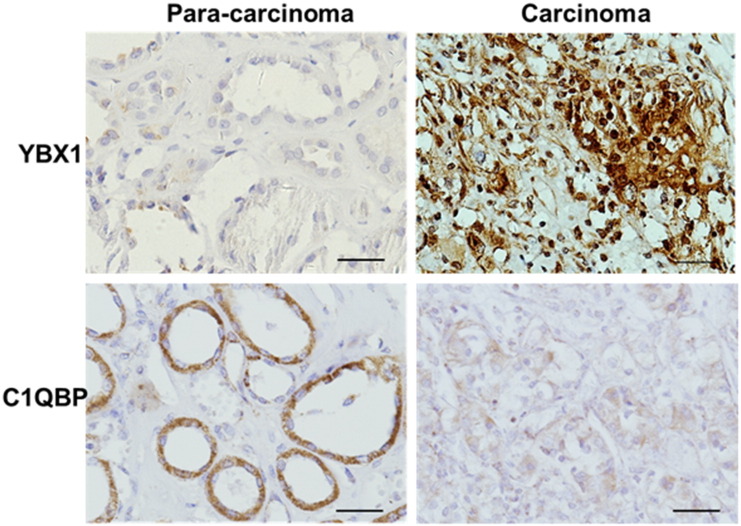
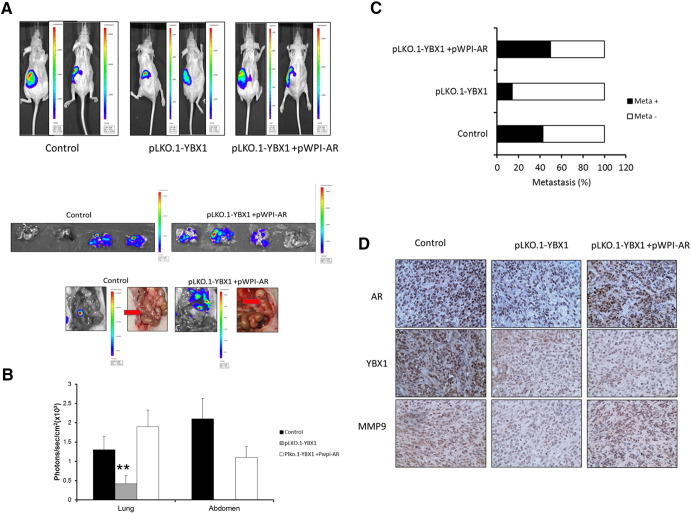
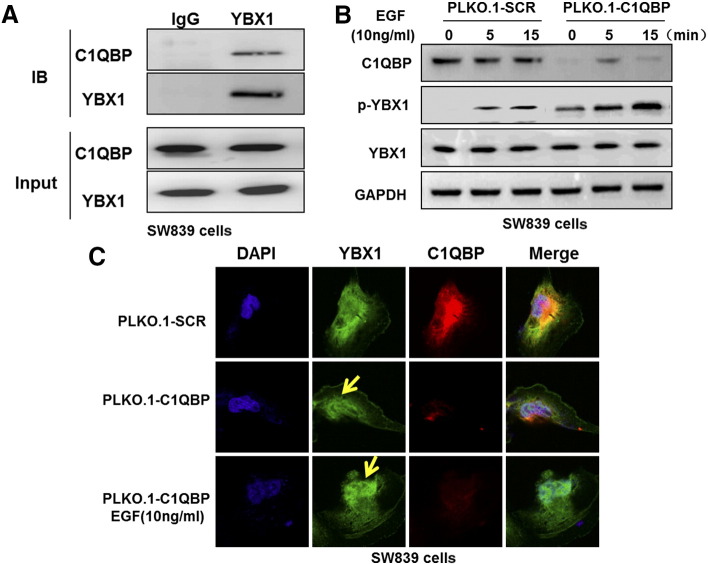
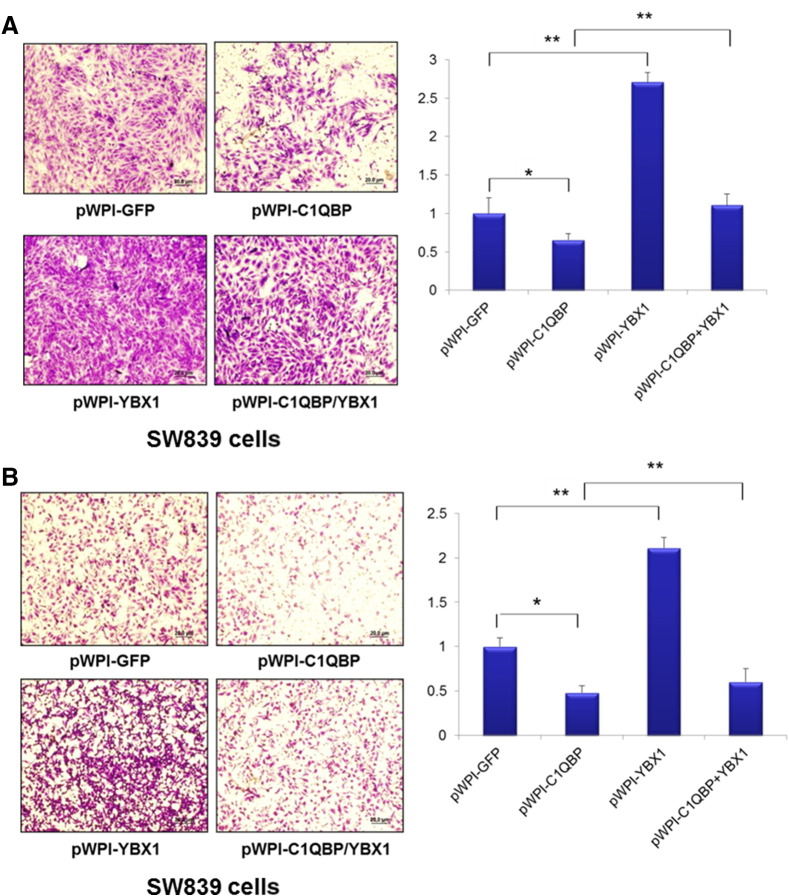
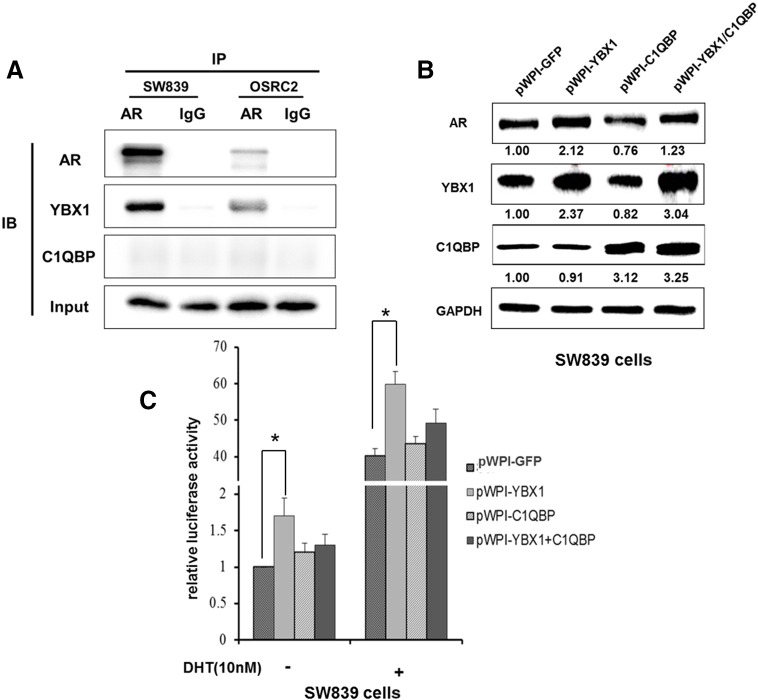
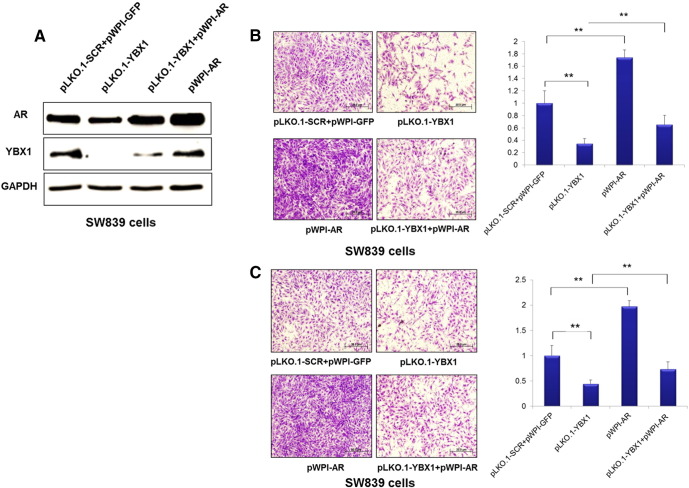
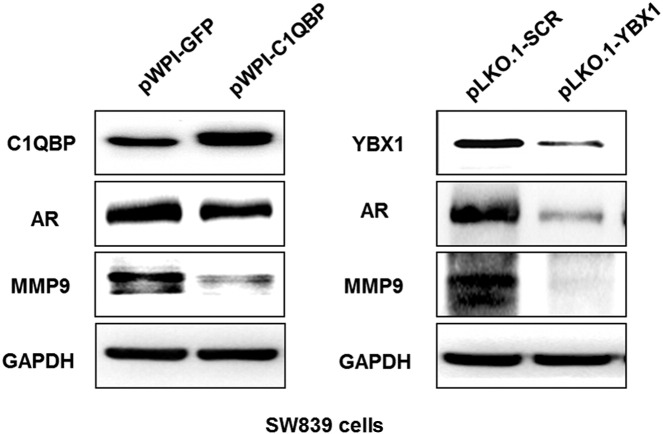
Early studies suggested that the androgen receptor (AR) might play important roles to promote the renal cell carcinoma (RCC) progression; however, the detailed mechanisms remain unclear. Here we demonstrated the higher YBX1 expression with lower C1QBP expression in human RCC clinical tissues, and the intensity of C1QBP was negatively correlated with the YBX1 nuclear expression. Mechanism dissection found C1QBP could interact with YBX1 to suppress the YBX1 activation via altering the YBX1 phosphorylation and nuclear translocation in RCC cells. The consequences of such suppression of YBX1 might then result in suppressing the RCC cell migration and invasion that involved altering the AR-modulated MMP9 signals. Interruption of this newly identified C1QBP→YBX1→AR→MMP9-suppressed RCC cell invasion pathway via targeting YBX1 or AR partially reversed the RCC cell invasion. Importantly, results from in vivo mouse model with orthotopic implantation of RCC OSRC2 cells into the left renal capsule also confirmed in vitro cell line studies showing targeting YBX1 could suppress RCC cell invasion via regulation of AR/MMP9 signals. Collectively, these data suggest that C1QBP could regulate YBX1 to suppress the AR-enhanced RCC cell invasion. Targeting this newly identified C1QBP/YBX1/AR/MMP9 signal pathway may provide a new potential therapy to better suppress RCC metastasis.
早期研究表明,雄激素受体(AR)可能在促进肾细胞癌(RCC)进展中发挥重要作用;然而,具体机制仍不清楚。在此我们证明,在人类RCC临床组织中YBX1表达较高而C1QBP表达较低,且C1QBP的强度与YBX1核表达呈负相关。机制剖析发现,C1QBP可与YBX1相互作用,通过改变RCC细胞中YBX1的磷酸化和核转位来抑制YBX1的激活。对YBX1的这种抑制作用可能会导致抑制RCC细胞的迁移和侵袭,这涉及改变AR调节的MMP9信号。通过靶向YBX1或AR中断这条新发现的C1QBP→YBX1→AR→MMP9抑制的RCC细胞侵袭途径,可部分逆转RCC细胞的侵袭。重要的是,将RCC OSRC2细胞原位植入左肾包膜的体内小鼠模型结果也证实了体外细胞系研究结果,即靶向YBX1可通过调节AR/MMP9信号来抑制RCC细胞侵袭。总体而言,这些数据表明C1QBP可调节YBX1以抑制AR增强的RCC细胞侵袭。靶向这条新发现的C1QBP/YBX1/AR/MMP9信号通路可能提供一种新的潜在治疗方法,以更好地抑制RCC转移。