Department of Urology, Tianjin Medical University Second Hospital, Tianjin Institute of Urology, Tianjin Medical University, Tianjin, 300211, China.
School of Laboratory Medicine, Tianjin Medical University, Tianjin, 300203, China.
Sci Rep. 2017 Apr 20;7(1):999. doi: 10.1038/s41598-017-01084-w.
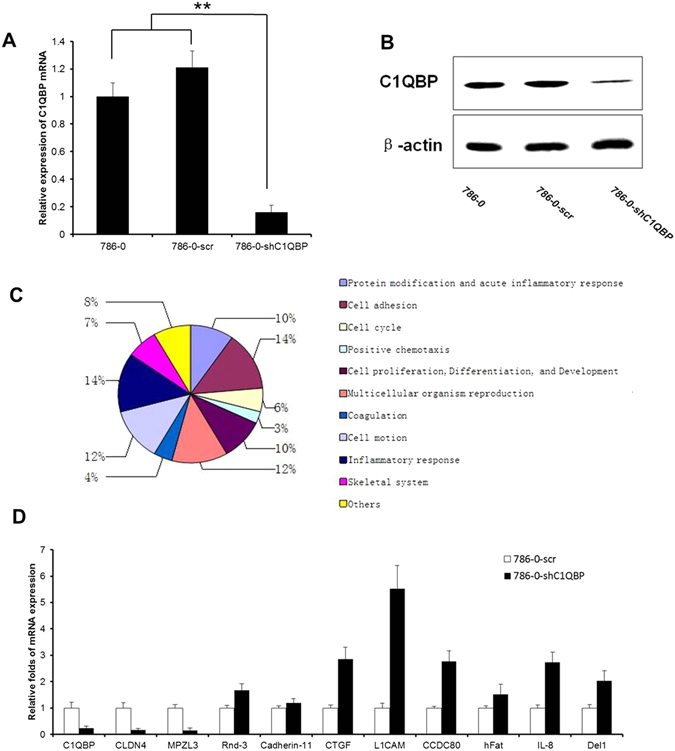
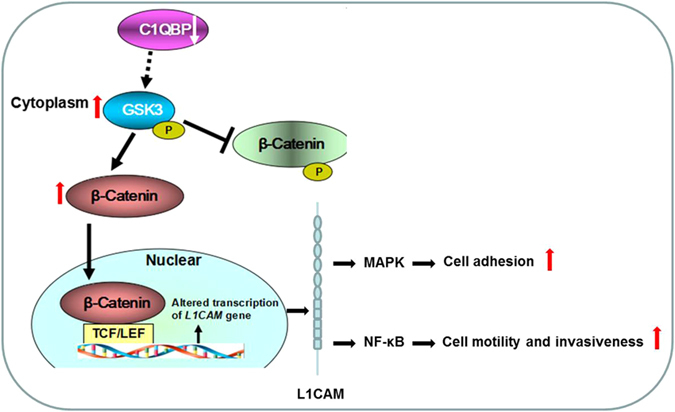
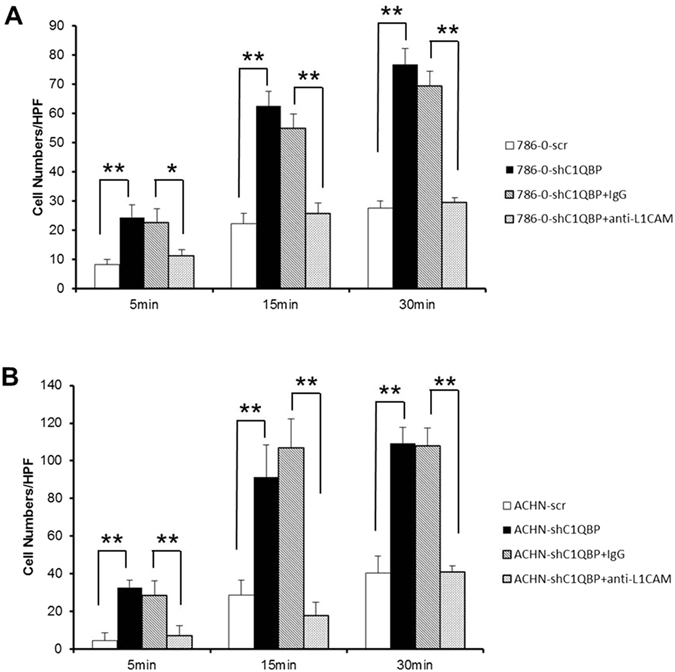
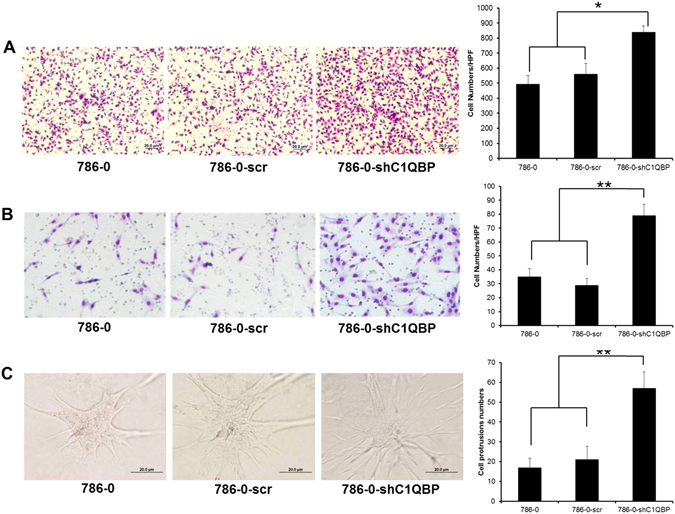
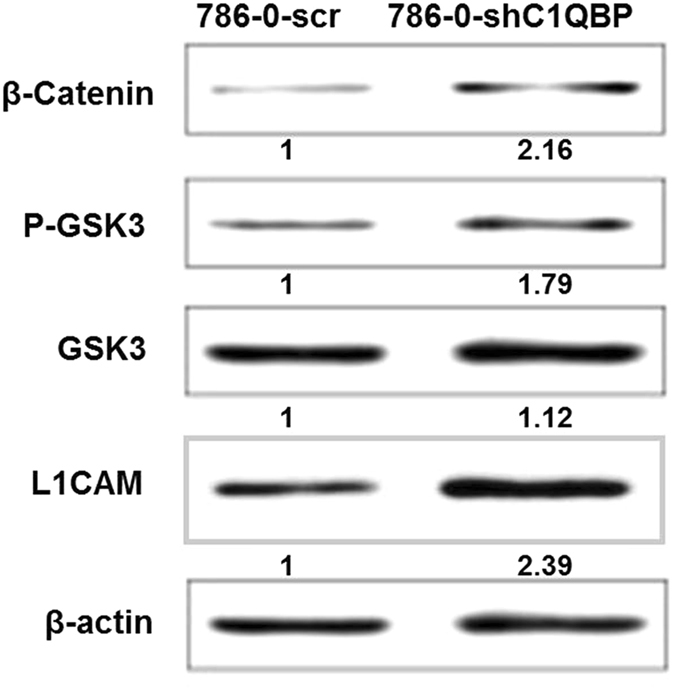
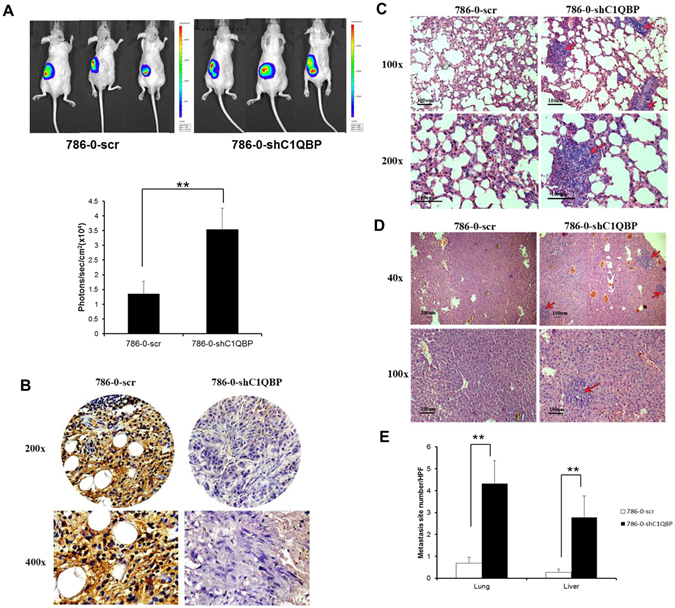
Complement component 1q subcomponent binding protein (C1QBP) is a ubiquitously expressed cellular protein and can be upregulated or activated in a variety of malignant tumors, including those from thyroid, colon and breast, but its role remains unclear in renal cell carcinoma (RCC). In this study, C1QBP knockdown in RCC cell influenced expression of multiple genes associated with cell adhesion, among which L1 cell adhesion molecule (L1CAM) was significantly higher upon a reduction of C1QBP. In turn, cell adhesion and invasion abilities were significantly increased with increased metastasis to lung and liver in vivo. C1QBP may regulate RCC cell adhesion and invasion through influencing the p-GSK3/β-Catenin/L1CAM expression. Over all, our study demonstrated that C1QBP could regulate RCC metastasis by regulating the GSK3/β-Catenin/L1CAM signaling pathway.
补体成分 1q 亚成分结合蛋白(C1QBP)是一种广泛表达的细胞蛋白,可在多种恶性肿瘤中上调或激活,包括甲状腺、结肠和乳腺肿瘤,但在肾细胞癌(RCC)中的作用尚不清楚。在这项研究中,RCC 细胞中 C1QBP 的敲低影响了与细胞黏附相关的多个基因的表达,其中 L1 细胞黏附分子(L1CAM)在 C1QBP 减少时显著升高。反过来,细胞黏附和侵袭能力显著增加,体内向肺和肝转移的能力也显著增加。C1QBP 可能通过影响 p-GSK3/β-Catenin/L1CAM 的表达来调节 RCC 细胞的黏附和侵袭。总之,我们的研究表明,C1QBP 可以通过调节 GSK3/β-Catenin/L1CAM 信号通路来调节 RCC 转移。