Kulmala Markku, Cai Runlong, Stolzenburg Dominik, Zhou Ying, Dada Lubna, Guo Yishuo, Yan Chao, Petäjä Tuukka, Jiang Jingkun, Kerminen Veli-Matti
Aerosol and Haze Laboratory, Beijing Advanced Innovation Center for Soft Matter Sciences and Engineering, Beijing University of Chemical Technology (BUCT) Beijing China.
Institute for Atmospheric and Earth System Research (INAR)/Physics, Faculty of Science, University of Helsinki Finland
Environ Sci Atmos. 2022 Mar 22;2(3):352-361. doi: 10.1039/d1ea00096a. eCollection 2022 May 19.
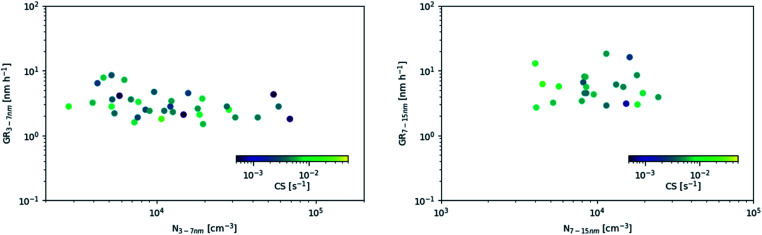
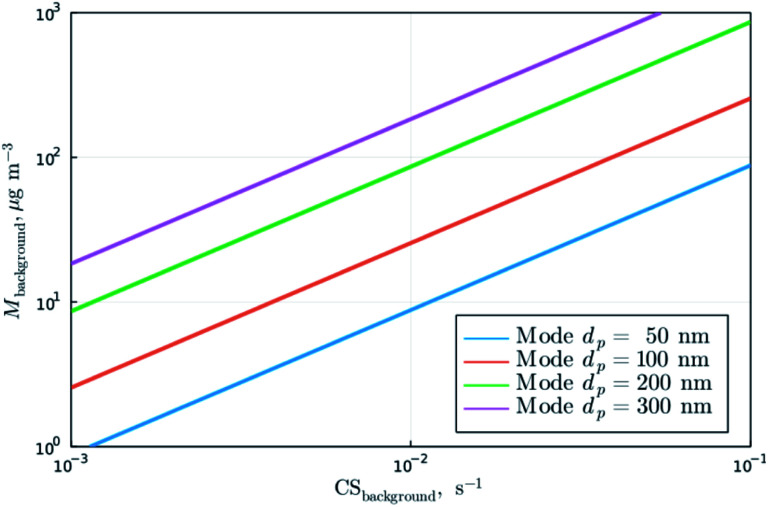
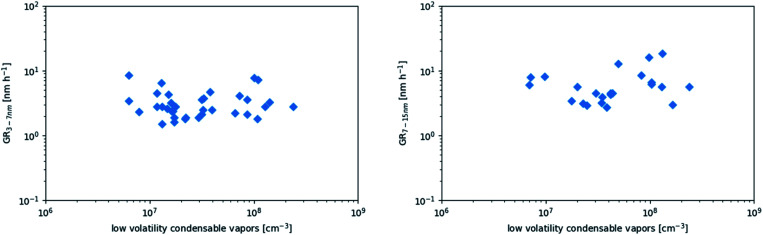
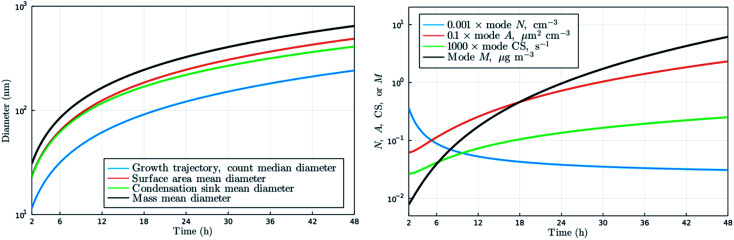
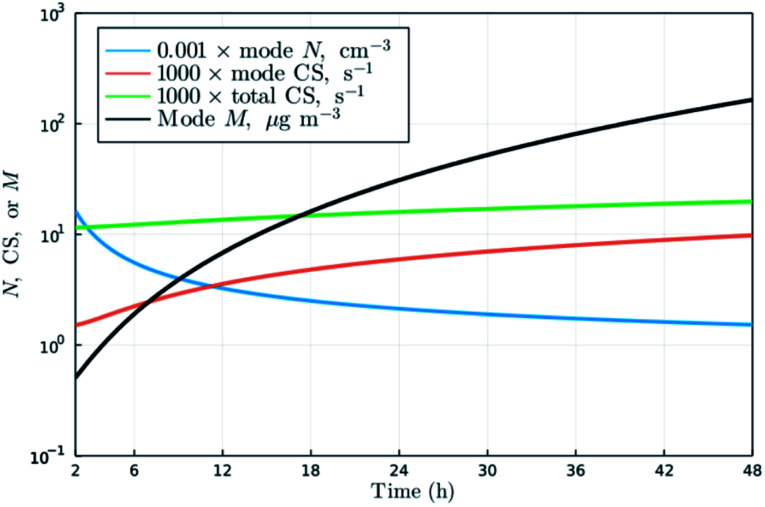
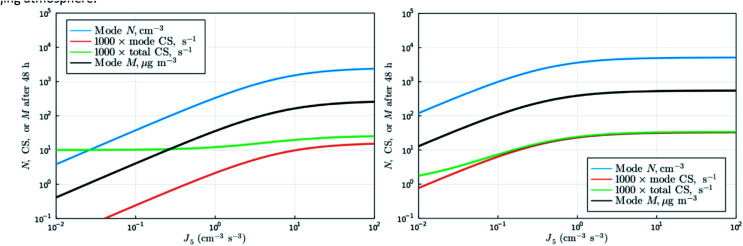
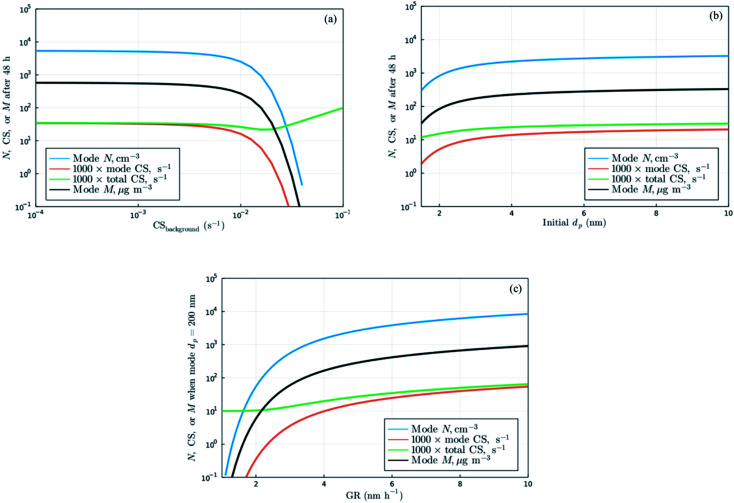
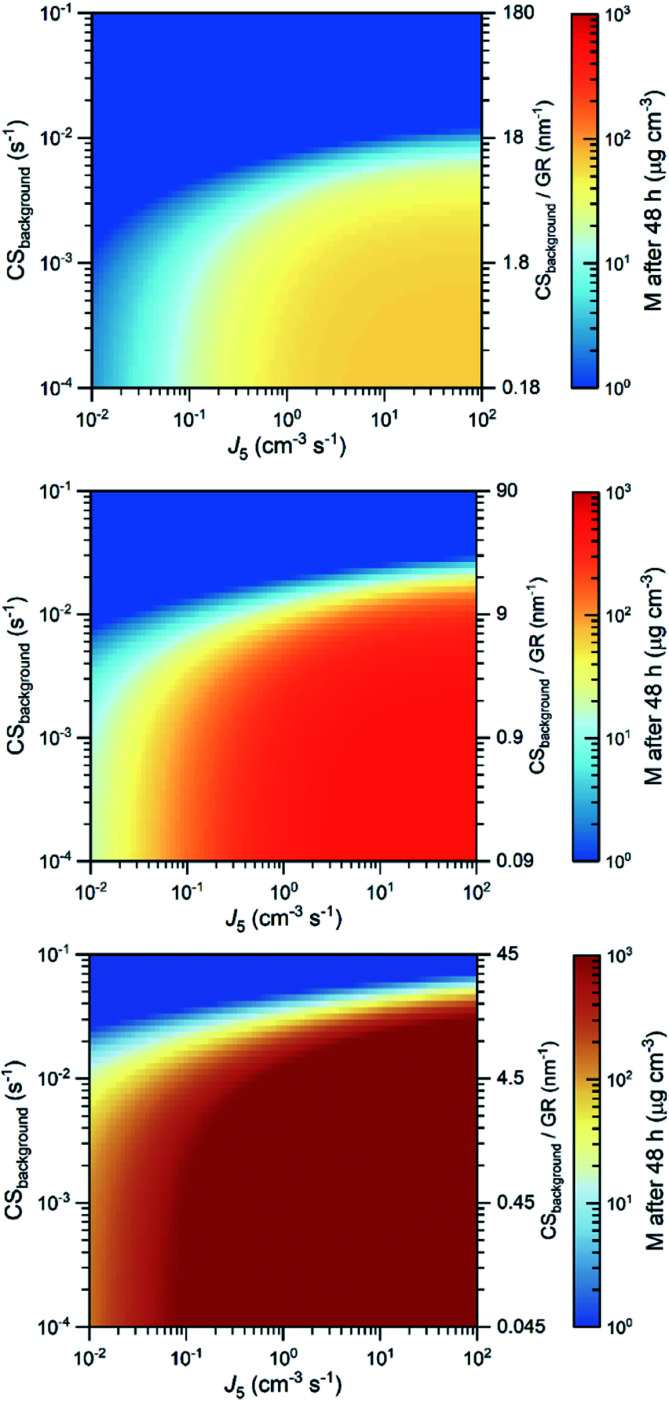
We investigated the contribution of atmospheric new particle formation (NPF) and subsequent growth of the newly formed particles, characterized by high concentrations of fine particulate matter (PM). In addition to having adverse effects on visibility and human health, these haze particles may act as cloud condensation nuclei, having potentially large influences on clouds and precipitation. Using atmospheric observations performed in 2019 in Beijing, a polluted megacity in China, we showed that the variability of growth rates (GR) of particles originating from NPF depend only weakly on low-volatile vapor - highly oxidated organic molecules (HOMs) and sulphuric acid - concentrations and have no apparent connection with the strength of NPF or the level of background pollution. We then constrained aerosol dynamic model simulations with these observations. We showed that under conditions typical for the Beijing atmosphere, NPF is capable of contributing with more than 100 μg m to the PM mass concentration and simultaneously >10 cm to the haze particle (diameter > 100 nm) number concentration. Our simulations reveal that the PM mass concentration originating from NPF, strength of NPF, particle growth rate and pre-existing background particle population are all connected with each other. Concerning the PM pollution control, our results indicate that reducing primary particle emissions might not result in an effective enough decrease in total PM mass concentrations until a reduction in emissions of precursor compounds for NPF and subsequent particle growth is imposed.
我们研究了大气中新粒子形成(NPF)以及新形成粒子随后生长的贡献,其特征为高浓度的细颗粒物(PM)。除了对能见度和人类健康产生不利影响外,这些雾霾颗粒可能充当云凝结核,对云和降水产生潜在的重大影响。利用2019年在中国污染严重的特大城市北京进行的大气观测,我们发现源自NPF的粒子生长速率(GR)的变化仅微弱地依赖于低挥发性蒸汽——高度氧化的有机分子(HOMs)和硫酸——的浓度,并且与NPF的强度或背景污染水平没有明显关联。然后,我们用这些观测结果对气溶胶动力学模型模拟进行了约束。我们表明,在北京大气的典型条件下,NPF能够对PM质量浓度贡献超过100μg/m³,同时对雾霾颗粒(直径>100nm)数浓度贡献>10⁸cm⁻³。我们的模拟结果表明,源自NPF的PM质量浓度、NPF的强度、粒子生长速率和预先存在的背景粒子数量都是相互关联的。关于PM污染控制,我们的结果表明,在对NPF及其后续粒子生长的前体化合物排放进行减排之前,减少一次粒子排放可能不会使总PM质量浓度有效降低。