Popadic Viseslav, Brajkovic Milica, Klasnja Slobodan, Milic Natasa, Rajovic Nina, Lisulov Danica Popovic, Divac Anica, Ivankovic Tatjana, Manojlovic Andrea, Nikolic Novica, Memon Lidija, Brankovic Marija, Popovic Maja, Sekulic Ana, Macut Jelica Bjekic, Markovic Olivera, Djurasevic Sinisa, Stojkovic Maja, Todorovic Zoran, Zdravkovic Marija
University Clinical Hospital Center Bezanijska kosa, Belgrade, Serbia.
Institute for Medical Statistics and Informatics, Faculty of Medicine University of Belgrade, Belgrade, Serbia.
Front Pharmacol. 2022 May 25;13:897279. doi: 10.3389/fphar.2022.897279. eCollection 2022.
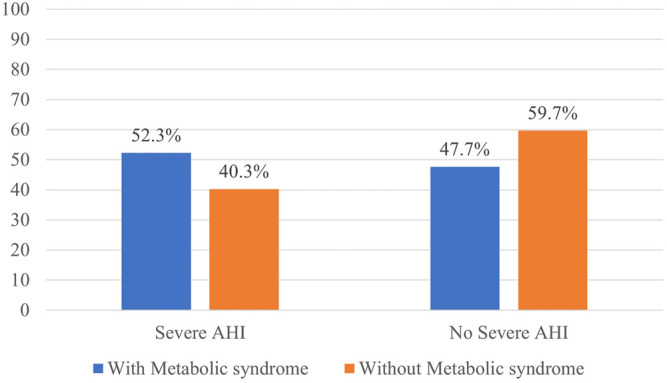
Obstructive sleep apnea (OSA) is a serious condition linked with various metabolic disorders and associated with increased all-cause and cardiovascular mortality. Although the potential mechanisms of pathophysiological processes related to OSA are relatively well known, the data regarding the correlation between obstructive sleep apnea, dyslipidemia, and systemic inflammation are still inconclusive. The study was conducted as a retrospective cohort study including 328 patients with newly diagnosed obstructive sleep apnea during the period between April 2018, and May 2020, in University Clinical Hospital Center "Bezanijska kosa", Belgrade, Serbia. Polysomnography was performed in all patients according to the protocol. Numerous demographic, antropometric, laboratory, and clinical data were correlated to Apnea-Hypopnea Index (AHI) as a dependent variable, with a particular review on the relation between lipid abnormalities, inflammatory parameters, and obstructive sleep apnea severity. Multivariate logistic regression model was used to assess predictors of severe OSA (AHI ≥30 per hour). A total of 328 patients were included in the study. The mean age of the patients was 54.0 ± 12.5 years and more than two-thirds were male (68.8%). The majority of the patients had an AHI of at least 30 events per hour. Patients with severe OSA were more frequently male, obese, hypertensive and hyperlipidemic, and had increased neck circumference (both male and female patients). One hundred and thirty-two patients had metabolic syndrome. Patients with severe OSA more frequently had metabolic syndrome and significantly higher levels of glucose, creatinine, uric acid, AST, ALT, CK, microalbumine/creatinine ratio, triglyceride, total cholesterol, HDL, total cholеsterol to HDL-C ratio, CRP, and ESR. In the multivariate linear regression model with AHI (≥30 per hour) as a dependent variable, of demographic and clinical data, triglycerides ≥1.7 mmol/L and CRP >5 mg/L were significantly associated with AHI≥30 per hour. The present study on 328 patients with newly diagnosed obstructive sleep apnea revealed significant relation of lipid abnormalities, inflammatory markers, and other clinically important data with obstructive sleep apnea severity. These results can lead to a better understanding of the underlying pathophysiological processes and open the door to a new world of potentially useful therapeutic modalities.
阻塞性睡眠呼吸暂停(OSA)是一种严重疾病,与多种代谢紊乱相关,并与全因死亡率和心血管死亡率增加有关。尽管与OSA相关的病理生理过程的潜在机制相对为人所知,但关于阻塞性睡眠呼吸暂停、血脂异常和全身炎症之间相关性的数据仍无定论。该研究作为一项回顾性队列研究开展,纳入了2018年4月至2020年5月期间在塞尔维亚贝尔格莱德“贝扎尼什卡科萨”大学临床中心新诊断为阻塞性睡眠呼吸暂停的328例患者。所有患者均按照方案进行了多导睡眠图检查。将众多人口统计学、人体测量学、实验室和临床数据与作为因变量的呼吸暂停低通气指数(AHI)相关联,特别审查了脂质异常、炎症参数与阻塞性睡眠呼吸暂停严重程度之间的关系。采用多因素逻辑回归模型评估重度OSA(AHI≥30次/小时)的预测因素。该研究共纳入328例患者。患者的平均年龄为54.0±12.5岁,超过三分之二为男性(68.8%)。大多数患者的AHI至少为30次/小时。重度OSA患者男性、肥胖、高血压和高脂血症的比例更高,且颈围增加(男性和女性患者均如此)。132例患者患有代谢综合征。重度OSA患者更常患有代谢综合征,且血糖、肌酐、尿酸、谷草转氨酶、谷丙转氨酶、肌酸激酶、微量白蛋白/肌酐比值、甘油三酯、总胆固醇、高密度脂蛋白、总胆固醇与高密度脂蛋白胆固醇比值、C反应蛋白和红细胞沉降率水平显著更高。在以AHI(≥30次/小时)作为因变量的多因素线性回归模型中,在人口统计学和临床数据中,甘油三酯≥1.7 mmol/L和C反应蛋白>5 mg/L与AHI≥30次/小时显著相关。这项针对328例新诊断为阻塞性睡眠呼吸暂停患者的研究揭示了脂质异常、炎症标志物及其他重要临床数据与阻塞性睡眠呼吸暂停严重程度之间的显著关系。这些结果有助于更好地理解潜在的病理生理过程,并为一系列潜在有用的治疗方式打开新的大门。