Center for Cancer Research, NCI, NIH, Bethesda, Maryland.
Institute of Cancer Research, London, UK.
Clin Cancer Res. 2022 Aug 15;28(16):3509-3525. doi: 10.1158/1078-0432.CCR-22-0851.
Therapies targeting the androgen receptor (AR) have improved the outcome for patients with castration-sensitive prostate cancer (CSPC). Expression of the constitutively active AR splice variant-7 (AR-V7) has shown clinical utility as a predictive biomarker of AR-targeted therapy resistance in castration-resistant prostate cancer (CRPC), but its importance in CSPC remains understudied.
We assessed different approaches to quantify AR-V7 mRNA and protein in prostate cancer cell lines, patient-derived xenograft (PDX) models, publicly available cohorts, and independent institutional clinical cohorts, to identify reliable approaches for detecting AR-V7 mRNA and protein and its association with clinical outcome.
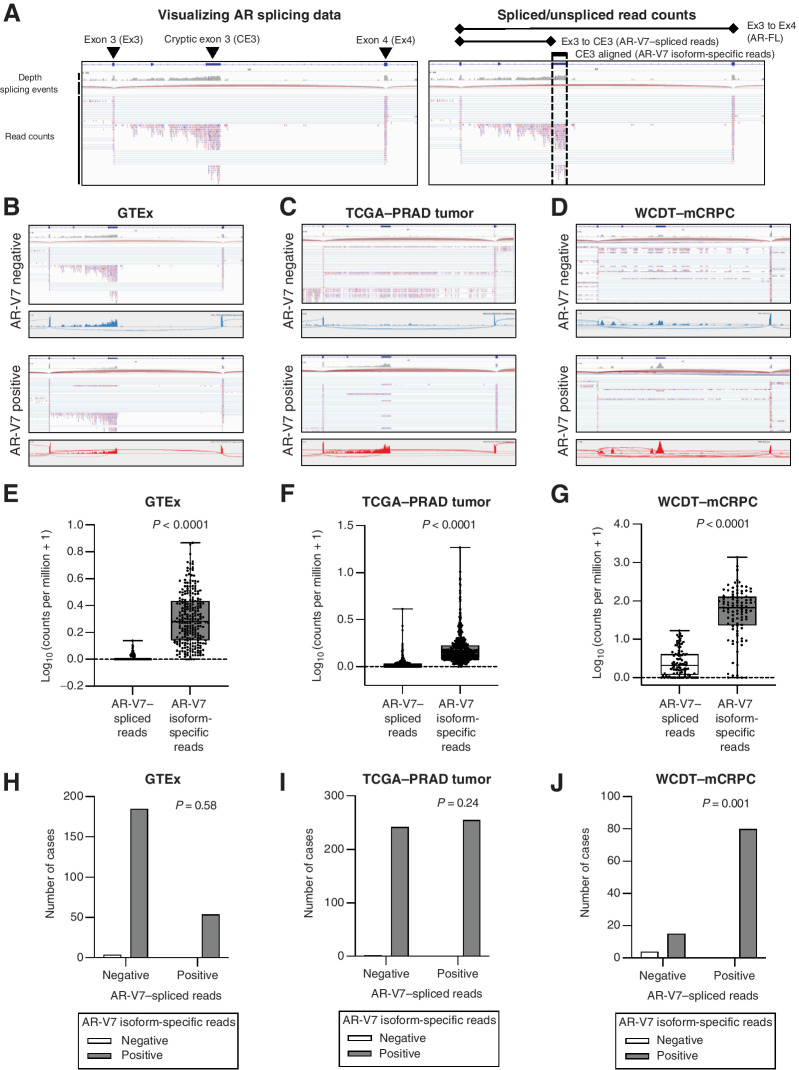
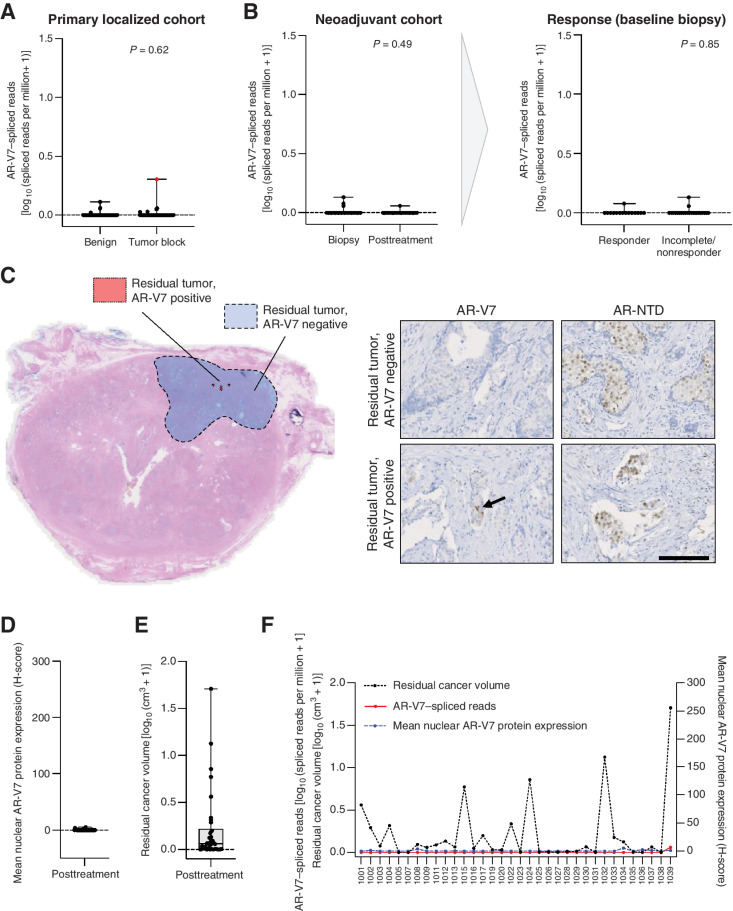
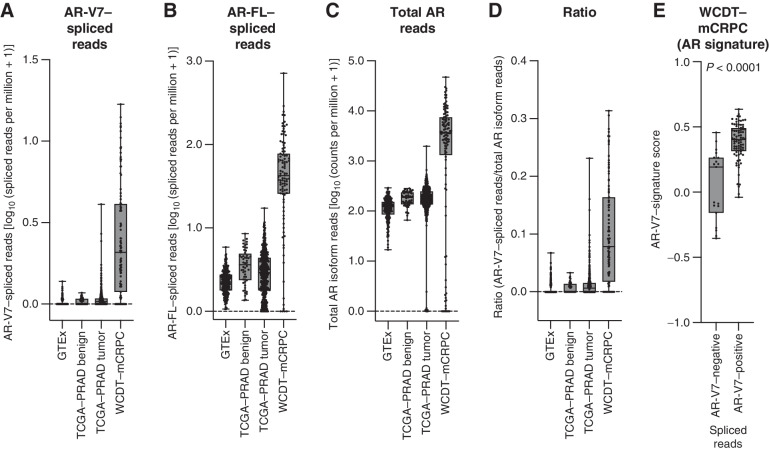
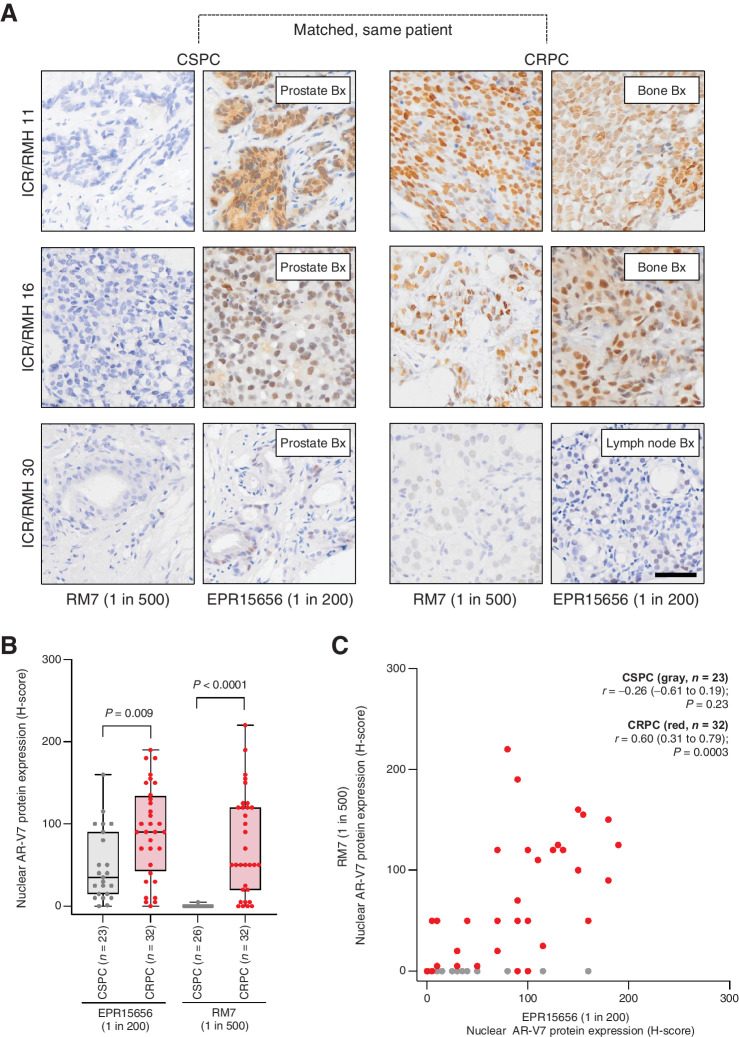
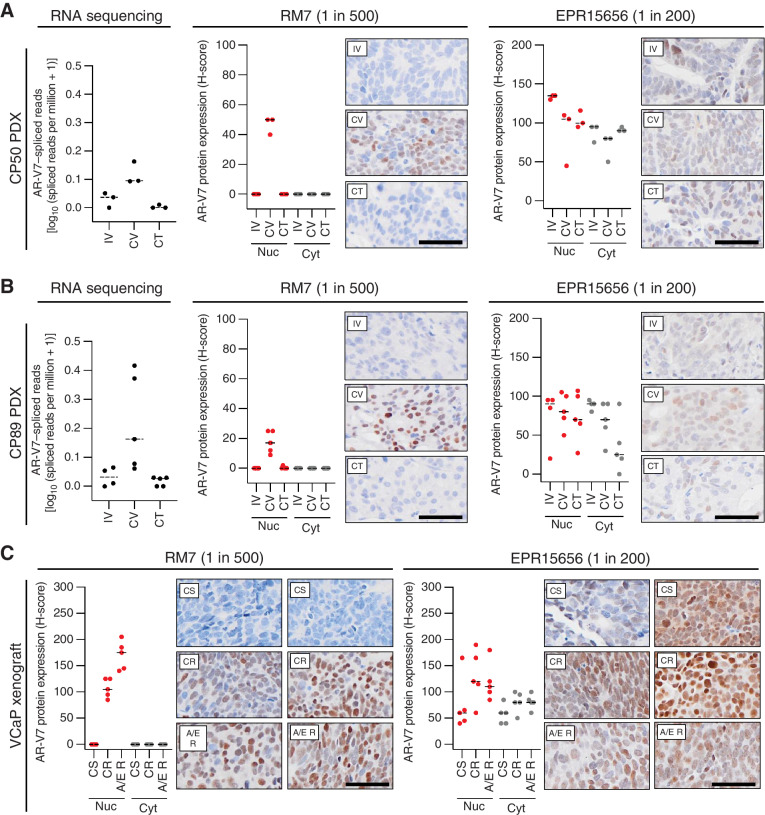
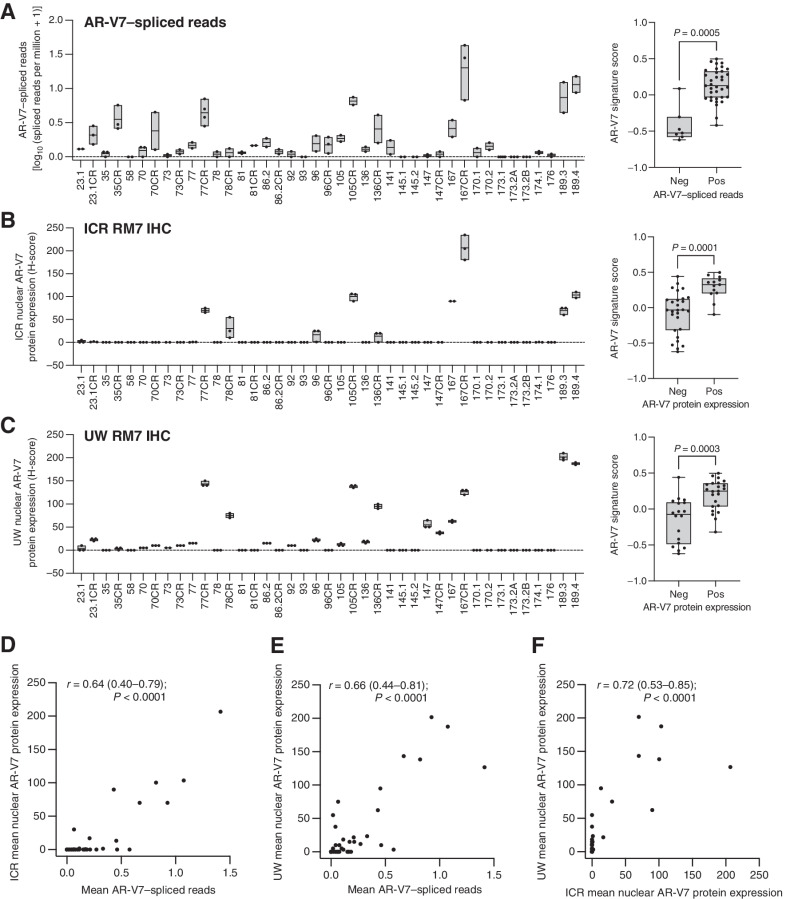
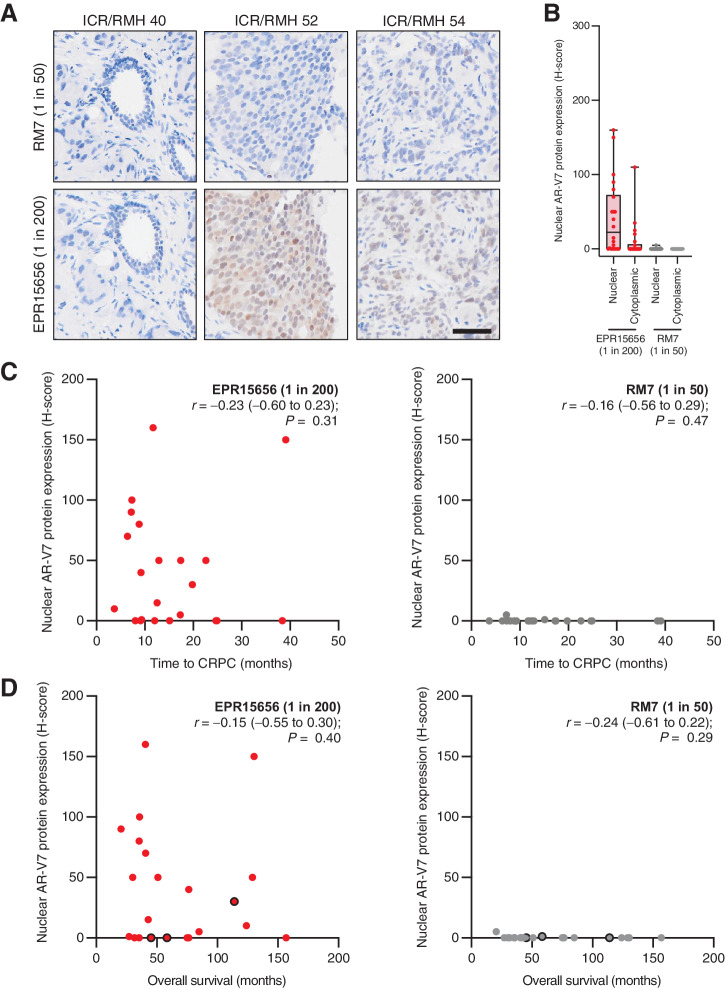
In CSPC and CRPC cohorts, AR-V7 mRNA was much less abundant when detected using reads across splice boundaries than when considering isoform-specific exonic reads. The RM7 AR-V7 antibody had increased sensitivity and specificity for AR-V7 protein detection by immunohistochemistry (IHC) in CRPC cohorts but rarely identified AR-V7 protein reactivity in CSPC cohorts, when compared with the EPR15656 AR-V7 antibody. Using multiple CRPC PDX models, we demonstrated that AR-V7 expression was exquisitely sensitive to hormonal manipulation. In CSPC institutional cohorts, AR-V7 protein quantification by either assay was associated neither with time to development of castration resistance nor with overall survival, and intense neoadjuvant androgen-deprivation therapy did not lead to significant AR-V7 mRNA or staining following treatment. Neither pre- nor posttreatment AR-V7 levels were associated with volumes of residual disease after therapy.
This study demonstrates that further analytical validation and clinical qualification are required before AR-V7 can be considered for clinical use in CSPC as a predictive biomarker.
针对雄激素受体 (AR) 的治疗方法改善了去势敏感型前列腺癌 (CSPC) 患者的预后。持续激活的 AR 剪接变体-7 (AR-V7) 的表达已显示出作为抗雄激素治疗抵抗的预测生物标志物在去势抵抗性前列腺癌 (CRPC) 中的临床应用价值,但它在 CSPC 中的重要性仍研究不足。
我们评估了定量检测前列腺癌细胞系、患者来源异种移植 (PDX) 模型、公开可用队列和独立机构临床队列中 AR-V7 mRNA 和蛋白的不同方法,以确定可靠的方法来检测 AR-V7 mRNA 和蛋白及其与临床结果的关联。
在 CSPC 和 CRPC 队列中,与考虑特异性外显子读段相比,使用跨越剪接边界的读段检测到的 AR-V7 mRNA 丰度要低得多。与 EPR15656 AR-V7 抗体相比,RM7 AR-V7 抗体在 CRPC 队列中通过免疫组化 (IHC) 检测 AR-V7 蛋白具有更高的敏感性和特异性,但在 CSPC 队列中很少识别出 AR-V7 蛋白反应性。使用多个 CRPC PDX 模型,我们证明 AR-V7 表达对激素处理非常敏感。在 CSPC 机构队列中,两种检测方法的 AR-V7 蛋白定量均与去势抵抗的发展时间或总生存期无关,强烈的新辅助雄激素剥夺治疗后治疗后 AR-V7 mRNA 或染色无明显变化。治疗前后的 AR-V7 水平均与治疗后残留疾病的体积无关。
本研究表明,在 AR-V7 可作为 CSPC 的预测生物标志物用于临床之前,需要进一步进行分析验证和临床资格认证。