Chen Chun-Hsien, Wang Chun-Chi, Ko Po-Yun, Chen Yen-Ling
School of Pharmacy, College of Pharmacy, Kaohsiung Medical University, Kaohsiung, Taiwan.
Development and Value Creation Research Center, Kaohsiung Medical University, Kaohsiung, Taiwan.
J Food Drug Anal. 2020 Dec 15;28(4):654-676. doi: 10.38212/2224-6614.1137.
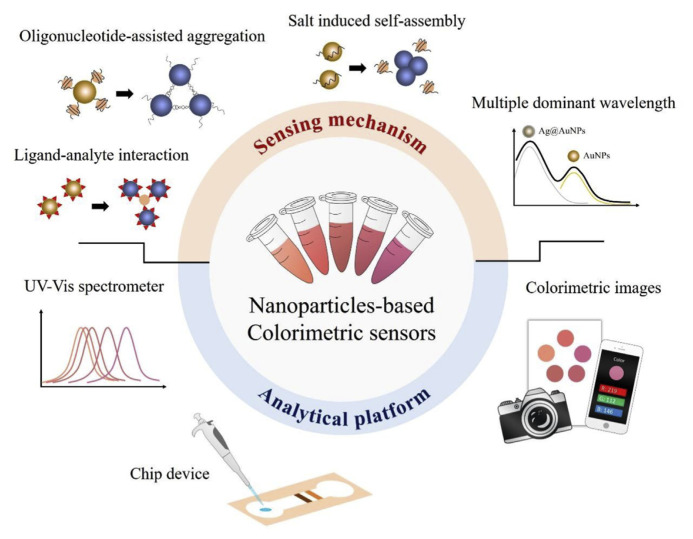
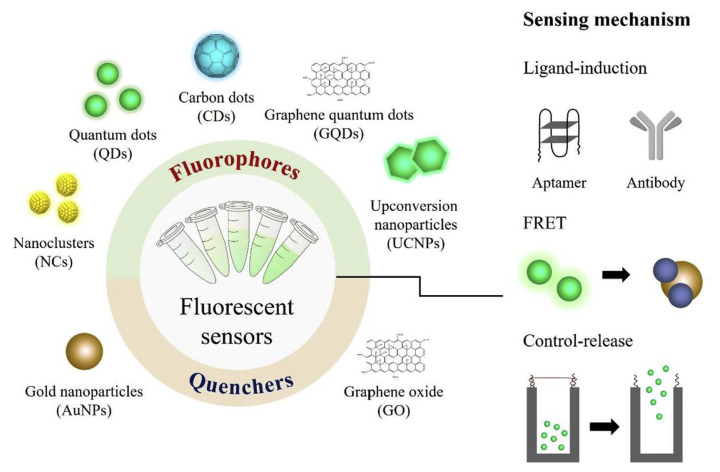
The abuse of illicit drugs has been prevalent in recent years and is associated with crime and public health issues. To strengthen public security and fortify public health services with respect to the increasing severity of drug abuse, academic and government institutes have been devoted to constructing relative analytical methods for illicit drugs. To date, the development of sensors has been greatly emphasized due to their features of high sensitivity, prompt detection and flexible manipulation; thus, sensors can serve as alternatives to conventional sophisticated instruments. Recently, the use of nanomaterials has inspired the development of a series of innovative sample pretreatment and detection strategies in the field of analytical chemistry. Herein, this review elaborated the application of nanomaterials in analytical methods, including sample pretreatments, colorimetric sensors and fluorescent sensors. The utilization of nanomaterials in the analytical field provides novel perspectives for the development of detection platforms and facilitates the monitoring of illicit drugs in diverse complex matrices.
近年来,非法药物的滥用现象十分普遍,且与犯罪和公共卫生问题相关联。鉴于药物滥用问题日益严重,为加强公共安全并强化公共卫生服务,学术机构和政府部门一直致力于构建针对非法药物的相关分析方法。迄今为止,由于传感器具有高灵敏度、快速检测及操作灵活等特点,其发展受到了极大重视;因此,传感器可作为传统精密仪器的替代物。最近,纳米材料的应用推动了分析化学领域一系列创新的样品预处理和检测策略的发展。在此,本综述阐述了纳米材料在分析方法中的应用,包括样品预处理、比色传感器和荧光传感器。纳米材料在分析领域的应用为检测平台的发展提供了新的视角,并有助于在各种复杂基质中监测非法药物。