Institute of Biodiversity Animal Health and Comparative Medicine, College of Medical, Veterinary and Life Sciences, University of Glasgow, Glasgow, United Kingdom.
Wellcome Sanger Institute, Hinxton, United Kingdom.
PLoS Pathog. 2022 Jun 13;18(6):e1010545. doi: 10.1371/journal.ppat.1010545. eCollection 2022 Jun.
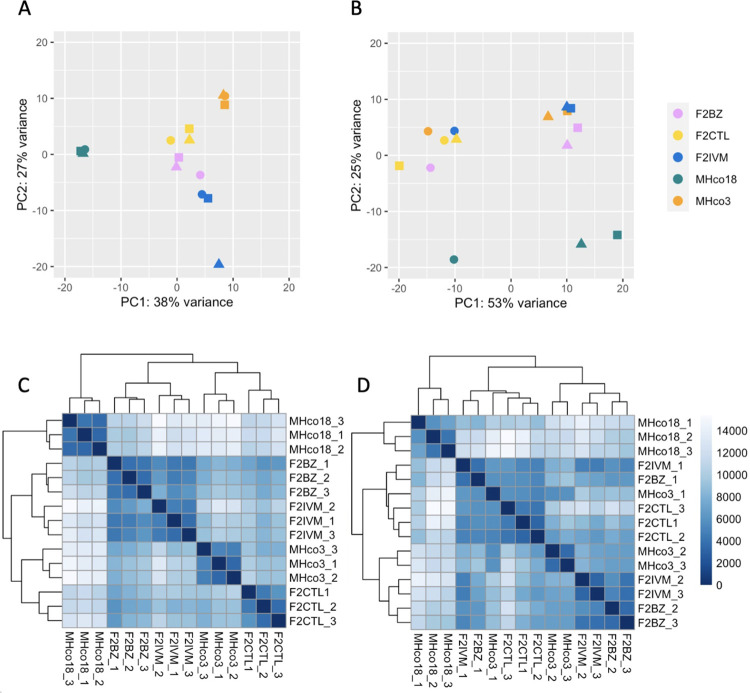
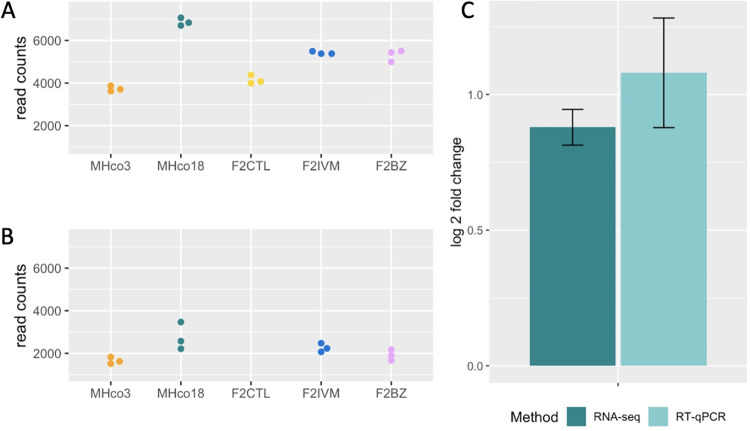
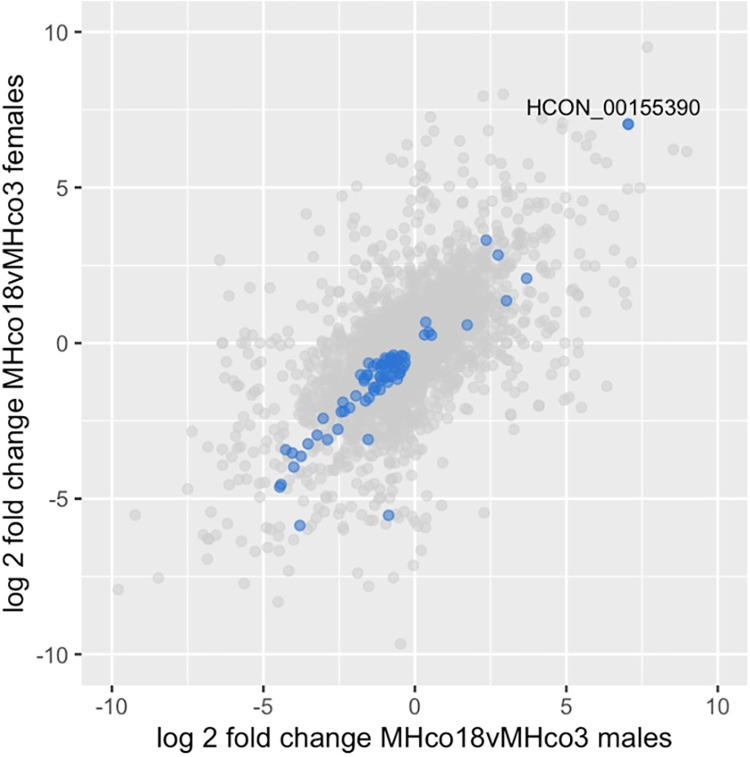
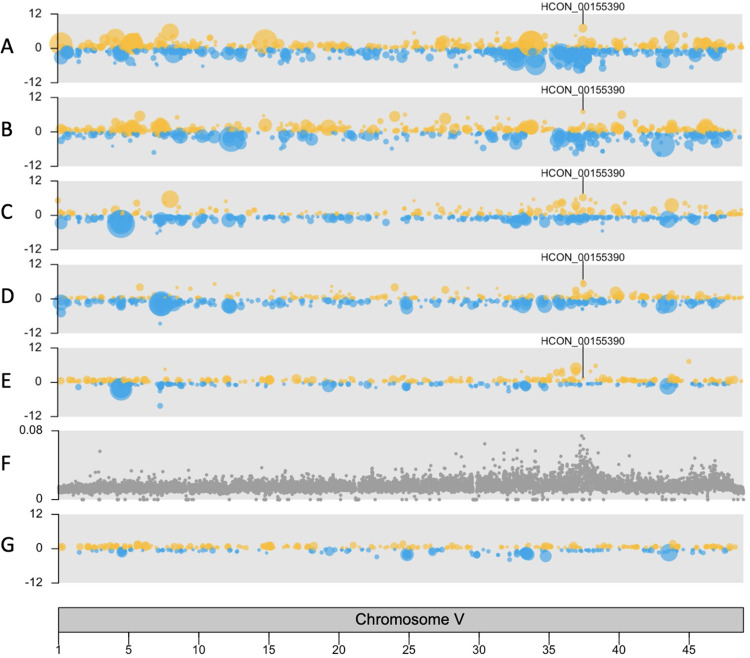
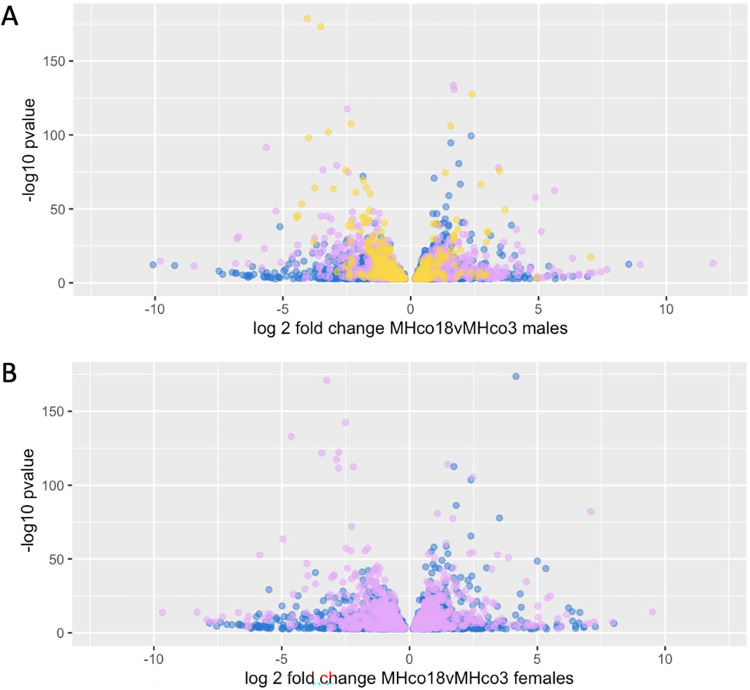
The antiparasitic drug ivermectin plays an essential role in human and animal health globally. However, ivermectin resistance is widespread in veterinary helminths and there are growing concerns of sub-optimal responses to treatment in related helminths of humans. Despite decades of research, the genetic mechanisms underlying ivermectin resistance are poorly understood in parasitic helminths. This reflects significant uncertainty regarding the mode of action of ivermectin in parasitic helminths, and the genetic complexity of these organisms; parasitic helminths have large, rapidly evolving genomes and differences in evolutionary history and genetic background can confound comparisons between resistant and susceptible populations. We undertook a controlled genetic cross of a multi-drug resistant and a susceptible reference isolate of Haemonchus contortus, an economically important gastrointestinal nematode of sheep, and ivermectin-selected the F2 population for comparison with an untreated F2 control. RNA-seq analyses of male and female adults of all populations identified high transcriptomic differentiation between parental isolates, which was significantly reduced in the F2, allowing differences associated specifically with ivermectin resistance to be identified. In all resistant populations, there was constitutive upregulation of a single gene, HCON_00155390:cky-1, a putative pharyngeal-expressed transcription factor, in a narrow locus on chromosome V previously shown to be under ivermectin selection. In addition, we detected sex-specific differences in gene expression between resistant and susceptible populations, including constitutive upregulation of a P-glycoprotein, HCON_00162780:pgp-11, in resistant males only. After ivermectin selection, we identified differential expression of genes with roles in neuronal function and chloride homeostasis, which is consistent with an adaptive response to ivermectin-induced hyperpolarisation of neuromuscular cells. Overall, we show the utility of a genetic cross to identify differences in gene expression that are specific to ivermectin selection and provide a framework to better understand ivermectin resistance and response to treatment in parasitic helminths.
抗寄生虫药物伊维菌素在全球范围内对人类和动物的健康起着至关重要的作用。然而,兽医蠕虫中的伊维菌素耐药性已广泛存在,人们越来越担心相关人类蠕虫对治疗的反应不佳。尽管经过几十年的研究,寄生性蠕虫中的伊维菌素耐药性的遗传机制仍知之甚少。这反映了在寄生性蠕虫中伊维菌素的作用方式以及这些生物体遗传复杂性方面存在很大的不确定性;寄生性蠕虫具有庞大、快速进化的基因组,并且在进化历史和遗传背景方面存在差异,这使得耐药和敏感群体之间的比较变得复杂。我们进行了一种多药耐药和一种敏感参考分离株的受控遗传杂交,该分离株是绵羊重要的胃肠道线虫旋毛虫,并用伊维菌素选择了 F2 群体,以与未处理的 F2 对照进行比较。所有群体的雄性和雌性成虫的 RNA-seq 分析确定了亲本分离株之间的高转录组分化,而 F2 中的分化显著降低,从而可以识别与伊维菌素耐药性特异性相关的差异。在所有耐药群体中,在先前显示受伊维菌素选择的染色体 V 上的一个狭窄基因座上,单个基因 HCON_00155390:cky-1 的组成型上调,该基因是一个假定的咽表达转录因子。此外,我们在耐药和敏感群体之间检测到性别特异性的基因表达差异,包括在耐药雄性中组成型上调的 P-糖蛋白 HCON_00162780:pgp-11。在伊维菌素选择后,我们鉴定了与神经元功能和氯离子稳态相关的基因的差异表达,这与伊维菌素诱导的肌细胞超极化的适应性反应一致。总体而言,我们展示了遗传杂交的实用性,可以鉴定出与伊维菌素选择特异性相关的基因表达差异,并为更好地理解寄生性蠕虫中的伊维菌素耐药性和对治疗的反应提供了框架。