Department of Plant Biology, Carnegie Institution for Science, Stanford, CA, USA.
Department of Biology, Stanford University, Stanford, CA, USA.
Nat Plants. 2022 Jun;8(6):646-655. doi: 10.1038/s41477-022-01167-1. Epub 2022 Jun 13.
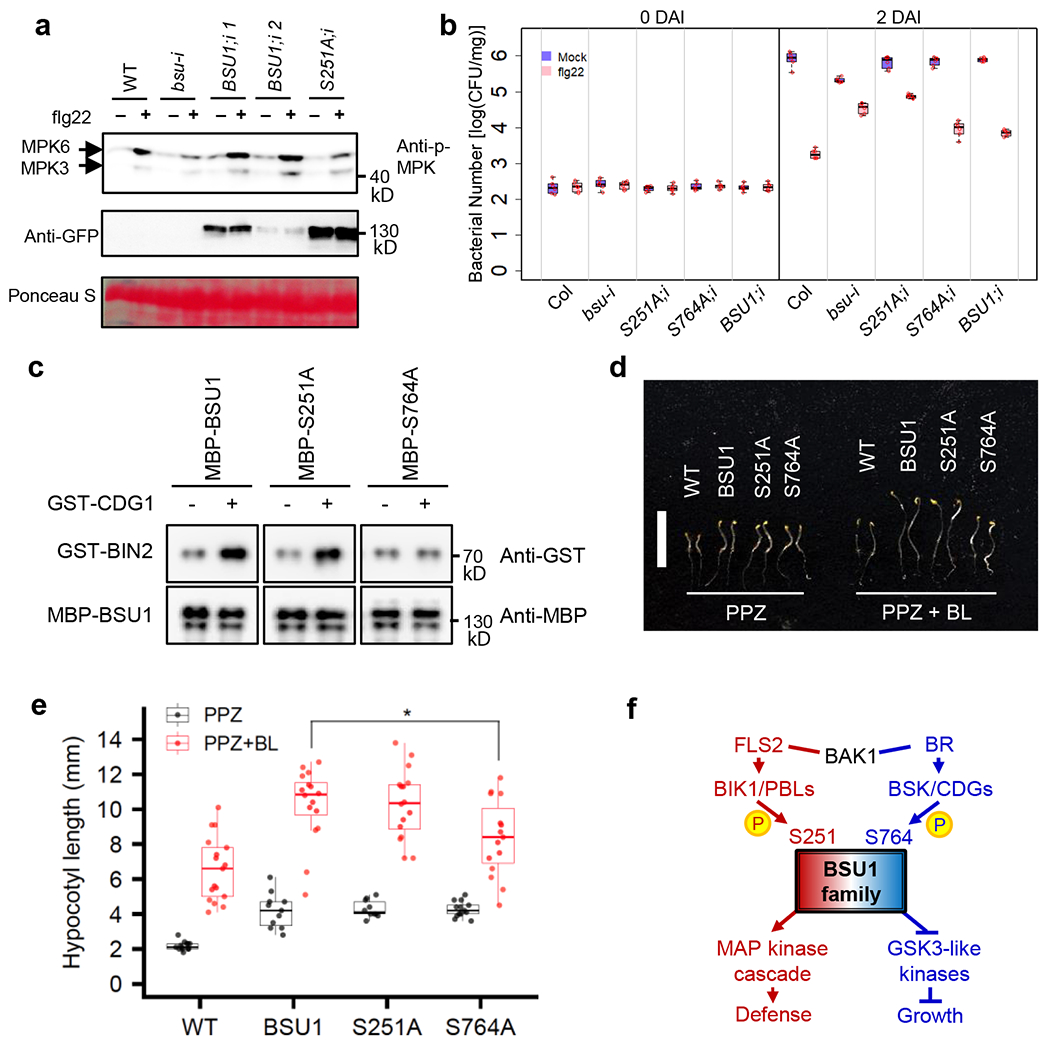
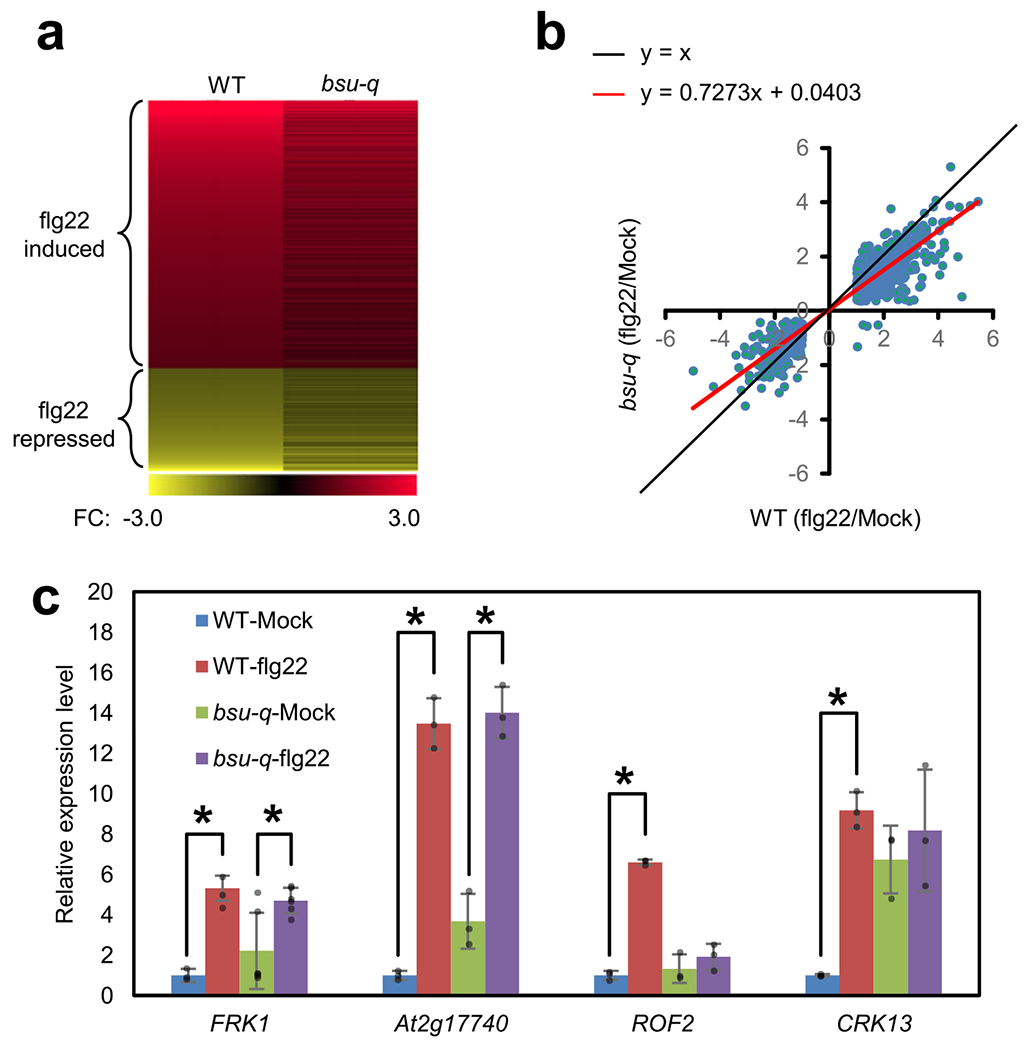
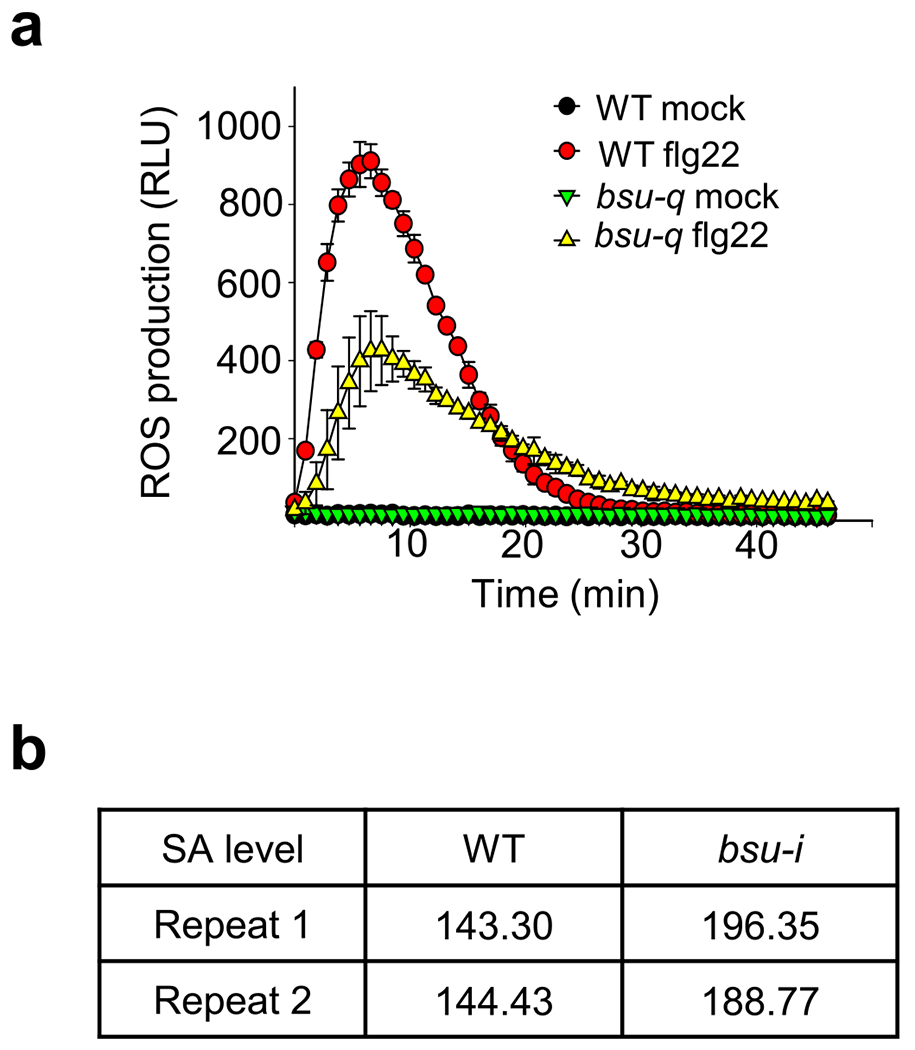
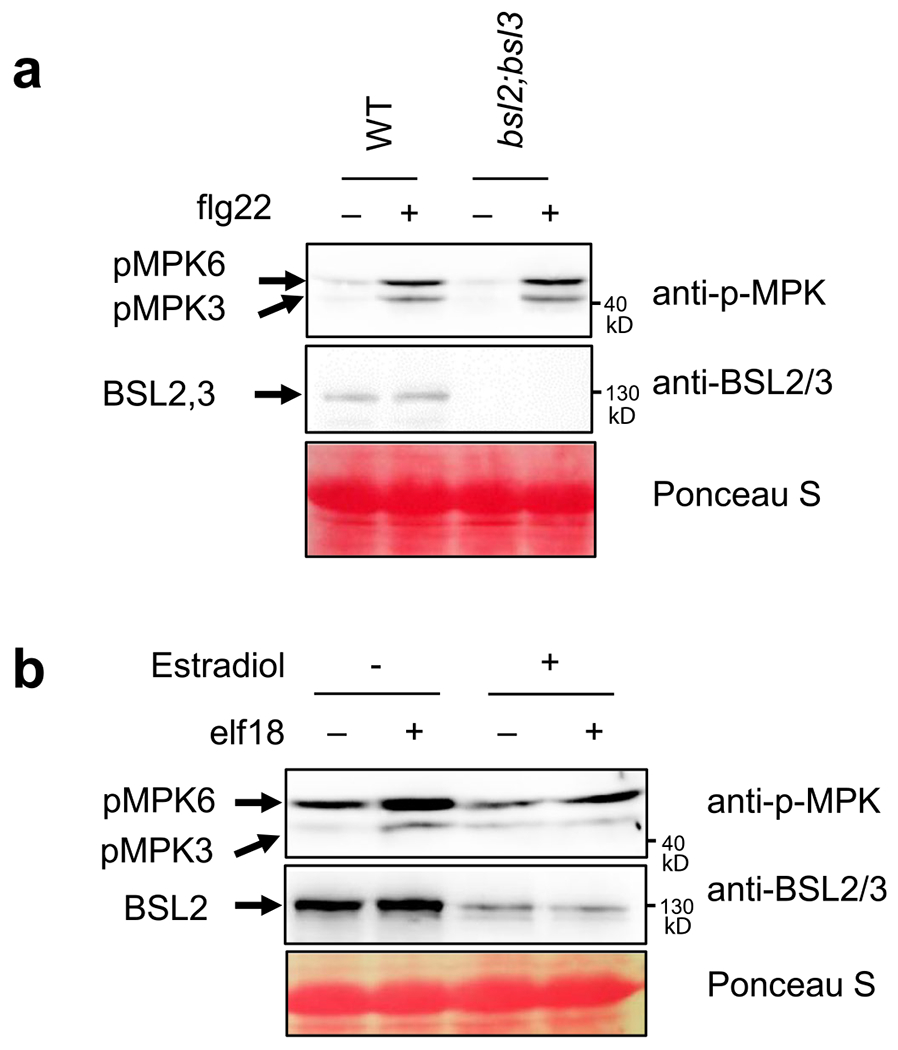
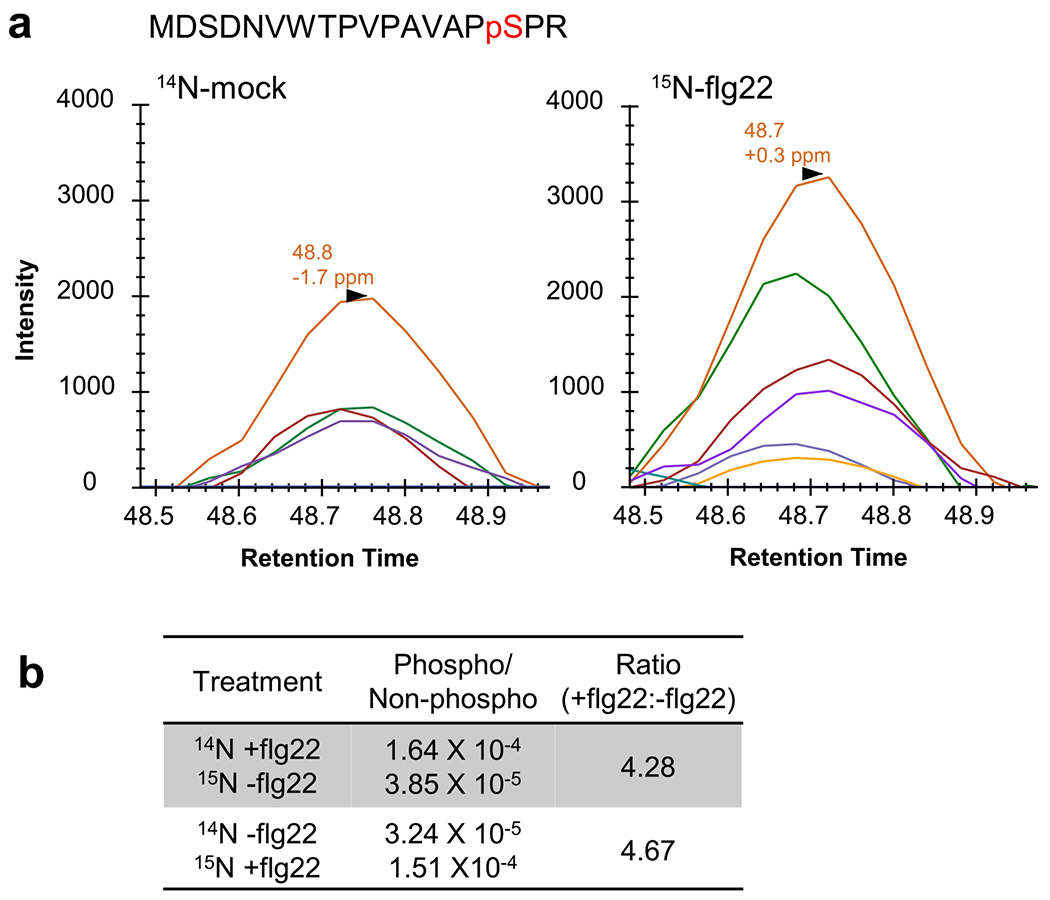
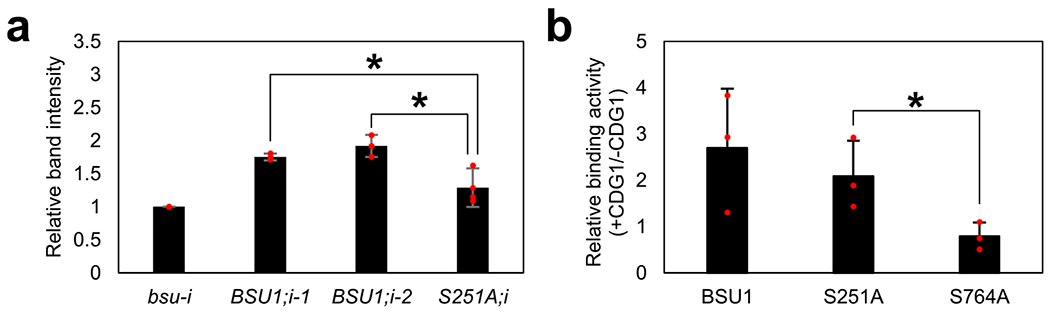
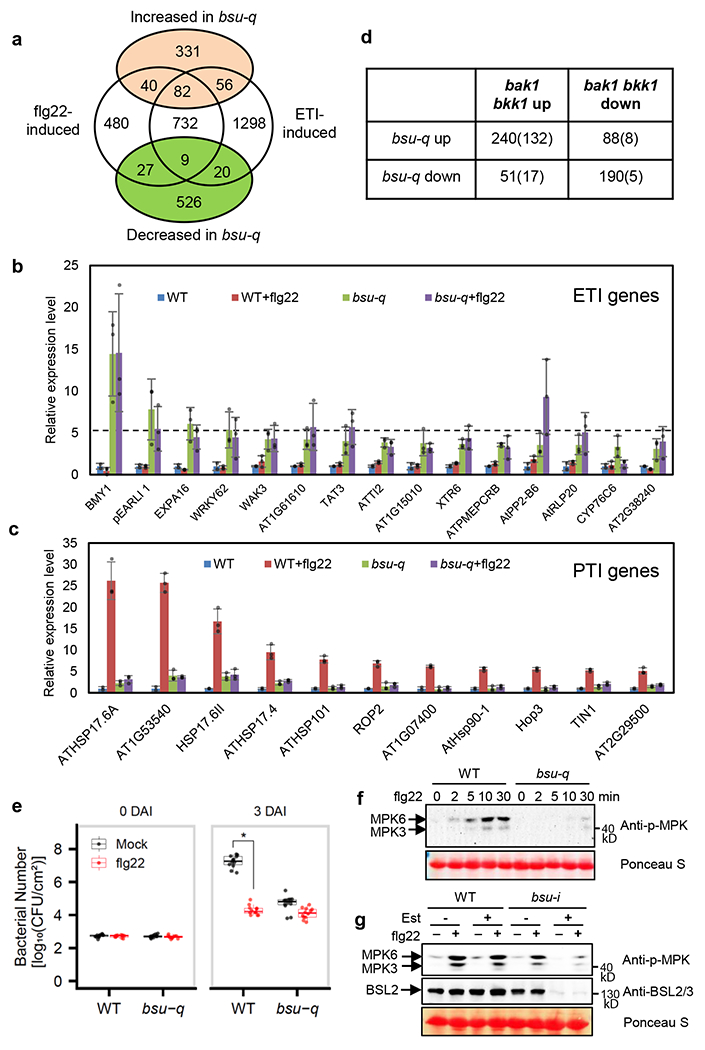
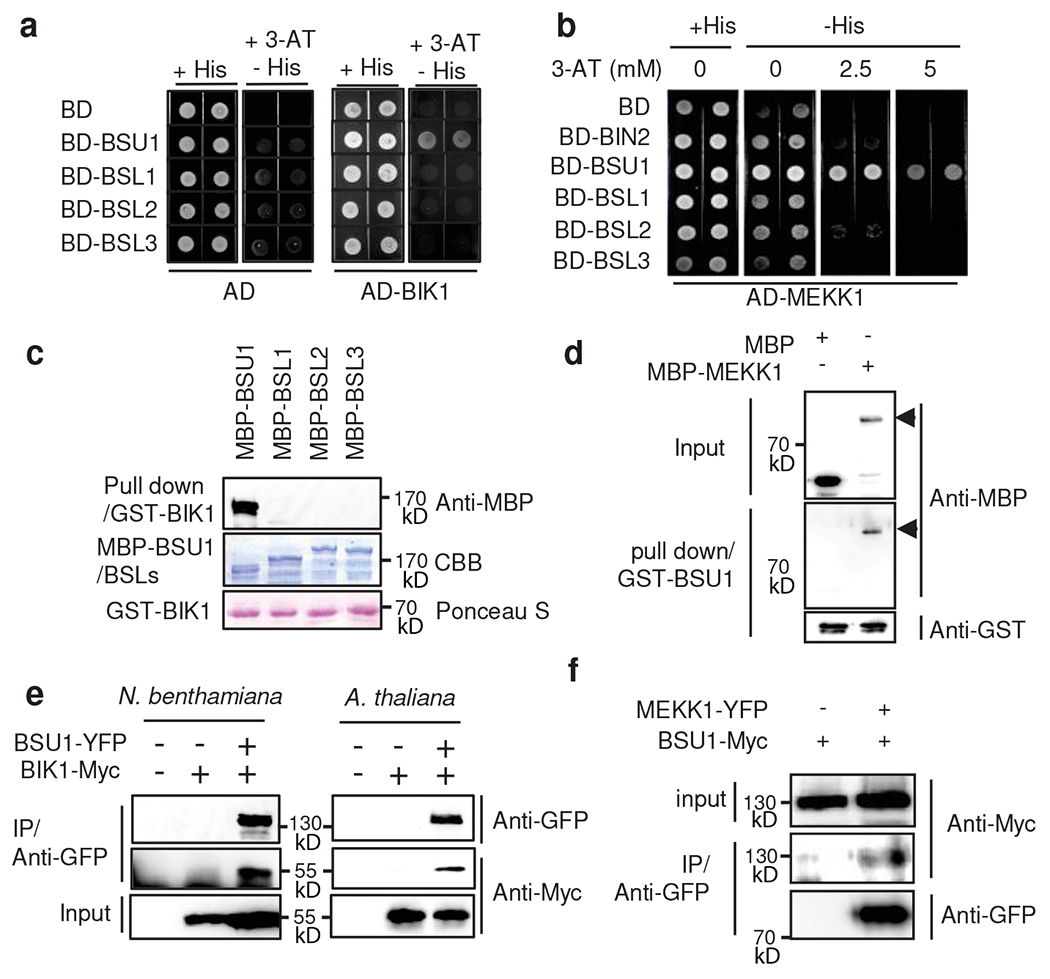
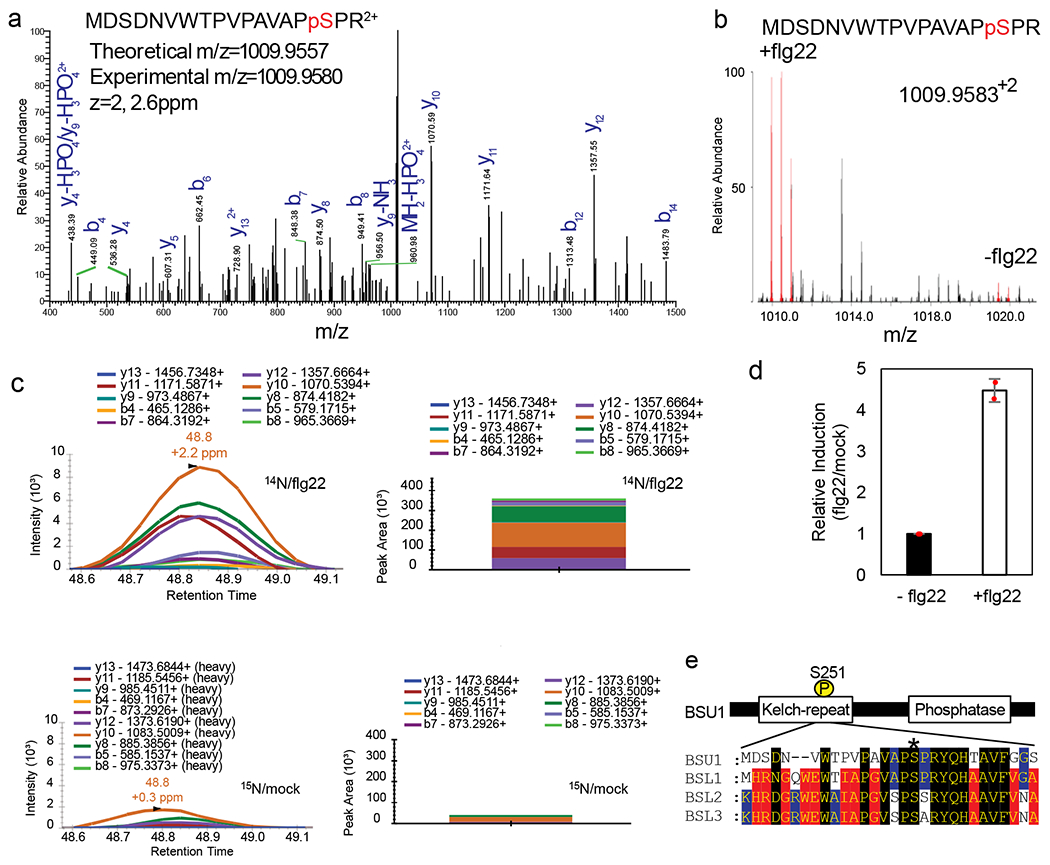
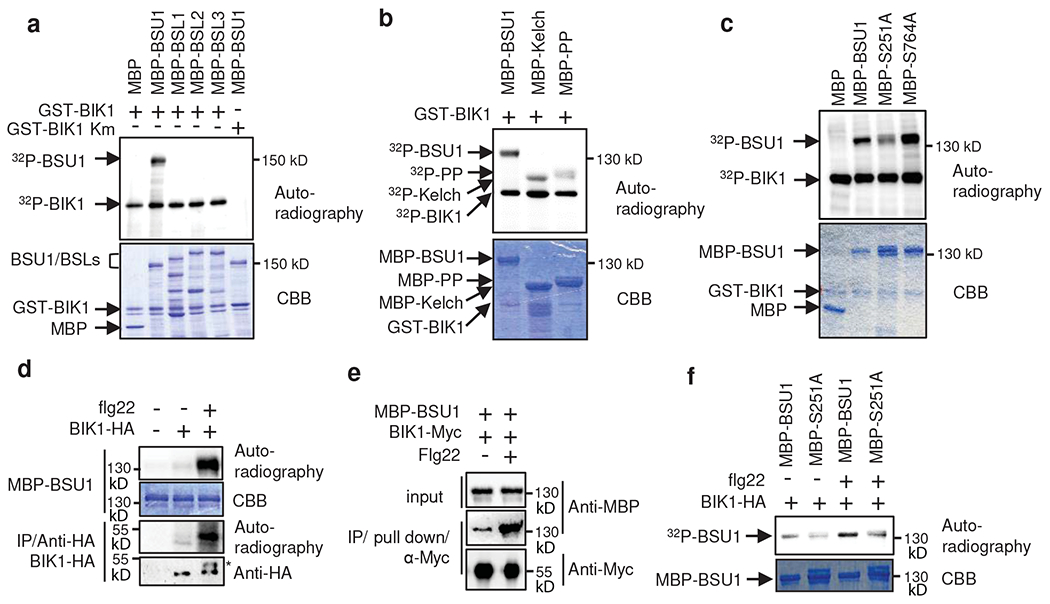
Hundreds of leucine-rich repeat receptor kinases (LRR-RKs) have evolved to control diverse processes of growth, development and immunity in plants, but the mechanisms that link LRR-RKs to distinct cellular responses are not understood. Here we show that two LRR-RKs, the brassinosteroid hormone receptor BRASSINOSTEROID INSENSITIVE 1 (BRI1) and the flagellin receptor FLAGELLIN SENSING 2 (FLS2), regulate downstream glycogen synthase kinase 3 (GSK3) and mitogen-activated protein (MAP) kinases, respectively, through phosphocoding of the BRI1-SUPPRESSOR1 (BSU1) phosphatase. BSU1 was previously identified as a component that inactivates GSK3s in the BRI1 pathway. We surprisingly found that the loss of the BSU1 family phosphatases activates effector-triggered immunity and impairs flagellin-triggered MAP kinase activation and immunity. The flagellin-activated BOTRYTIS-INDUCED KINASE 1 (BIK1) phosphorylates BSU1 at serine 251. Mutation of serine 251 reduces BSU1's ability to mediate flagellin-induced MAP kinase activation and immunity, but not its abilities to suppress effector-triggered immunity and interact with GSK3, which is enhanced through the phosphorylation of BSU1 at serine 764 upon brassinosteroid signalling. These results demonstrate that BSU1 plays an essential role in immunity and transduces brassinosteroid-BRI1 and flagellin-FLS2 signals using different phosphorylation sites. Our study illustrates that phosphocoding in shared downstream components provides signalling specificities for diverse plant receptor kinases.
数百个富含亮氨酸重复受体激酶(LRR-RK)进化而来,以控制植物生长、发育和免疫的各种过程,但将 LRR-RK 与不同的细胞反应联系起来的机制尚不清楚。在这里,我们表明,两种 LRR-RK,油菜素甾体激素受体 BRASSINOSTEROID INSENSITIVE 1(BRI1)和鞭毛蛋白受体 FLAGELLIN SENSING 2(FLS2),分别通过 BRASSINOSTEROID-SUPPRESSOR1(BSU1)磷酸酶的磷酸化编码来调节下游糖原合酶激酶 3(GSK3)和丝裂原激活蛋白(MAP)激酶。BSU1 先前被鉴定为一种在 BRI1 途径中使 GSK3 失活的成分。我们惊讶地发现,BSU1 家族磷酸酶的缺失激活了效应物触发的免疫,并损害了鞭毛蛋白触发的 MAP 激酶激活和免疫。鞭毛蛋白激活的 BOTRYTIS-INDUCED KINASE 1(BIK1)在丝氨酸 251 处磷酸化 BSU1。丝氨酸 251 的突变降低了 BSU1 介导鞭毛蛋白诱导的 MAP 激酶激活和免疫的能力,但不降低其抑制效应物触发的免疫和与 GSK3 相互作用的能力,BSU1 在油菜素信号转导时通过丝氨酸 764 的磷酸化增强了与 GSK3 的相互作用。这些结果表明,BSU1 在免疫中发挥重要作用,并通过不同的磷酸化位点转导油菜素-BRI1 和鞭毛蛋白-FLS2 信号。我们的研究表明,在共享下游成分中的磷酸编码为不同的植物受体激酶提供了信号特异性。