Aramaki Yoshihiro, Homma Yuuki, Mamizu Tetsuya, Kakizaki Fujiyasu
Department of Rehabilitation, Sendai Seiyo Gakuin College: 4-3-55 Nagamachi, Taihakuku, Sendai 982-0011, Japan.
Department of Physical Therapy, Facullty of Health Science Technology, Bunkyo Gakuin University, Japan.
J Phys Ther Sci. 2022 Jun;34(6):454-458. doi: 10.1589/jpts.34.454. Epub 2022 Jun 6.
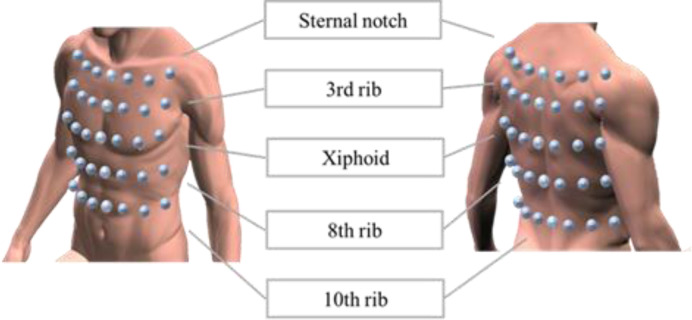
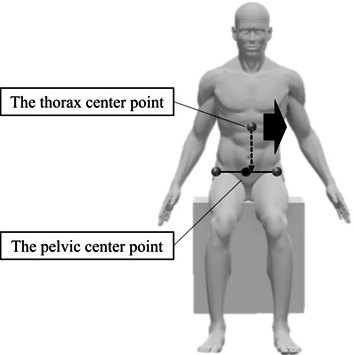
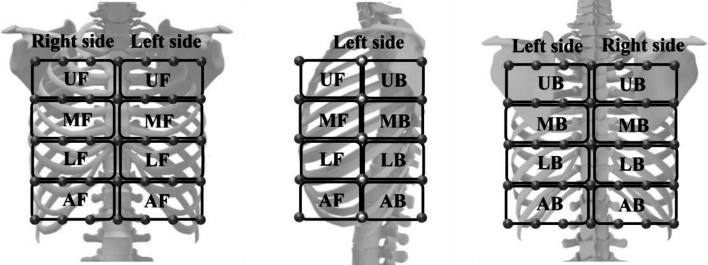
[Purpose] We analyzed the relationship between the degree of asymmetry in the shape of the thorax and postural changes in the frontal plane, and examined the mechanism that creates an asymmetry in the thoracic shape. [Participants and Methods] The participants included 19 healthy young males. We calculated the thoracic volume and lateral deviation from the amount of displacement of reflective markers attached to the thoracic area using the Vicon MX 3D-analysis system. [Results] Left-right differences were shown in each area of the thorax, and positive and negative correlations were found with the amount of lateral deviation of the thorax, which captured postural changes in the frontal plane. [Conclusion] The results of this study suggest that postural changes in the frontal plane are factors involved in the mechanism of left-right asymmetry formation in the thoracic shape.
[目的]我们分析了胸廓形状不对称程度与额状面姿势变化之间的关系,并研究了导致胸廓形状不对称的机制。[参与者与方法]参与者包括19名健康年轻男性。我们使用Vicon MX 3D分析系统,根据附着在胸部区域的反光标记的位移量计算胸廓容积和侧向偏差。[结果]胸廓各区域均显示出左右差异,并且发现与反映额状面姿势变化的胸廓侧向偏差量存在正相关和负相关。[结论]本研究结果表明,额状面的姿势变化是胸廓形状左右不对称形成机制中的相关因素。