Aramaki Yoshihiro, Kakizaki Fujiyasu, Kawata Shinichi, Omotehara Takuya, Itoh Masahiro
Department of Anatomy, Tokyo Medical University, Japan.
Department of Rehabilitation, Sendai Seiyo Gakuin College, Japan.
J Phys Ther Sci. 2021 Feb;33(2):118-124. doi: 10.1589/jpts.33.118. Epub 2021 Feb 13.
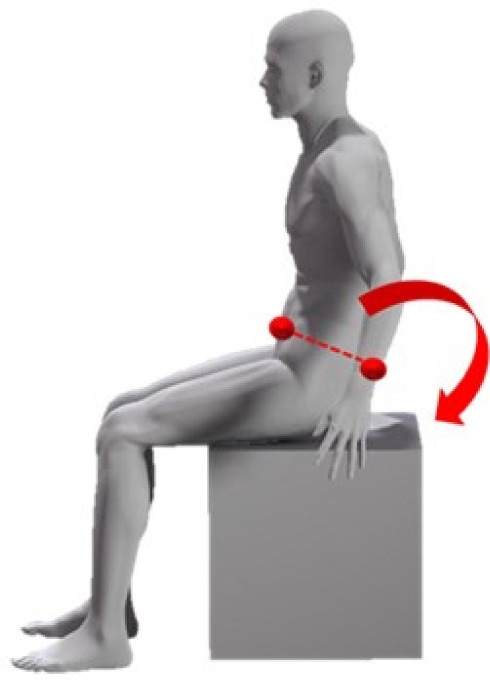
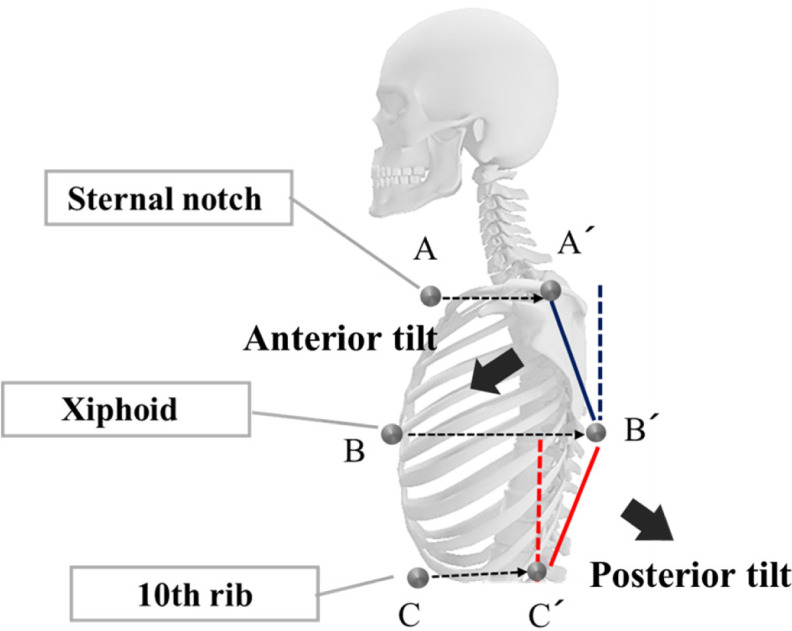
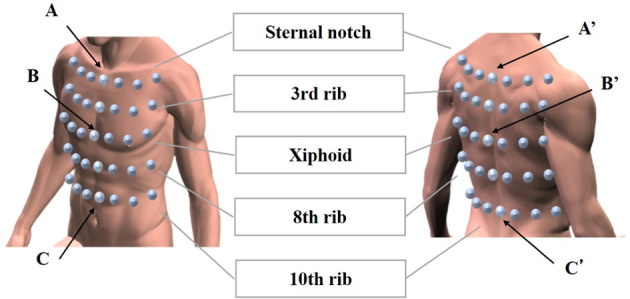
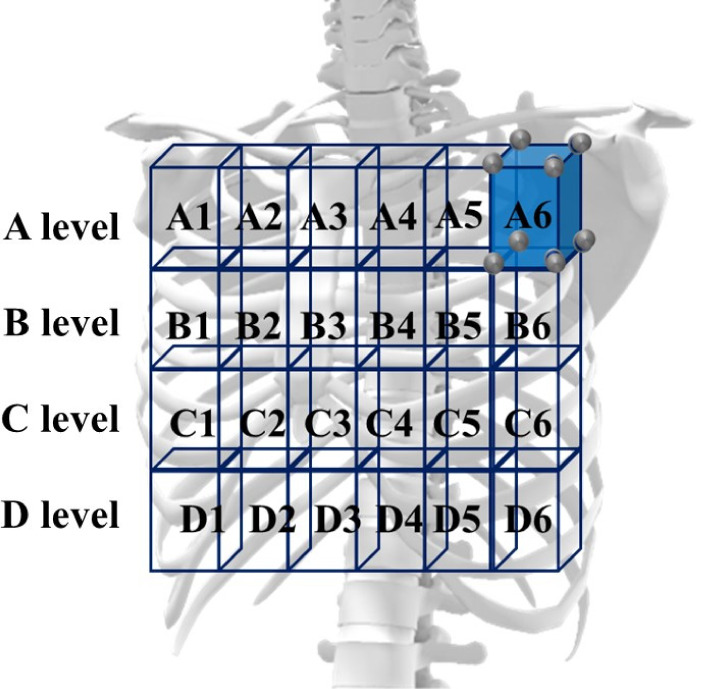
[Purpose] We investigated how differences in pelvic angle in the posterior pelvic tilt sitting posture simultaneously affect the thoracic morphology and the respiratory function. [Participants and Methods] The participants were 18 healthy young males. We positioned the pelvis at 0°, 10°, 20°, and 30° of posterior tilt, following which the thoracic expansion volume ratio, thoracic spine tilt angle, and respiratory function were measured. We calculated the thoracic volume and thoracic spine tilt angle by measuring the amount of displacement of reflective markers attached to the thoracic area using the Vicon MX 3D-analysis system. Respiratory function was measured by spirometry. [Results] The expansion volume ratio decreased significantly in response to 10-30° posterior pelvic tilt sitting at the mid-thorax and 30° posterior pelvic tilt sitting at the lowest thorax. The upper thoracic spine level showed a change in anterior tilt at 10-30° posterior pelvic tilt sitting, whereas the lower thoracic spine level showed a change in posterior tilt at 30° posterior pelvic tilt sitting. Respiratory function was significantly lower at 30° posterior pelvic tilt sitting than at 0° posterior pelvic tilt sitting. A positive correlation between thoracic expansion volume ratio and respiratory function was found at 30° posterior pelvic tilt sitting. [Conclusion] Changes in thoracic spine tilt angle due to posterior pelvic tilt sitting may restrict the expansion of thoracic motion during respiration, thereby affecting respiratory function.
[目的]我们研究了后倾坐姿下骨盆角度的差异如何同时影响胸廓形态和呼吸功能。[参与者与方法]参与者为18名健康年轻男性。我们将骨盆置于后倾0°、10°、20°和30°的位置,随后测量胸廓扩张容积比、胸椎倾斜角度和呼吸功能。我们使用Vicon MX 3D分析系统通过测量附着在胸部区域的反光标记的位移量来计算胸廓容积和胸椎倾斜角度。呼吸功能通过肺活量测定法进行测量。[结果]在中胸部后倾10 - 30°坐姿以及最低胸部后倾30°坐姿时,扩张容积比显著降低。上胸椎水平在骨盆后倾10 - 30°坐姿时显示前倾变化,而下胸椎水平在骨盆后倾30°坐姿时显示后倾变化。骨盆后倾30°坐姿时的呼吸功能显著低于骨盆后倾0°坐姿时。在骨盆后倾30°坐姿时,胸廓扩张容积比与呼吸功能之间存在正相关。[结论]后倾坐姿导致的胸椎倾斜角度变化可能会限制呼吸过程中胸廓运动的扩张,从而影响呼吸功能。