Xu Yongming, Jiang Qingqing, Xu Xiaoliang, Pu Shaofeng, Lv Yingying, Li Chen, Wu Junzhen, Du Dongping
Department of Pain Management Center, Shanghai Jiao Tong University Affiliated Sixth People's Hospital, Shanghai, People's Republic of China.
Department of Neurology, Shanghai Jiao Tong University Affiliated Sixth People's Hospital, Shanghai, People's Republic of China.
J Pain Res. 2022 Jun 7;15:1659-1667. doi: 10.2147/JPR.S365954. eCollection 2022.
Neuropathic pain is the most common clinical sign of complex regional pain syndrome (CRPS). Currently, lumbar sympathetic block (LSB) is commonly utilized in lower extremity CRPS that has failed to respond to medication therapy and physical therapy, but its effectiveness is unknown. The tourniquet ischemia test (IT) can distinguish between two types of CRPS: IT-positive CRPS and IT-negative CRPS.
The aim of the study was to investigate whether LSB improves pain scores in patients with lower extremity CRPS-1 and to screen factors to predict its efficacy.
Prospective clinical observational study.
Pain management center.
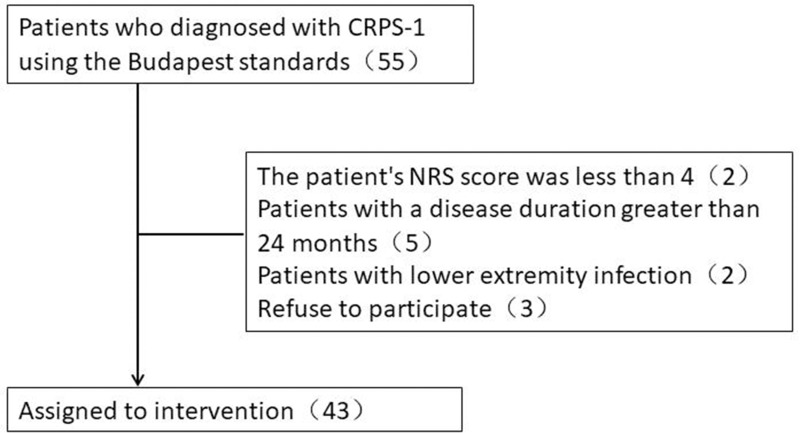
Forty-three patients diagnosed with lower extremity CRPS-1 using the Budapest criteria were included as participants.
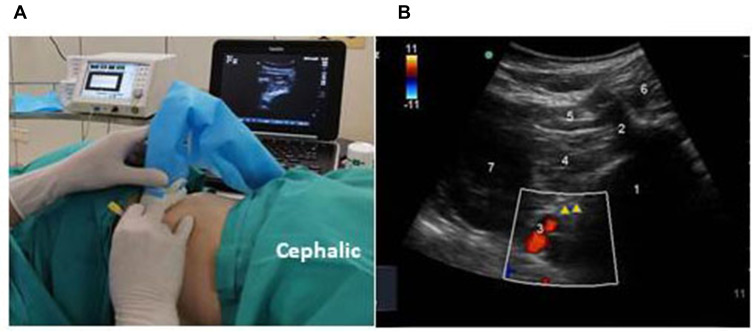
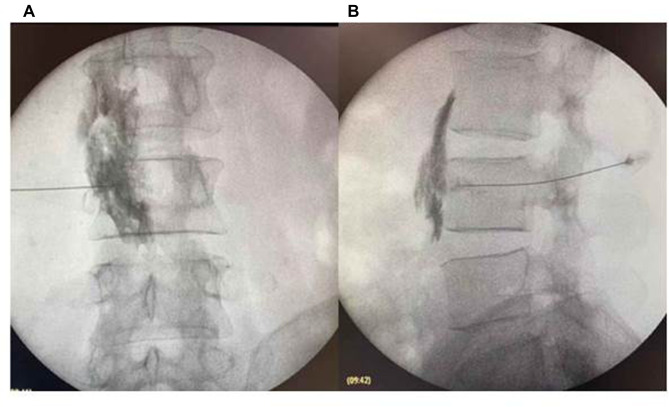
Forty-three CRPS-1 patients were treated with LSB therapy, and all of them underwent a tourniquet ischemia test (IT) before undergoing LSB therapy. LSB therapy was performed using a combination of ultrasonography and fluoroscopy. Then, numeric rating scale (NRS) scores and the symptom relief rates of patients were evaluated at 1, 4, and 12 weeks. Finally, peripheral blood inflammatory cytokine samples were collected before and after the LSB treatment.
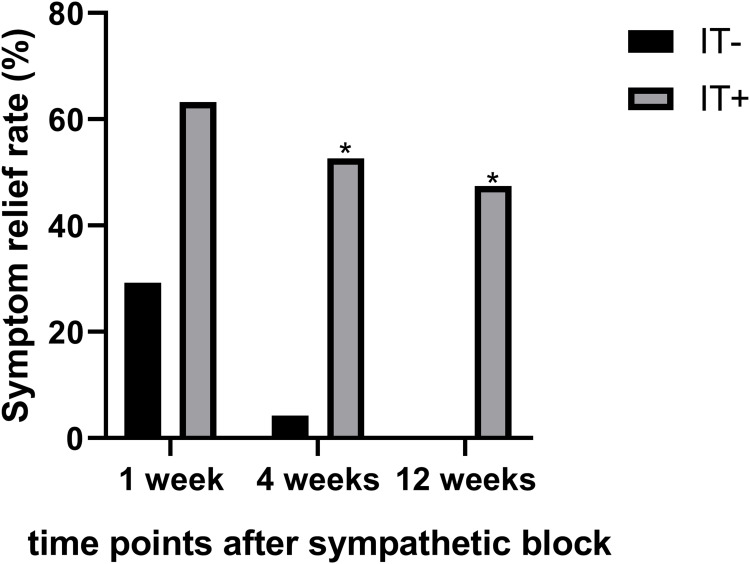
At 4 weeks after the treatment, the total effective symptom relief rate of LSB on CRPS-1 was 25.6% (11/43), with 52.6% (10/19) of IT(+) patients and 4.2% (1/24) of IT(-) patients. There was a significant difference between the IT(-) and IT(+) groups (P = 0.001). The multivariate binary logistic regression analysis revealed that the response to the tourniquet IT was the only significant independent predictor of sympathetic block success (p = 0.007).
Tourniquet IT is a simple, safe and effective test to distinguish patients with lower extremity CRPS-1. The response to the tourniquet IT is a reliable predictor of LSB effectiveness in lower extremity CRPS-1 patients.
神经性疼痛是复杂性区域疼痛综合征(CRPS)最常见的临床症状。目前,腰交感神经阻滞(LSB)常用于对药物治疗和物理治疗无效的下肢CRPS,但它的有效性尚不清楚。止血带缺血试验(IT)可区分两种类型的CRPS:IT阳性CRPS和IT阴性CRPS。
本研究旨在调查LSB是否能改善下肢CRPS-1患者的疼痛评分,并筛选预测其疗效的因素。
前瞻性临床观察研究。
疼痛管理中心。
纳入43例符合布达佩斯标准诊断为下肢CRPS-1的患者作为参与者。
43例CRPS-1患者接受LSB治疗,所有患者在接受LSB治疗前均进行了止血带缺血试验(IT)。LSB治疗采用超声和荧光透视相结合的方法。然后,在1、4和12周时评估患者的数字评分量表(NRS)评分和症状缓解率。最后,在LSB治疗前后采集外周血炎症细胞因子样本。
治疗后4周,LSB对CRPS-1的总有效症状缓解率为25.6%(11/43),其中IT(+)患者为52.6%(10/19),IT(-)患者为4.2%(1/24)。IT(-)组和IT(+)组之间存在显著差异(P = 0.001)。多因素二元逻辑回归分析显示,止血带IT反应是交感神经阻滞成功的唯一显著独立预测因素(p = 0.007)。
止血带IT是一种简单、安全、有效的区分下肢CRPS-1患者的试验。止血带IT反应是下肢CRPS-1患者LSB有效性的可靠预测指标。