Govil Gaurav, Tomar Lavindra, Dhawan Pawan
Department of Orthopaedics, Max Super Speciality Hospital, Patparganj, Delhi, IND.
Cureus. 2022 May 12;14(5):e24939. doi: 10.7759/cureus.24939. eCollection 2022 May.
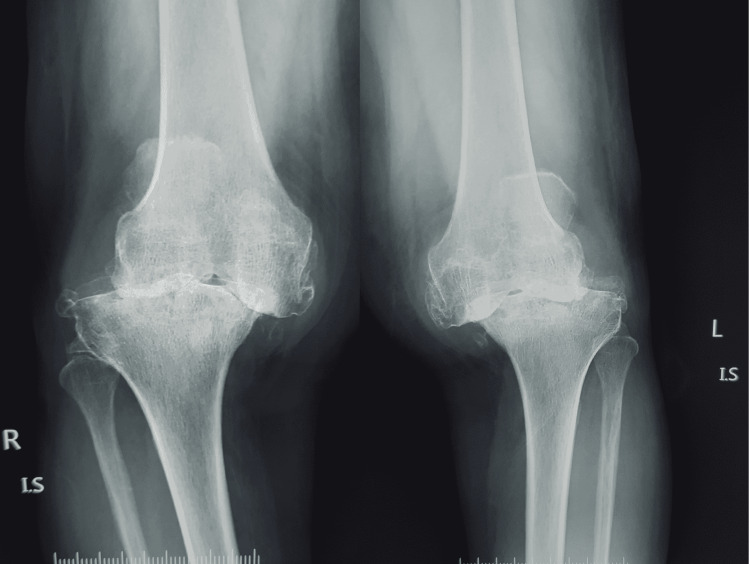
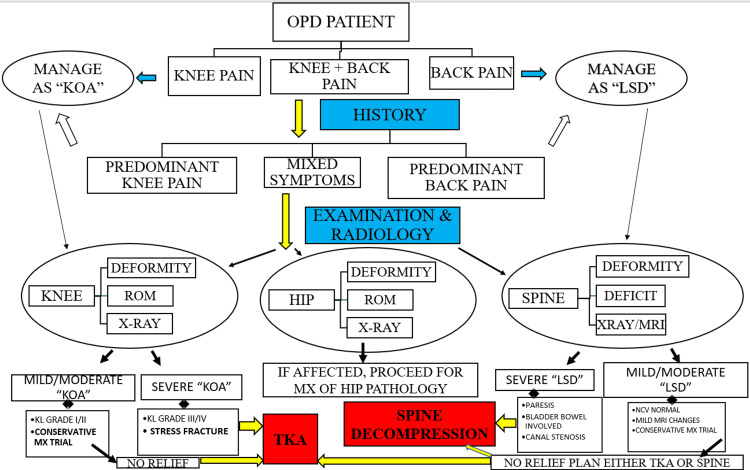
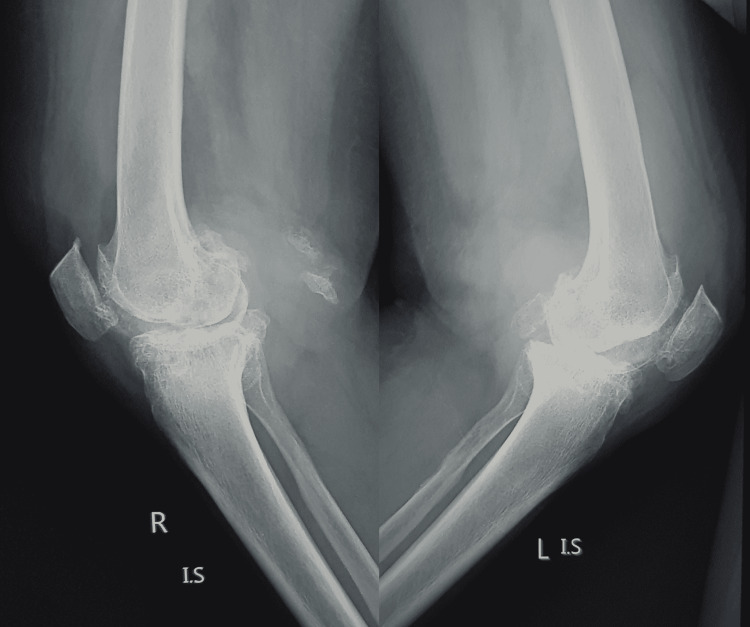
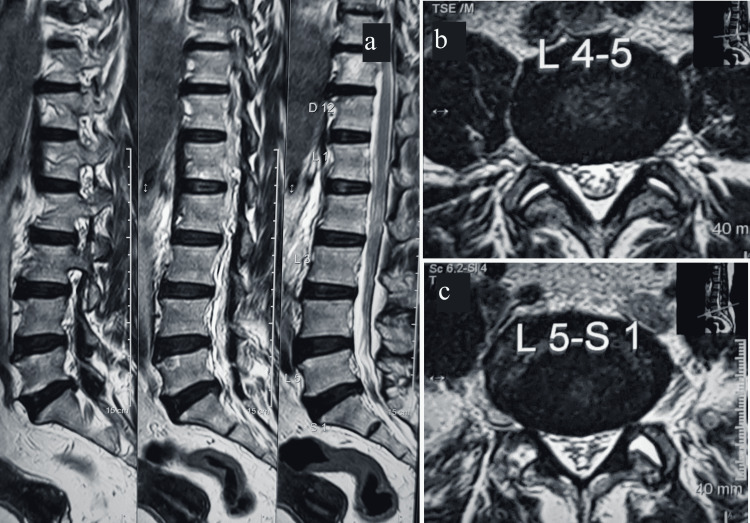
The elderly present with progressive degenerative osteoarthritis of the knee and lumbar spine degeneration (LSD). The coexistent conditions when presented concurrently become challenging for the clinicians and surgeons, as well as determining the predominant source of the underlying pain generation factor. The concurrent presentation of a significant knee and low back pain poses challenges in decision-making for treatment with management being normally individualized. The review narrates the different concepts used for the assessment of knee-spine syndrome. The prime factor for the pain needs to be ascertained by evaluating the deformity of the lumbar spine and the knees to address the causative factor appropriately. A thorough history, detailed examination, and supplemental diagnostic testing will differentiate the clinical entities and guide the treatment. However, a misdiagnosis may need a secondary site surgery and further treatment to alleviate the pain. Clinicians have been challenged while differentiating between the knee and spine pathology to target prime pain generator factors for adequate pain relief, improved functional outcomes, and substantial patient satisfaction. We present our strategy for the management of knee-spine syndrome. The protocols utilized to manage the clinical scenario have been reviewed and discussed. Clinical pearls to identify and treat the symptomatic concurrent knee-spine degeneration are presented. There is still a lack of consensus on the concurrent knee-spine degenerative pathology and its management strategy. The dilemma persists, and a case-based approach needs to be adopted by surgeons.
老年人患有膝关节进行性退行性骨关节炎和腰椎退变(LSD)。当这些共存疾病同时出现时,对于临床医生和外科医生来说都具有挑战性,同时也难以确定潜在疼痛产生因素的主要来源。膝关节和下背部同时出现明显疼痛给治疗决策带来了挑战,治疗通常需要个体化。本文综述了用于评估膝-脊柱综合征的不同概念。需要通过评估腰椎和膝关节的畸形来确定疼痛的主要因素,以便恰当地解决致病因素。全面的病史、详细的检查和补充诊断测试将区分临床病症并指导治疗。然而,误诊可能需要进行二次手术和进一步治疗以减轻疼痛。在区分膝关节和脊柱病变以确定主要疼痛产生因素以实现充分的疼痛缓解、改善功能结果和提高患者满意度方面,临床医生一直面临挑战。我们介绍了我们治疗膝-脊柱综合征的策略。对用于处理这种临床情况的方案进行了综述和讨论。还介绍了识别和治疗有症状的膝-脊柱并发退变的临床要点。对于膝-脊柱并发退行性病变及其管理策略仍缺乏共识。这种困境依然存在,外科医生需要采用基于病例的方法。