Pottier Mathieu, Le Thi Van Anh, Primard-Brisset Catherine, Marion Jessica, Bianchi Michele, Victor Cindy, Déjardin Annabelle, Pilate Gilles, Thomine Sébastien
Institut de Biologie Intégrative de la Cellule, CNRS, Avenue de la Terrasse, 91198 Gif-sur-Yvette, France.
Current affiliation: Institute for Molecular Physiology, Heinrich-Heine-University Düsseldorf, Düsseldorf 40225, Germany.
Mol Biol Evol. 2022 Jun 14;39(6). doi: 10.1093/molbev/msac129.
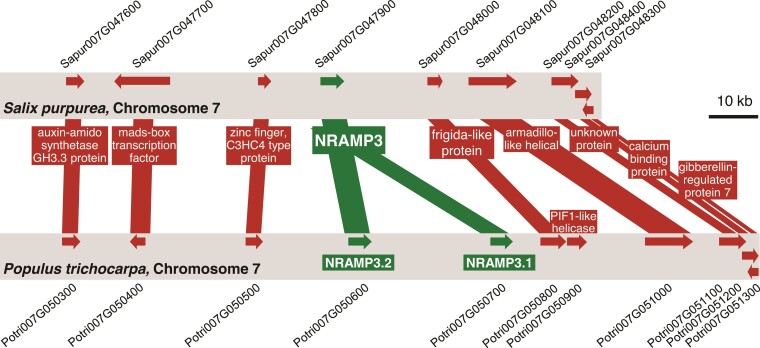
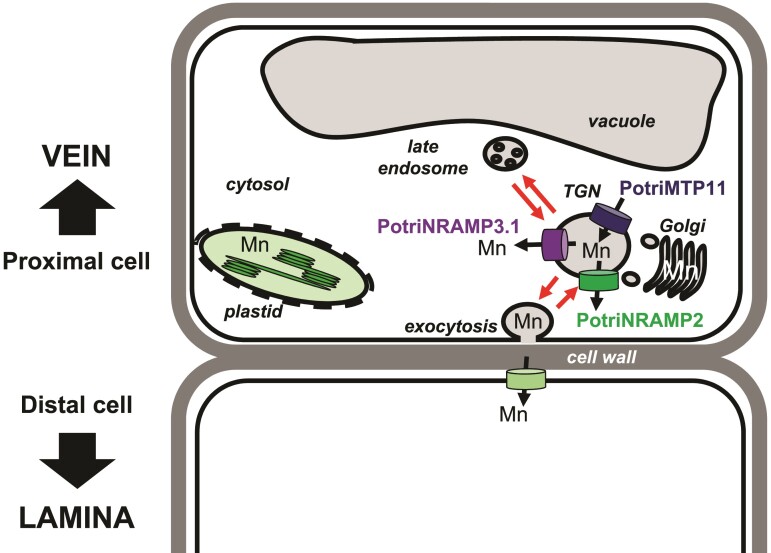
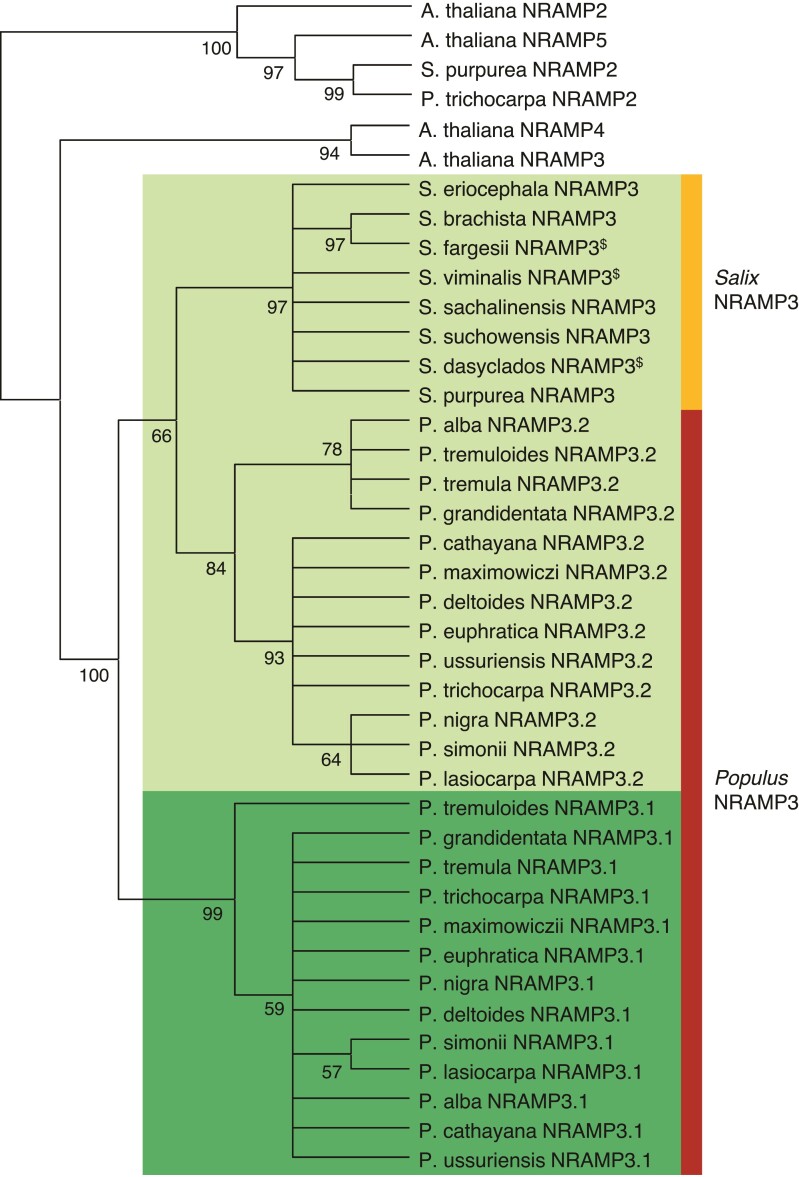
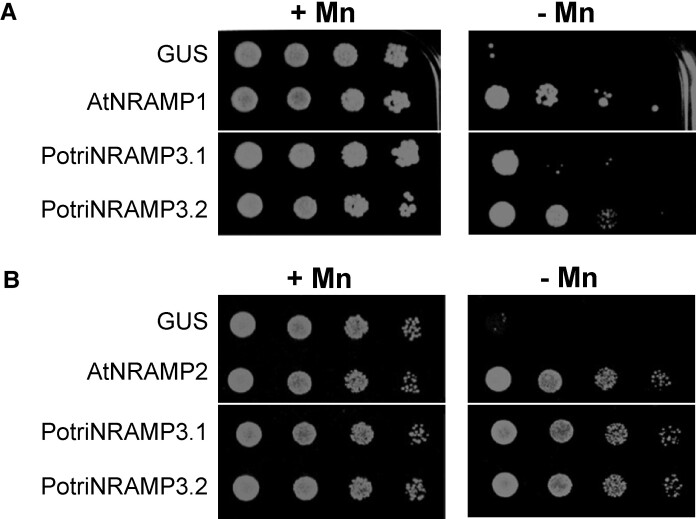
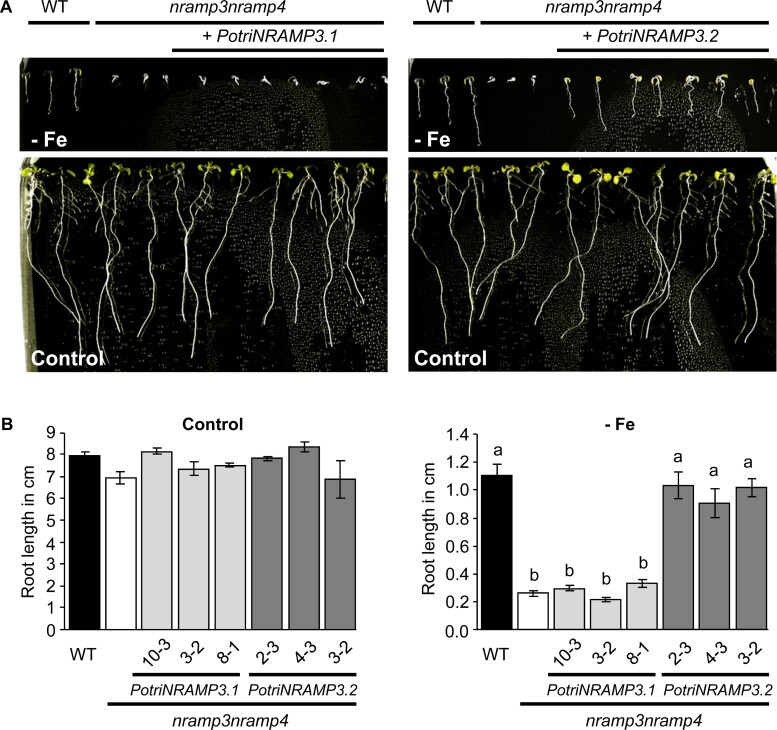
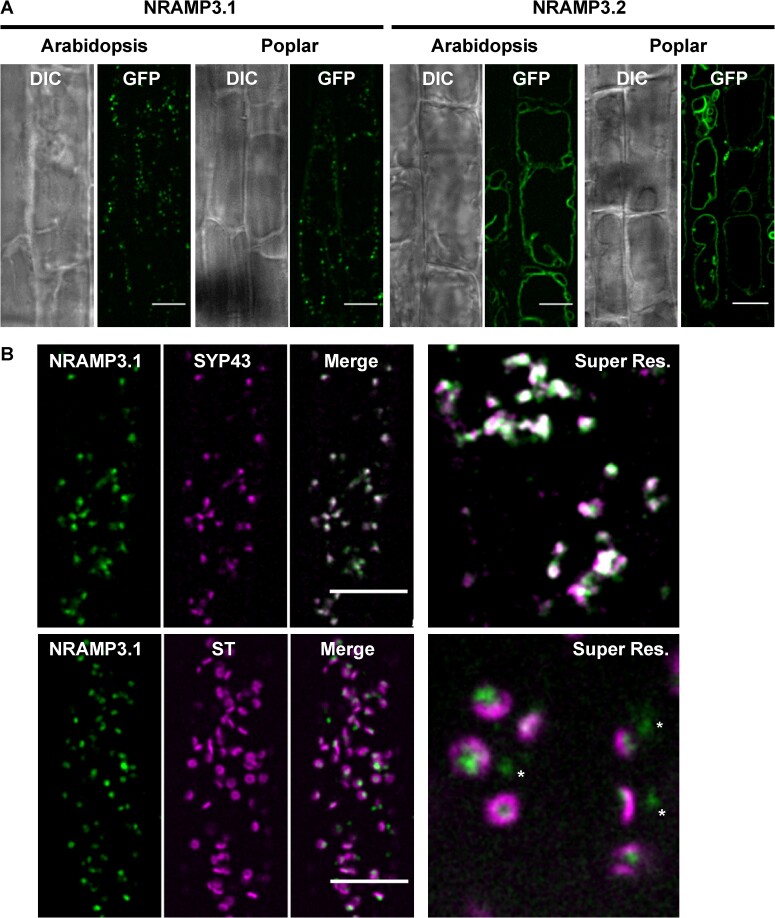
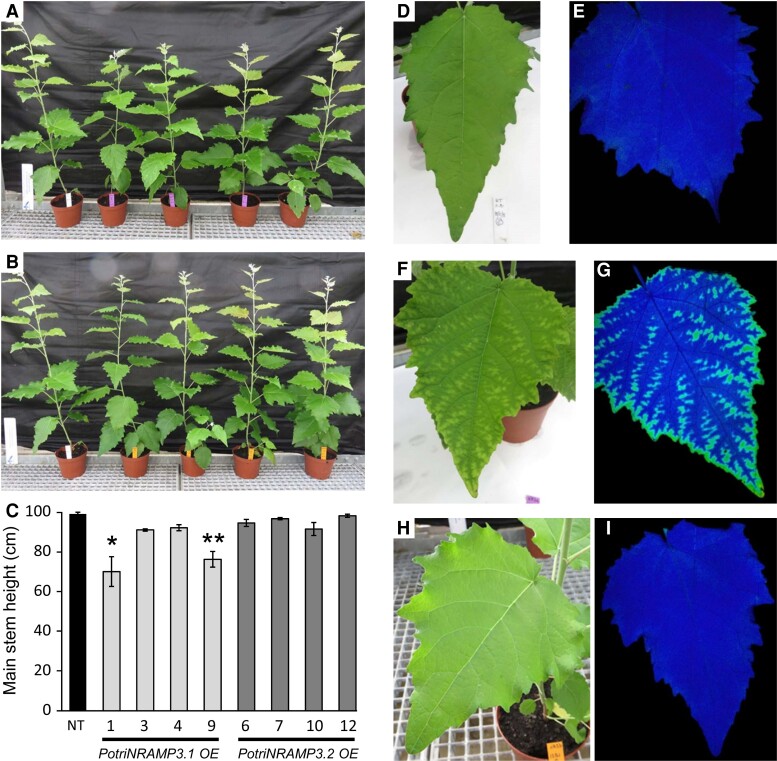
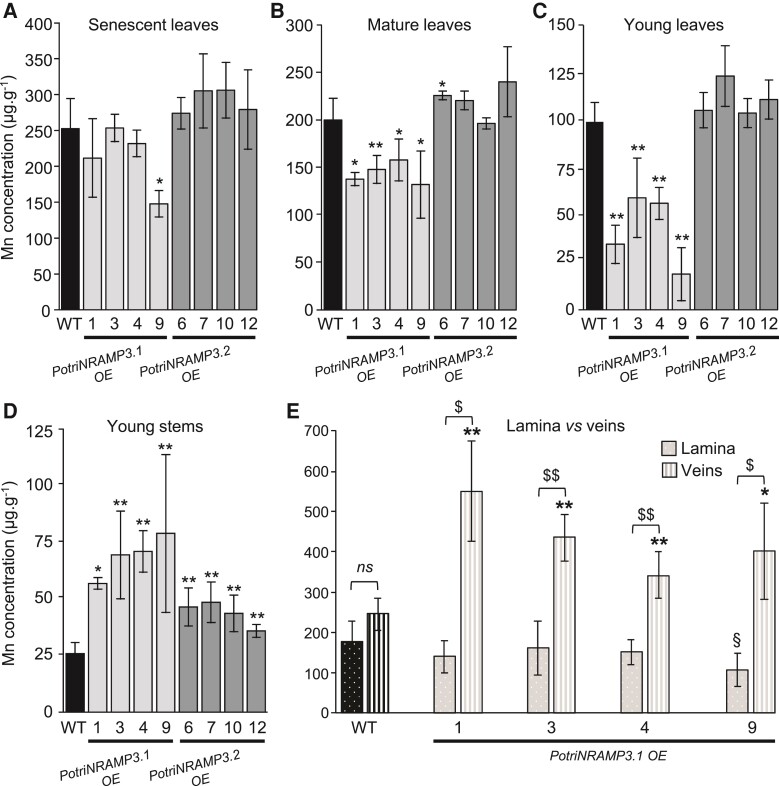
Transition metals are essential for a wealth of metabolic reactions, but their concentrations need to be tightly controlled across cells and cell compartments, as metal excess or imbalance has deleterious effects. Metal homeostasis is achieved by a combination of metal transport across membranes and metal binding to a variety of molecules. Gene duplication is a key process in evolution, as emergence of advantageous mutations on one of the copies can confer a new function. Here, we report that the poplar genome contains two paralogues encoding NRAMP3 metal transporters localized in tandem. All Populus species analyzed had two copies of NRAMP3, whereas only one could be identified in Salix species indicating that duplication occurred when the two genera separated. Both copies are under purifying selection and encode functional transporters, as shown by expression in the yeast heterologous expression system. However, genetic complementation revealed that only one of the paralogues has retained the original function in release of metals stored in the vacuole previously characterized in A. thaliana. Confocal imaging showed that the other copy has acquired a distinct localization to the Trans Golgi Network (TGN). Expression in poplar suggested that the copy of NRAMP3 localized on the TGN has a novel function in the control of cell-to-cell transport of manganese. This work provides a clear case of neo-functionalization through change in the subcellular localization of a metal transporter as well as evidence for the involvement of the secretory pathway in cell-to-cell transport of manganese.
过渡金属对于大量的代谢反应至关重要,但它们在细胞和细胞区室中的浓度需要严格控制,因为金属过量或失衡会产生有害影响。金属稳态是通过跨膜金属运输和金属与多种分子结合来实现的。基因复制是进化中的一个关键过程,因为其中一个拷贝上有利突变的出现可以赋予新功能。在这里,我们报告杨树基因组包含两个串联定位的编码NRAMP3金属转运蛋白的旁系同源物。所有分析的杨树物种都有两个NRAMP3拷贝,而在柳树物种中只能鉴定到一个,这表明在这两个属分离时发生了复制。两个拷贝都受到纯化选择并编码功能性转运蛋白,这在酵母异源表达系统中的表达中得到了证明。然而,遗传互补表明,只有一个旁系同源物保留了在拟南芥中先前表征的释放液泡中储存的金属的原始功能。共聚焦成像显示另一个拷贝在反式高尔基体网络(TGN)中有不同的定位。杨树中的表达表明,定位在TGN上的NRAMP3拷贝在控制锰的细胞间运输方面具有新功能。这项工作通过金属转运蛋白亚细胞定位的变化提供了一个新功能化的明确案例,以及分泌途径参与锰细胞间运输的证据。