Harrison J, Morris D L, Haynes J, Hitchcock A, Womack C, Wherry D C
Gut. 1987 Mar;28(3):267-71. doi: 10.1136/gut.28.3.267.
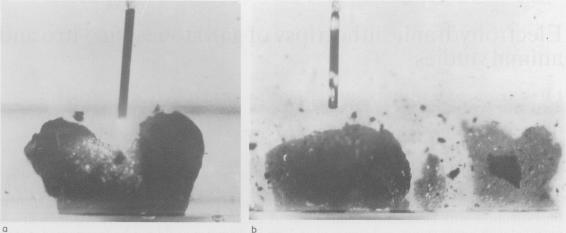
Electrohydraulic lithotripsy of human gall stones was investigated in vitro in a bath of saline and in a saline perfused bile duct. The technique was effective--only two stones could not be shattered. Electrohydraulic lithotripsy power requirement correlated with mechanical strength of stones, but not with biochemical composition. A trend toward higher power requirement was recorded with larger stones and stones over 2 cm in diameter could not be fragmented. Safety studies indicated that electrohydraulic lithotripsy was safe, provided the probe tip was not in contact with the bile duct wall. In vivo studies did not show any late effects after 10 days. Electrohydraulic lithotripsy is likely to be useful in the management of biliary calculi.
在体外的盐水浴和盐水灌注的胆管中对人体胆结石进行了液电碎石术研究。该技术是有效的——只有两块结石未能被击碎。液电碎石术的能量需求与结石的机械强度相关,但与生化成分无关。记录到结石越大能量需求越高的趋势,直径超过2厘米的结石无法被击碎。安全性研究表明,只要探头尖端不接触胆管壁,液电碎石术就是安全的。体内研究显示10天后未出现任何迟发效应。液电碎石术可能对胆管结石的治疗有用。