Department of Dermatology, University of Turku and Turku University Hospital, Hämeentie 11 TE6, 20520, Turku, Finland.
FICAN West Cancer Research Laboratory, University of Turku and Turku University Hospital, Turku, Finland.
Sci Rep. 2022 Jun 14;12(1):9876. doi: 10.1038/s41598-022-13696-y.
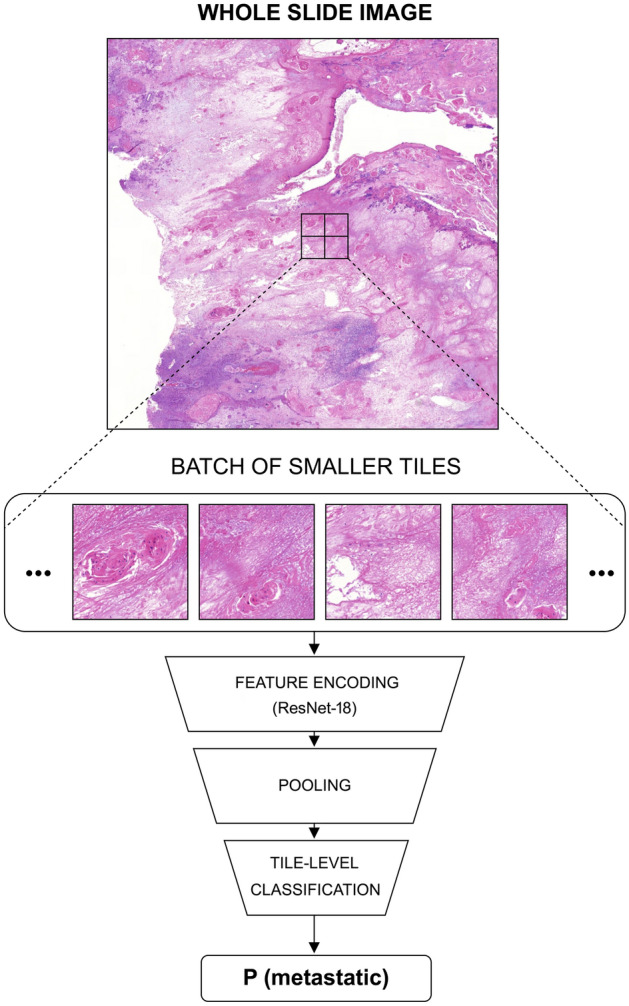
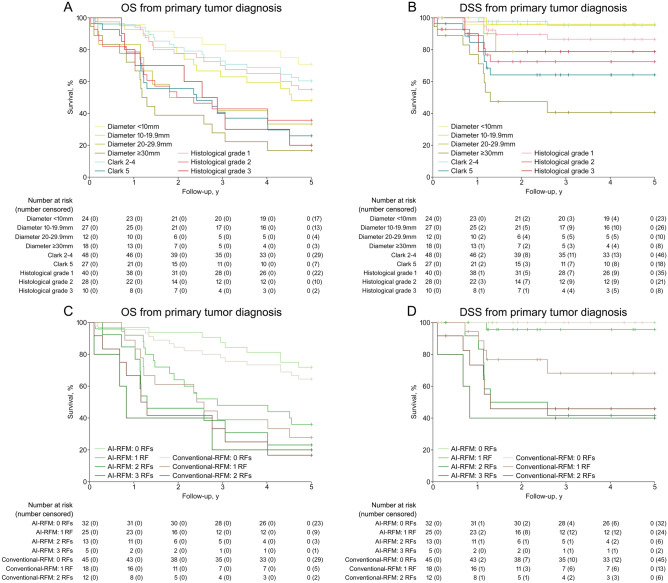
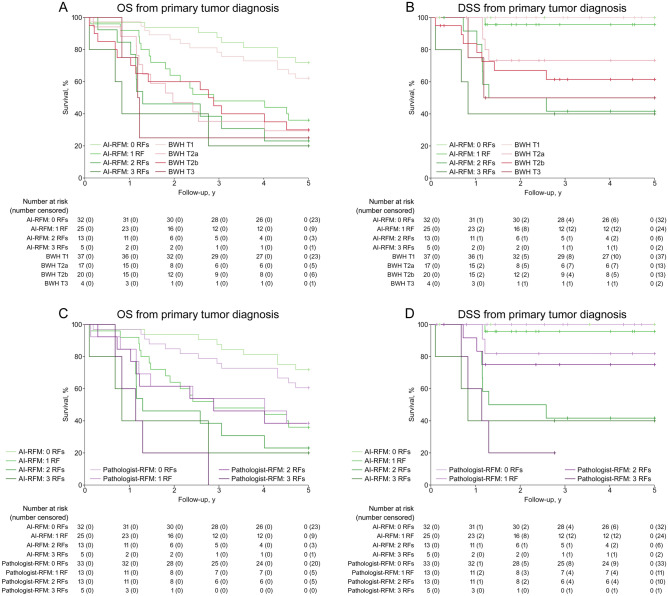
Cutaneous squamous cell carcinoma (cSCC) harbors metastatic potential and causes mortality. However, clinical assessment of metastasis risk is challenging. We approached this challenge by harnessing artificial intelligence (AI) algorithm to identify metastatic primary cSCCs. Residual neural network-architectures were trained with cross-validation to identify metastatic tumors on clinician annotated, hematoxylin and eosin-stained whole slide images representing primary non-metastatic and metastatic cSCCs (n = 104). Metastatic primary tumors were divided into two subgroups, which metastasize rapidly (≤ 180 days) (n = 22) or slowly (> 180 days) (n = 23) after primary tumor detection. Final model was able to predict whether primary tumor was non-metastatic or rapidly metastatic with slide-level area under the receiver operating characteristic curve (AUROC) of 0.747. Furthermore, risk factor (RF) model including prediction by AI, Clark's level and tumor diameter provided higher AUROC (0.917) than other RF models and predicted high 5-year disease specific survival (DSS) for patients with cSCC with 0 or 1 RFs (100% and 95.7%) and poor DSS for patients with cSCCs with 2 or 3 RFs (41.7% and 40.0%). These results indicate, that AI recognizes unknown morphological features associated with metastasis and may provide added value to clinical assessment of metastasis risk and prognosis of primary cSCC.
皮肤鳞状细胞癌 (cSCC) 具有转移潜能并导致死亡。然而,临床评估转移风险具有挑战性。我们通过利用人工智能 (AI) 算法来识别转移性原发性 cSCC 来解决这一挑战。使用交叉验证对残留神经网络架构进行训练,以识别临床医生注释的、代表原发性非转移性和转移性 cSCC 的苏木精和伊红染色全幻灯片图像上的转移性肿瘤 (n = 104)。转移性原发性肿瘤分为两个亚组,即快速转移(≤180 天)(n = 22)或缓慢转移 (>180 天) (n = 23)。最终模型能够预测原发性肿瘤是否为非转移性或快速转移性,在幻灯片级别的接受者操作特征曲线 (AUROC) 中,其 AUC 为 0.747。此外,包括 AI 预测、Clark 分级和肿瘤直径在内的风险因素 (RF) 模型提供了更高的 AUC (0.917),优于其他 RF 模型,并预测了原发性 cSCC 患者具有 0 或 1 个 RF 的患者具有高 5 年疾病特异性生存率 (DSS) (100% 和 95.7%),而具有 2 或 3 个 RF 的患者具有差的 DSS (41.7% 和 40.0%)。这些结果表明,AI 识别出与转移相关的未知形态特征,并可能为原发性 cSCC 的转移风险评估和预后提供附加价值。