Ahmouda Kaouthar, Benhaoua Boubaker
Department of Process Engineering and Petrochemistry, Faculty of Technology, University of El Oued El Oued 39000 Algeria
Renewable Energy in Arid Zones Research Unit, University of El Oued El Oued 39000 Algeria.
RSC Adv. 2022 May 13;12(23):14593-14609. doi: 10.1039/d2ra01085b. eCollection 2022 May 12.
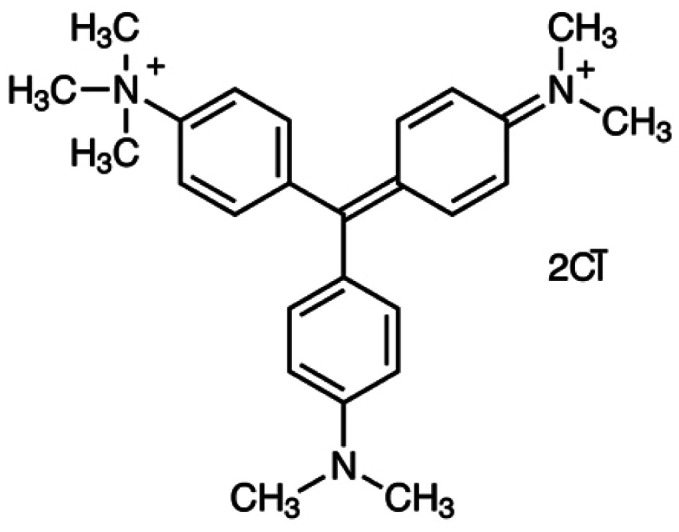
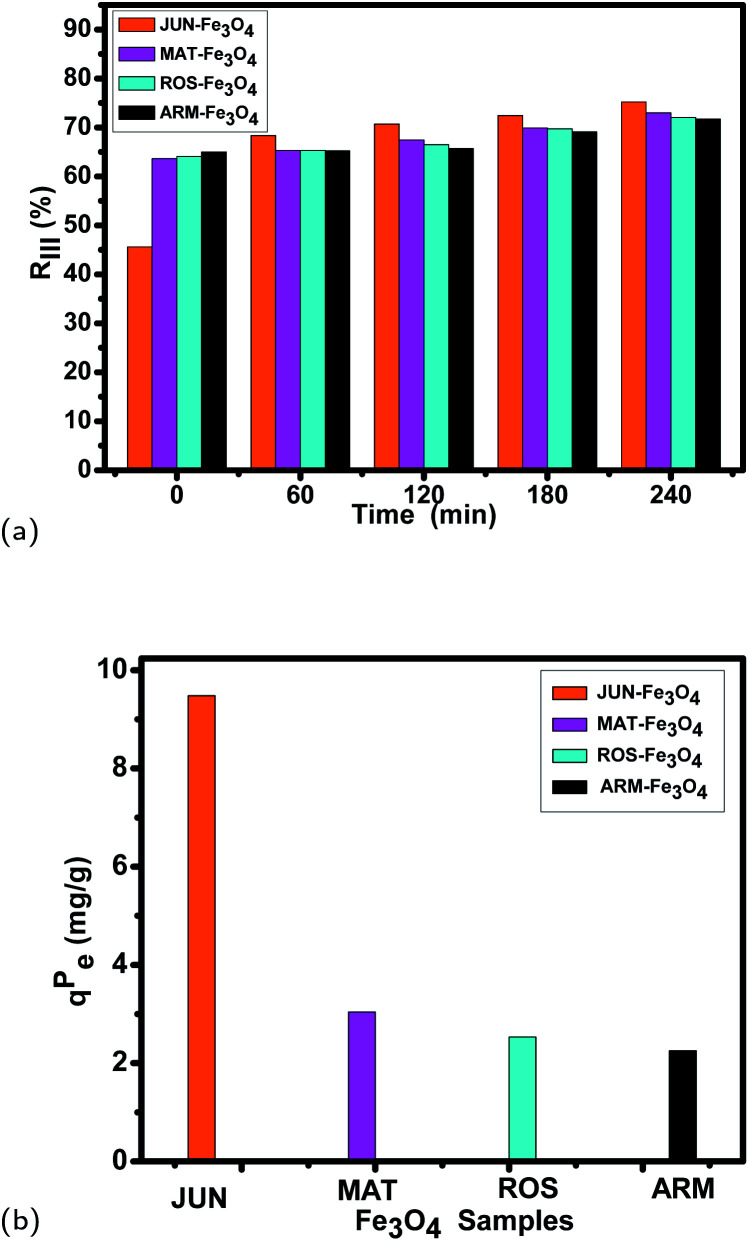
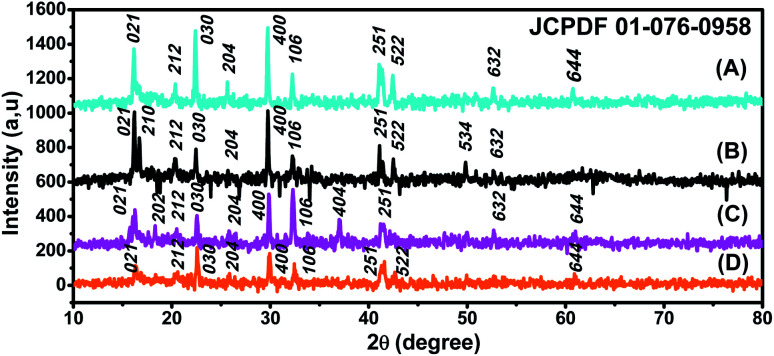
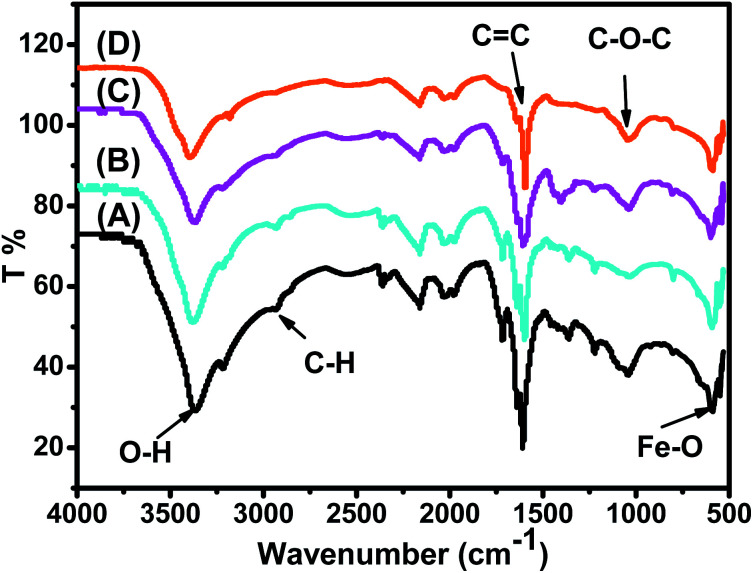
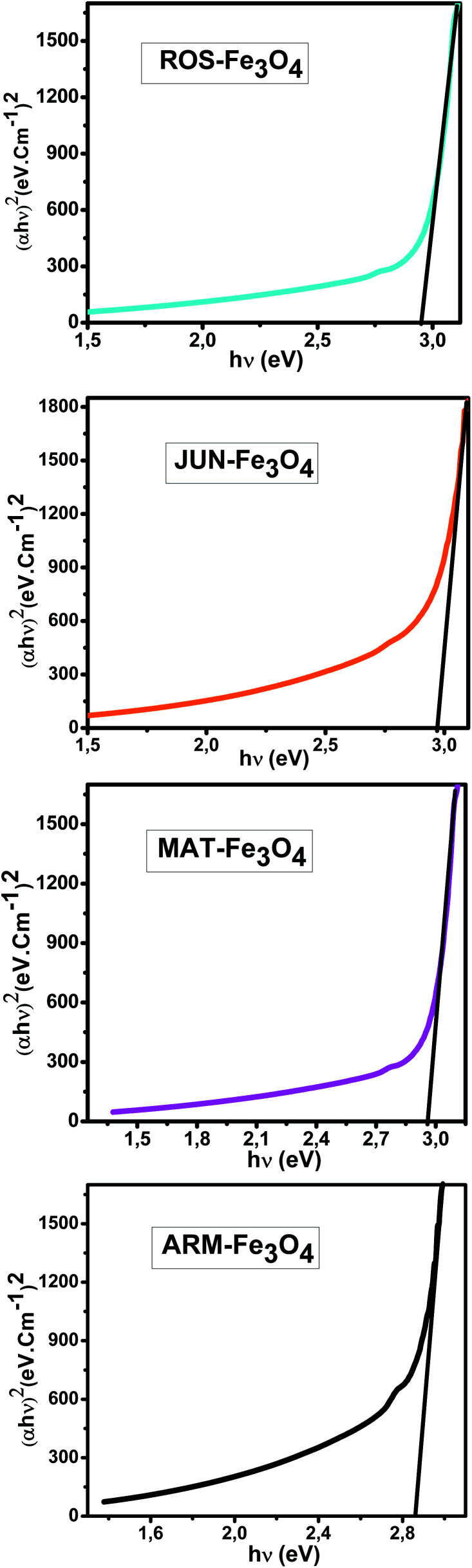
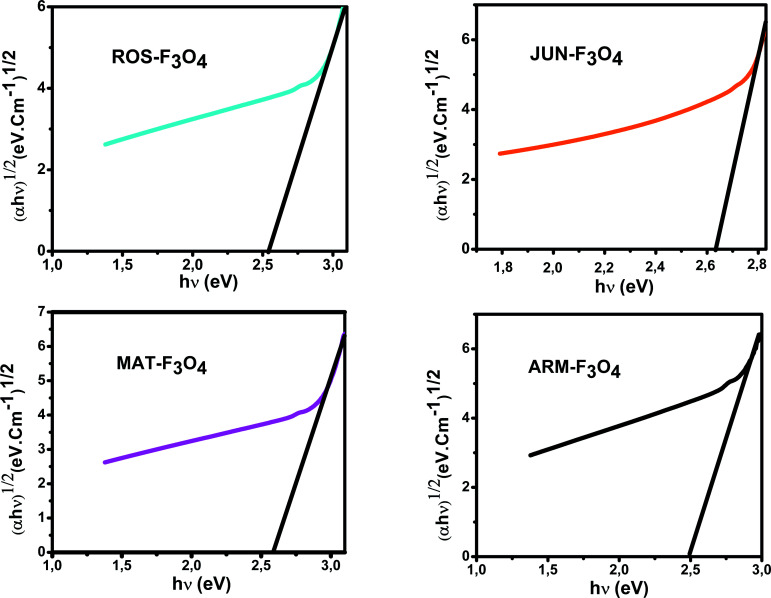
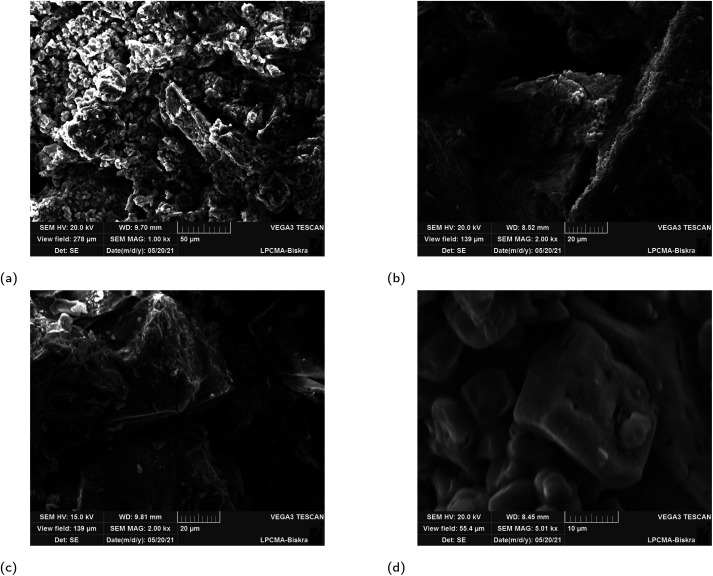
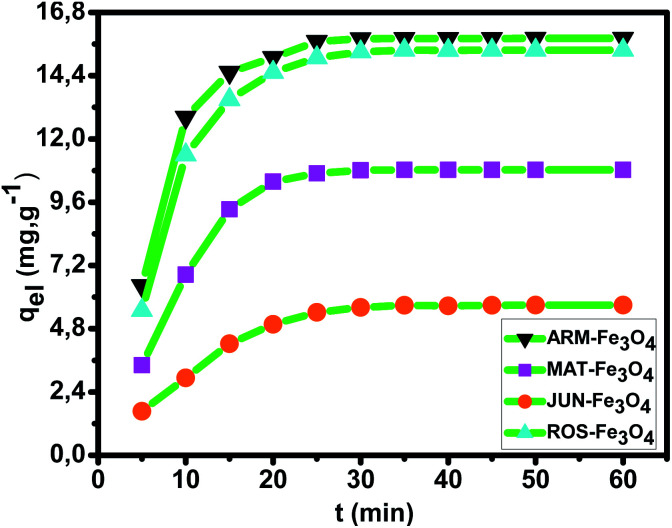
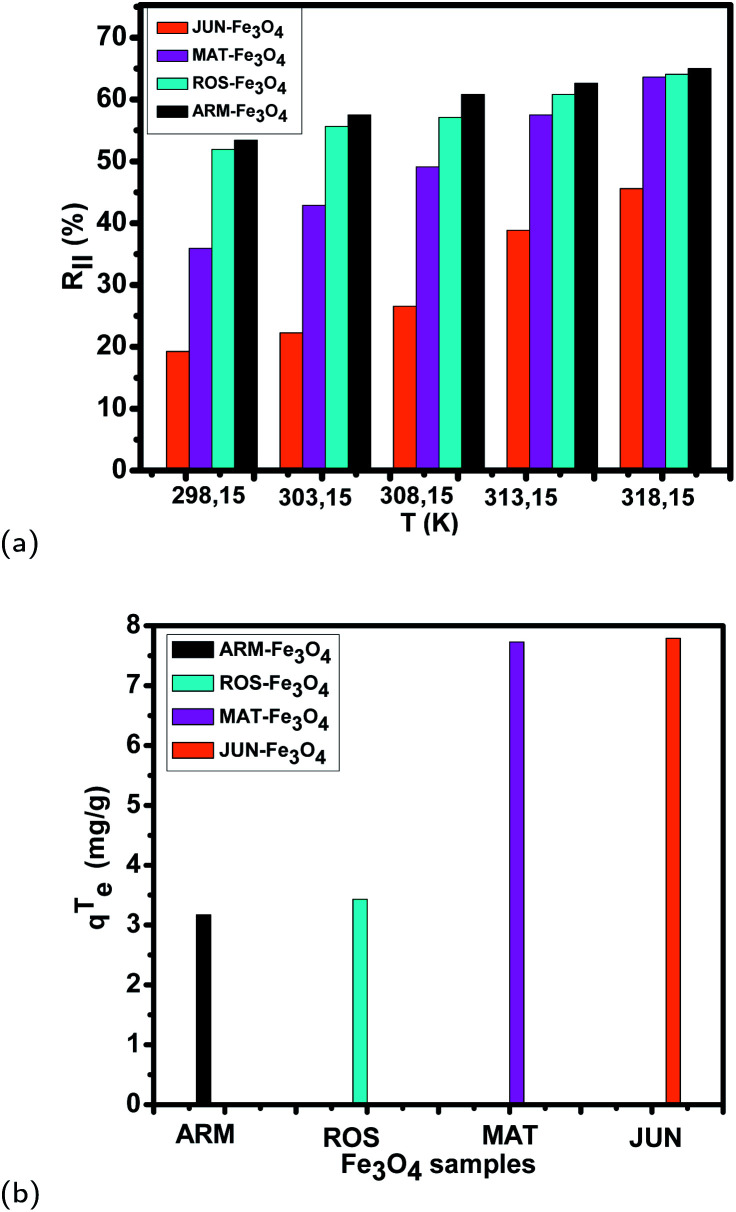
Four magnetite nanoparticle (NP) samples have been greenly synthesized using four aqueous plant extracts, which are (L), (L), (L), and (L). The pH of these extracts are acidic (5.25, 5.05, 4.63, and 3.69, respectively). The synthesized samples were characterized by XRD, SEM, ATR-FTIR, and UV-Vis. This work aimed to study the preferential and enhanced adsorption of methyl green (MG) on the four greenly synthesized FeO surfaces by coupling three processes: MG adsorption in ambient dark conditions as the first process, followed by the thermocatalysis of the MG/FeO residual solution in the second process, and finally photocatalysis by the UV irradiation of MG/FeO residual solution after carrying out thermocatalysis. The novelty of this study lies in highlighting the influence of the mediating plant extract's acidity on the magnetite NPs' physicochemical characteristics, which impact the preferential and enhanced MG adsorption. The studied physicochemical characteristics are the functional hydroxyl group density on the magnetite surface, grain size, and band gap energy. It was found that the plant extract's acidity has a clear effect on the studied physicochemical properties. The analysis of the FTIR spectra showed that the hydroxyl group densities differ on the four magnetite samples. Furthermore, the calculated grain sizes of the magnetite samples based on XRD spectra data vary from 29.27 to 41.49 nm. The analysis of the UV-Vis spectra of the four magnetite samples showed that the estimated direct band gap energies vary from 2.87 to 2.97 eV. The obtained results showed that the decrease of the mediating plant extract's acidity leads to an increase in the hydroxyl group density on magnetite surfaces, which resulted in an increase in the MG adsorption capacities and yields in the first process of adsorption. Thus, MG adsorption was more preferred on greenly synthesized magnetite surfaces mediated by plant extracts with low acidity ( (L) and (L)). Furthermore, the increase of the plant extract's acidity leads to a decrease in the particle size and an increase in the band gap energy and, therefore, to the decrease of the electron/hole pair recombination speed upon electron excitation. So, magnetite greenly synthesized from a more acidic mediating plant extract showed higher thermo- and photocatalytic activities for MG adsorption ( (L) and (L)). However, under photocatalysis, the enhancement is even more significant compared to thermocatalysis.
已使用四种植物水提取物绿色合成了四种磁铁矿纳米颗粒(NP)样品,分别是(L)、(L)、(L)和(L)。这些提取物的pH值呈酸性(分别为5.25、5.05、4.63和3.69)。通过X射线衍射(XRD)、扫描电子显微镜(SEM)、衰减全反射傅里叶变换红外光谱(ATR-FTIR)和紫外可见光谱(UV-Vis)对合成的样品进行了表征。这项工作旨在通过耦合三个过程来研究甲基绿(MG)在四种绿色合成的FeO表面上的优先和增强吸附:第一个过程是在环境黑暗条件下MG的吸附,第二个过程是MG/FeO残留溶液的热催化,最后一个过程是在进行热催化后对MG/FeO残留溶液进行紫外光照射的光催化。本研究的新颖之处在于突出了介导植物提取物酸度对磁铁矿纳米颗粒物理化学特性的影响,这会影响MG的优先和增强吸附。所研究的物理化学特性是磁铁矿表面的官能羟基密度、晶粒尺寸和带隙能量。结果发现,植物提取物的酸度对所研究的物理化学性质有明显影响。傅里叶变换红外光谱(FTIR)分析表明,四种磁铁矿样品上的羟基密度不同。此外,根据XRD光谱数据计算出的磁铁矿样品晶粒尺寸在29.27至41.49纳米之间变化。对四种磁铁矿样品的紫外可见光谱分析表明,估计的直接带隙能量在2.87至2.97电子伏特之间变化。所得结果表明,介导植物提取物酸度的降低导致磁铁矿表面羟基密度增加,这导致在吸附的第一个过程中MG吸附容量和产率增加。因此,MG在由低酸度植物提取物((L)和(L))介导的绿色合成磁铁矿表面上的吸附更受青睐。此外,植物提取物酸度的增加导致粒径减小和带隙能量增加,因此导致电子激发时电子/空穴对复合速度降低。所以,由酸性更强的介导植物提取物绿色合成的磁铁矿对MG吸附表现出更高的热催化和光催化活性((L)和(L))。然而,在光催化下,与热催化相比,增强作用更为显著。