• 文献检索
  • 文档翻译
  • 深度研究
  • 学术资讯
  • Suppr Zotero 插件Zotero 插件
  • 邀请有礼
  • 套餐&价格
  • 历史记录
应用&插件
Suppr Zotero 插件Zotero 插件浏览器插件Mac 客户端Windows 客户端微信小程序
定价
高级版会员购买积分包购买API积分包
服务
文献检索文档翻译深度研究API 文档MCP 服务
关于我们
关于 Suppr公司介绍联系我们用户协议隐私条款
关注我们

Suppr 超能文献

核心技术专利:CN118964589B侵权必究
粤ICP备2023148730 号-1Suppr @ 2026

文献检索

告别复杂PubMed语法,用中文像聊天一样搜索,搜遍4000万医学文献。AI智能推荐,让科研检索更轻松。

立即免费搜索

文件翻译

保留排版,准确专业,支持PDF/Word/PPT等文件格式,支持 12+语言互译。

免费翻译文档

深度研究

AI帮你快速写综述,25分钟生成高质量综述,智能提取关键信息,辅助科研写作。

立即免费体验

基于深度学习的共享单车使用情况预测:一项综述

Bike sharing usage prediction with deep learning: a survey.

作者信息

Jiang Weiwei

机构信息

School of Information and Communication Engineering, Beijing University of Posts and Telecommunications, Beijing, 100876 China.

出版信息

Neural Comput Appl. 2022;34(18):15369-15385. doi: 10.1007/s00521-022-07380-5. Epub 2022 Jun 10.

DOI:10.1007/s00521-022-07380-5
PMID:35702665
原文链接:https://pmc.ncbi.nlm.nih.gov/articles/PMC9185130/
Abstract

As a representative of shared mobility, bike sharing has become a green and convenient way to travel in cities in recent years. Bike usage prediction becomes more important for supporting efficient operation and management in bike share systems as the basis of inventory management and bike rebalancing. The essential of usage prediction in bike sharing systems is to model the spatial interactions of nearby stations, the temporal dependence of demands, and the impacts of environmental and societal factors. Deep learning has shown a great advantage of making a precise prediction for bike sharing usage. Recurrent neural networks capture the temporal dependence with the memory cell and gate mechanisms. Convolutional neural networks and graph neural networks learn spatial interactions of nearby stations with local convolutional operations defined for the grid-format and graph-format inputs respectively. In this survey, the latest studies about bike sharing usage prediction with deep learning are reviewed, with a classification for the prediction problems and models. Different applications based on bike usage prediction are discussed, both within and beyond bike share systems. Some research directions are pointed out to encourage future research. To the best of our knowledge, this paper is the first comprehensive survey that focuses on bike sharing usage prediction with deep learning techniques.

摘要

作为共享出行的代表,共享单车近年来已成为城市中一种绿色便捷的出行方式。自行车使用情况预测对于支持共享单车系统的高效运营和管理变得愈发重要,它是库存管理和自行车再平衡的基础。共享单车系统中使用情况预测的关键在于对附近站点的空间交互、需求的时间依赖性以及环境和社会因素的影响进行建模。深度学习在共享单车使用情况的精确预测方面展现出巨大优势。循环神经网络通过记忆单元和门控机制捕捉时间依赖性。卷积神经网络和图神经网络分别针对网格格式和图格式输入定义的局部卷积操作来学习附近站点的空间交互。在本次综述中,回顾了关于深度学习在共享单车使用情况预测方面的最新研究,并对预测问题和模型进行了分类。讨论了基于自行车使用情况预测的不同应用,包括共享单车系统内外的应用。指出了一些研究方向以鼓励未来的研究。据我们所知,本文是第一篇专注于深度学习技术在共享单车使用情况预测方面的全面综述。

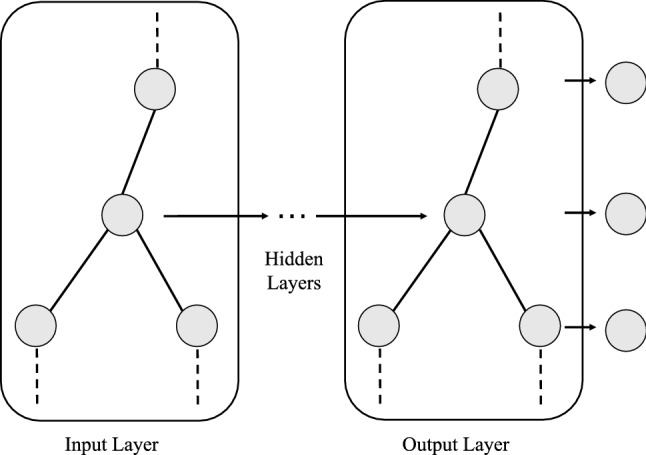
https://cdn.ncbi.nlm.nih.gov/pmc/blobs/ac62/9185130/ceb2538d4ce0/521_2022_7380_Fig7_HTML.jpg
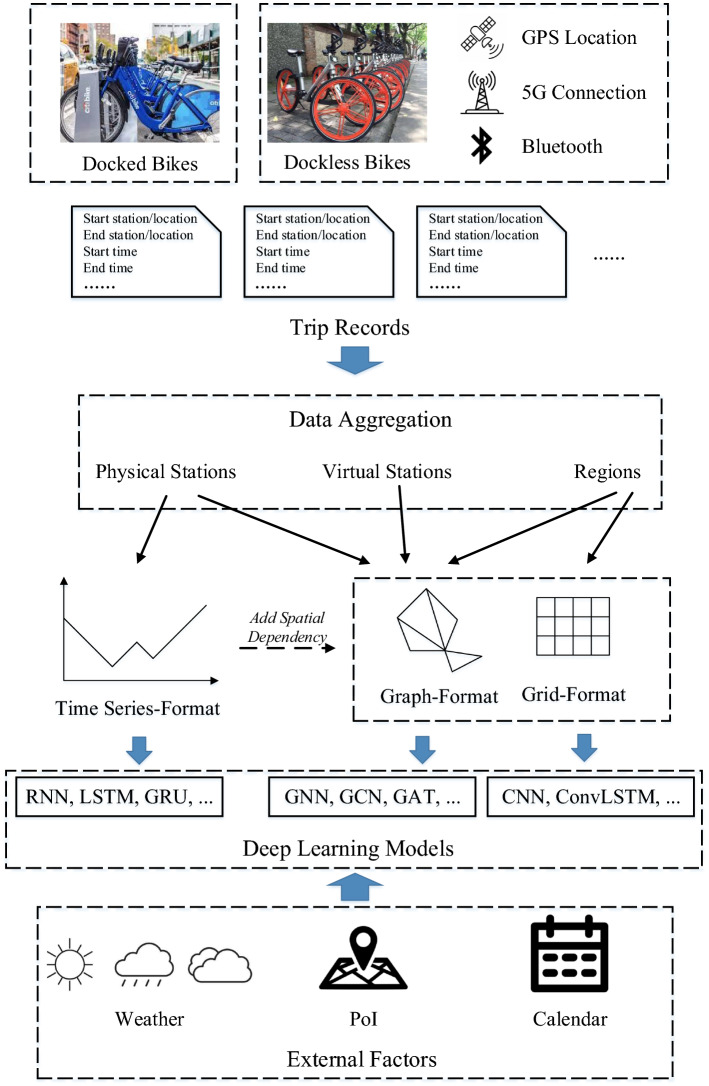
https://cdn.ncbi.nlm.nih.gov/pmc/blobs/ac62/9185130/abbf59d00255/521_2022_7380_Fig1_HTML.jpg
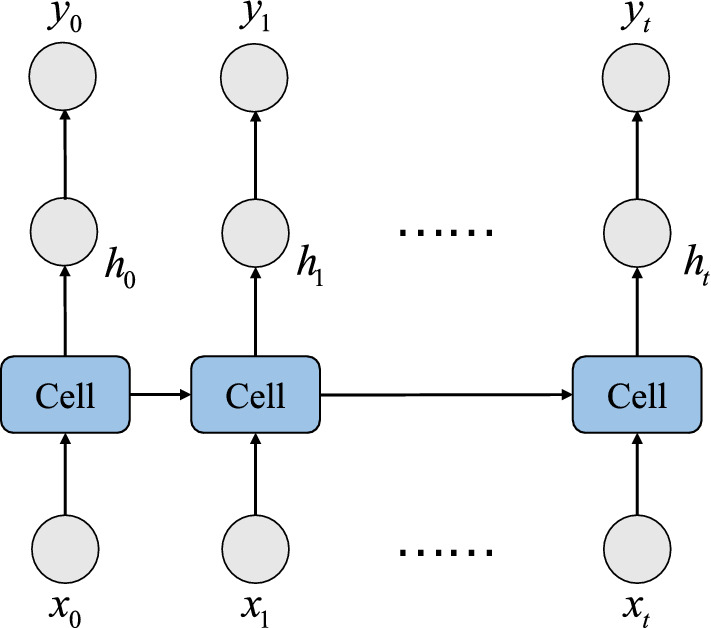
https://cdn.ncbi.nlm.nih.gov/pmc/blobs/ac62/9185130/ef06338ec095/521_2022_7380_Fig2_HTML.jpg
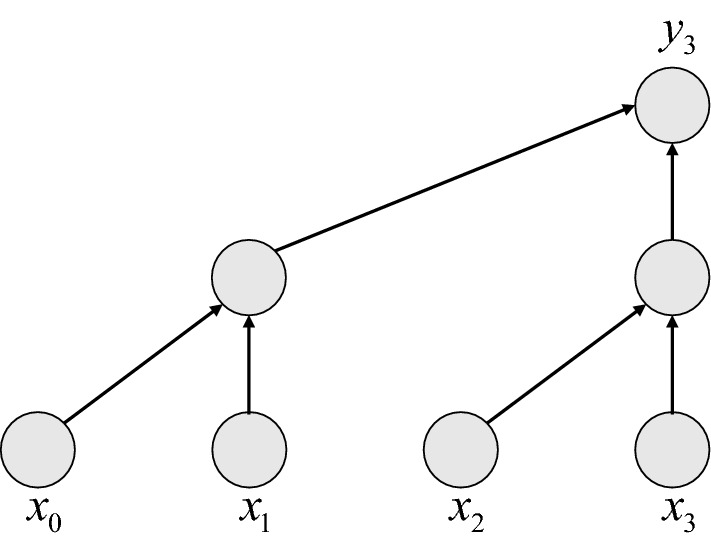
https://cdn.ncbi.nlm.nih.gov/pmc/blobs/ac62/9185130/64f581e4dcc6/521_2022_7380_Fig3_HTML.jpg
https://cdn.ncbi.nlm.nih.gov/pmc/blobs/ac62/9185130/befe7194f248/521_2022_7380_Fig4_HTML.jpg
https://cdn.ncbi.nlm.nih.gov/pmc/blobs/ac62/9185130/35c2e8261c68/521_2022_7380_Fig5_HTML.jpg
https://cdn.ncbi.nlm.nih.gov/pmc/blobs/ac62/9185130/d1b0a86e7210/521_2022_7380_Fig6_HTML.jpg
https://cdn.ncbi.nlm.nih.gov/pmc/blobs/ac62/9185130/ceb2538d4ce0/521_2022_7380_Fig7_HTML.jpg
https://cdn.ncbi.nlm.nih.gov/pmc/blobs/ac62/9185130/abbf59d00255/521_2022_7380_Fig1_HTML.jpg
https://cdn.ncbi.nlm.nih.gov/pmc/blobs/ac62/9185130/ef06338ec095/521_2022_7380_Fig2_HTML.jpg
https://cdn.ncbi.nlm.nih.gov/pmc/blobs/ac62/9185130/64f581e4dcc6/521_2022_7380_Fig3_HTML.jpg
https://cdn.ncbi.nlm.nih.gov/pmc/blobs/ac62/9185130/befe7194f248/521_2022_7380_Fig4_HTML.jpg
https://cdn.ncbi.nlm.nih.gov/pmc/blobs/ac62/9185130/35c2e8261c68/521_2022_7380_Fig5_HTML.jpg
https://cdn.ncbi.nlm.nih.gov/pmc/blobs/ac62/9185130/d1b0a86e7210/521_2022_7380_Fig6_HTML.jpg
https://cdn.ncbi.nlm.nih.gov/pmc/blobs/ac62/9185130/ceb2538d4ce0/521_2022_7380_Fig7_HTML.jpg

相似文献

1
Bike sharing usage prediction with deep learning: a survey.基于深度学习的共享单车使用情况预测:一项综述
Neural Comput Appl. 2022;34(18):15369-15385. doi: 10.1007/s00521-022-07380-5. Epub 2022 Jun 10.
2
FF-STGCN: A usage pattern similarity based dual-network for bike-sharing demand prediction.FF-STGCN:一种基于使用模式相似性的双网络共享单车需求预测方法。
PLoS One. 2024 Mar 7;19(3):e0298684. doi: 10.1371/journal.pone.0298684. eCollection 2024.
3
Bike-Sharing Demand Prediction at Community Level under COVID-19 Using Deep Learning.基于深度学习的 COVID-19 下社区层面共享单车需求预测。
Sensors (Basel). 2022 Jan 29;22(3):1060. doi: 10.3390/s22031060.
4
A Short-Term Hybrid TCN-GRU Prediction Model of Bike-Sharing Demand Based on Travel Characteristics Mining.基于出行特征挖掘的共享单车需求短期混合TCN-GRU预测模型
Entropy (Basel). 2022 Aug 26;24(9):1193. doi: 10.3390/e24091193.
5
Graph convolutional network approach applied to predict hourly bike-sharing demands considering spatial, temporal, and global effects.图卷积网络方法应用于考虑空间、时间和全局效应的共享单车需求的逐时预测。
PLoS One. 2019 Sep 16;14(9):e0220782. doi: 10.1371/journal.pone.0220782. eCollection 2019.
6
Identifying the factors affecting bike-sharing usage and degree of satisfaction in Ningbo, China.识别影响中国宁波共享单车使用情况和满意度的因素。
PLoS One. 2017 Sep 21;12(9):e0185100. doi: 10.1371/journal.pone.0185100. eCollection 2017.
7
A City Shared Bike Dispatch Approach Based on Temporal Graph Convolutional Network and Genetic Algorithm.一种基于时态图卷积网络和遗传算法的城市共享单车调度方法
Biomimetics (Basel). 2024 Jun 17;9(6):368. doi: 10.3390/biomimetics9060368.
8
A Spatial-Temporal Graph Convolutional Recurrent Network for Transportation Flow Estimation.一种用于交通流估计的时空图卷积循环网络。
Sensors (Basel). 2023 Aug 30;23(17):7534. doi: 10.3390/s23177534.
9
Evolvement patterns of usage in a medium-sized bike-sharing system during the COVID-19 pandemic.新冠疫情期间一个中型共享单车系统的使用演变模式。
Sustain Cities Soc. 2023 Sep;96:104669. doi: 10.1016/j.scs.2023.104669. Epub 2023 May 24.
10
Examining spatiotemporal changing patterns of bike-sharing usage during COVID-19 pandemic.审视新冠疫情期间共享单车使用的时空变化模式。
J Transp Geogr. 2021 Feb;91:102997. doi: 10.1016/j.jtrangeo.2021.102997. Epub 2021 Feb 19.

引用本文的文献

1
A bike-sharing demand prediction model based on Spatio-Temporal Graph Convolutional Networks.一种基于时空图卷积网络的共享单车需求预测模型。
PeerJ Comput Sci. 2024 Oct 15;10:e2391. doi: 10.7717/peerj-cs.2391. eCollection 2024.
2
FF-STGCN: A usage pattern similarity based dual-network for bike-sharing demand prediction.FF-STGCN:一种基于使用模式相似性的双网络共享单车需求预测方法。
PLoS One. 2024 Mar 7;19(3):e0298684. doi: 10.1371/journal.pone.0298684. eCollection 2024.

本文引用的文献

1
Shared mobility in post-COVID era: New challenges and opportunities.后新冠时代的共享出行:新挑战与新机遇。
Sustain Cities Soc. 2021 Apr;67:102714. doi: 10.1016/j.scs.2021.102714. Epub 2021 Jan 16.
2
The link between bike sharing and subway use during the COVID-19 pandemic: The case-study of New York's Citi Bike.新冠疫情期间共享单车与地铁使用之间的联系:纽约花旗单车的案例研究
Transp Res Interdiscip Perspect. 2020 Jul;6:100166. doi: 10.1016/j.trip.2020.100166. Epub 2020 Jul 8.
3
Long short-term memory.长短期记忆
Neural Comput. 1997 Nov 15;9(8):1735-80. doi: 10.1162/neco.1997.9.8.1735.