Department of Biological, Geo. and Evs. Sciences, Cleveland State University, Cleveland, OH, USA.
Center for Gene Regulation in Health and Disease, Cleveland State University, Cleveland, OH, USA.
RNA Biol. 2022 Jan;19(1):819-828. doi: 10.1080/15476286.2022.2084839.
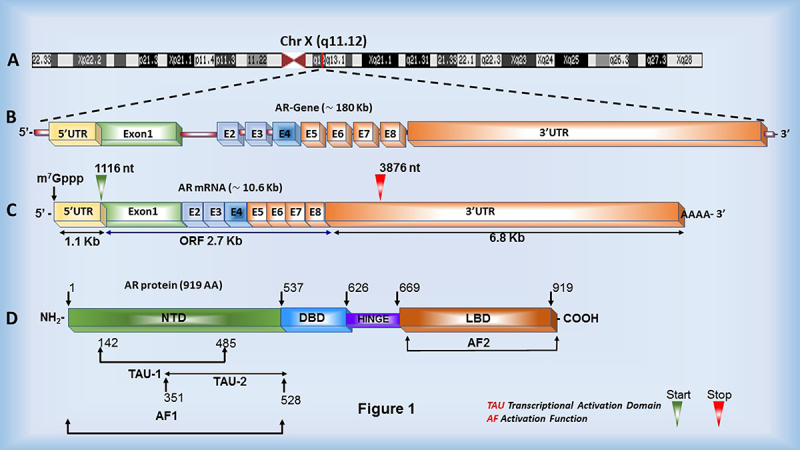
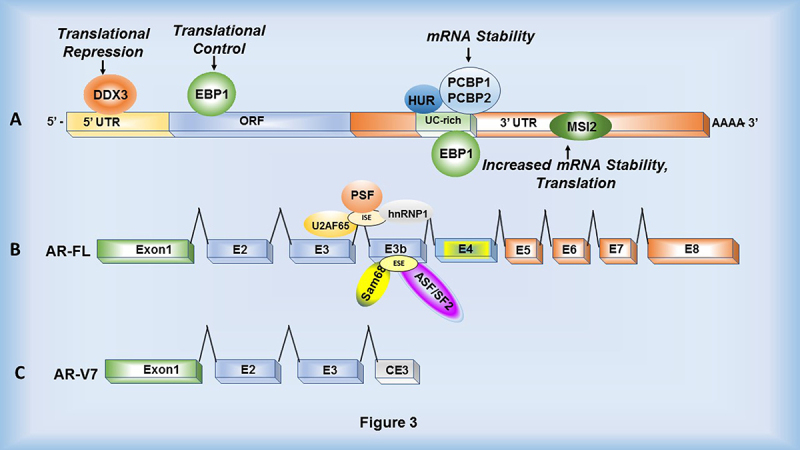
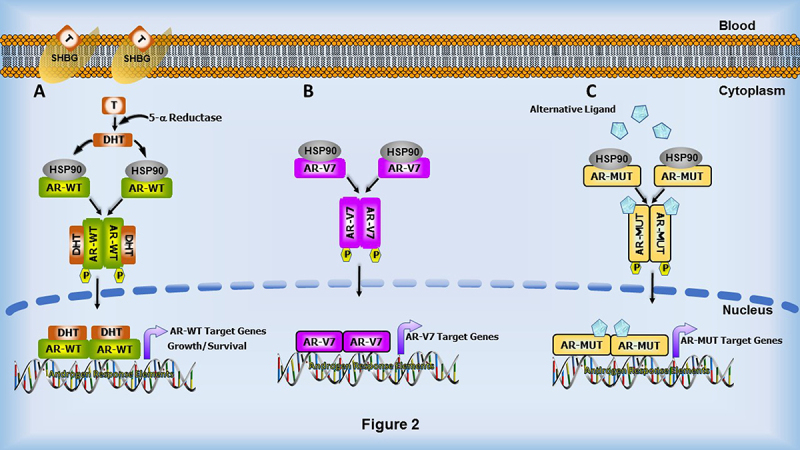
The Androgen Receptor (AR), transcriptionally activated by its ligands, testosterone and dihydrotestosterone (DHT), is widely expressed in cells and tissues, influencing normal biology and disease states. The protein product of the AR gene is involved in the regulation of numerous biological functions, including the development and maintenance of the normal prostate gland and of the cardiovascular, musculoskeletal and immune systems. Androgen signalling, mediated by AR protein, plays a crucial role in the development of prostate cancer (PCa), and is presumed to be involved in other cancers including those of the breast, bladder, liver and kidney. Significant research and reviews have focused on AR protein function; however, inadequate research and literature exist to define the function of AR mRNA in normal and cancer cells. The AR mRNA transcript is nearly 11 Kb long and contains a long 3' untranslated region (UTR), suggesting its biological role in post-transcriptional regulation, consequently affecting the overall functions of both normal and cancer cells. Research has demonstrated that many biological activities, including RNA stability, translation, cellular trafficking and localization, are associated with the 3' UTRs of mRNAs. In this review, we describe the potential role of the AR 3' UTR and summarize RNA-binding proteins (RBPs) that interact with the AR mRNA to regulate post-transcriptional metabolism. We highlight the importance of AR mRNA as a critical modulator of carcinogenesis and its important role in developing therapy-resistant prostate cancer.
雄激素受体(AR)受其配体睾酮和二氢睾酮(DHT)的转录激活,广泛表达于细胞和组织中,影响正常生物学和疾病状态。AR 基因的蛋白产物参与调节许多生物学功能,包括正常前列腺和心血管、肌肉骨骼和免疫系统的发育和维持。由 AR 蛋白介导的雄激素信号转导在前列腺癌(PCa)的发展中起着至关重要的作用,并被认为参与其他癌症,包括乳腺癌、膀胱癌、肝癌和肾癌。大量的研究和综述集中在 AR 蛋白功能上;然而,对于正常和癌细胞中 AR mRNA 的功能,研究和文献都不足。AR mRNA 转录本长达近 11 Kb,含有长的 3'非翻译区(UTR),这表明其在转录后调控中的生物学作用,从而影响正常和癌细胞的整体功能。研究表明,许多生物学活性,包括 RNA 稳定性、翻译、细胞运输和定位,都与 mRNAs 的 3'UTR 有关。在这篇综述中,我们描述了 AR 3'UTR 的潜在作用,并总结了与 AR mRNA 相互作用的 RNA 结合蛋白(RBPs),以调节转录后代谢。我们强调了 AR mRNA 作为致癌作用关键调节剂的重要性及其在开发治疗耐药性前列腺癌中的重要作用。