Dongguan Institute of Clinical Cancer Research, Affiliated Dongguan Hospital, Southern Medical University, Dongguan, 523059, China.
College of Chemistry & Environmental Science, Key Laboratory of Medicinal Chemistry and Molecular Diagnosis of Ministry of Education, Chemical Biology Key Laboratory of Hebei Province, Hebei University, Baoding, 071002, People's Republic of China.
J Nanobiotechnology. 2022 Jun 15;20(1):280. doi: 10.1186/s12951-022-01440-7.
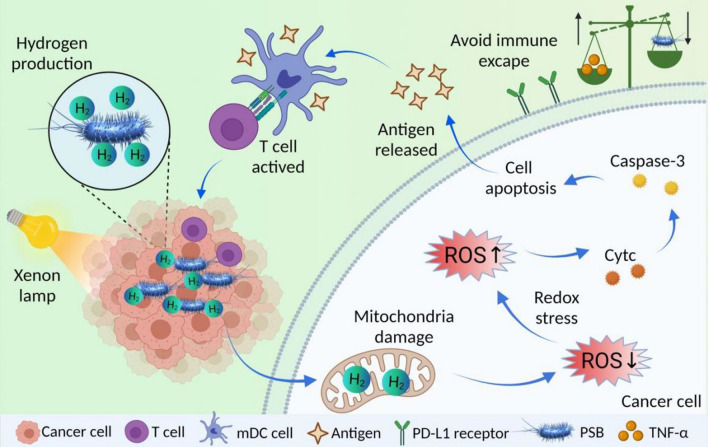
As an antioxidant, hydrogen (H) can selectively react with the highly toxic hydroxyl radical (·OH) in tumor cells to break the balance of reactive oxygen species (ROS) and cause oxidative stress. However, due to the high diffusibility and storage difficulty of hydrogen, it is impossible to achieve long-term release at the tumor site, which highly limited their therapeutic effect.
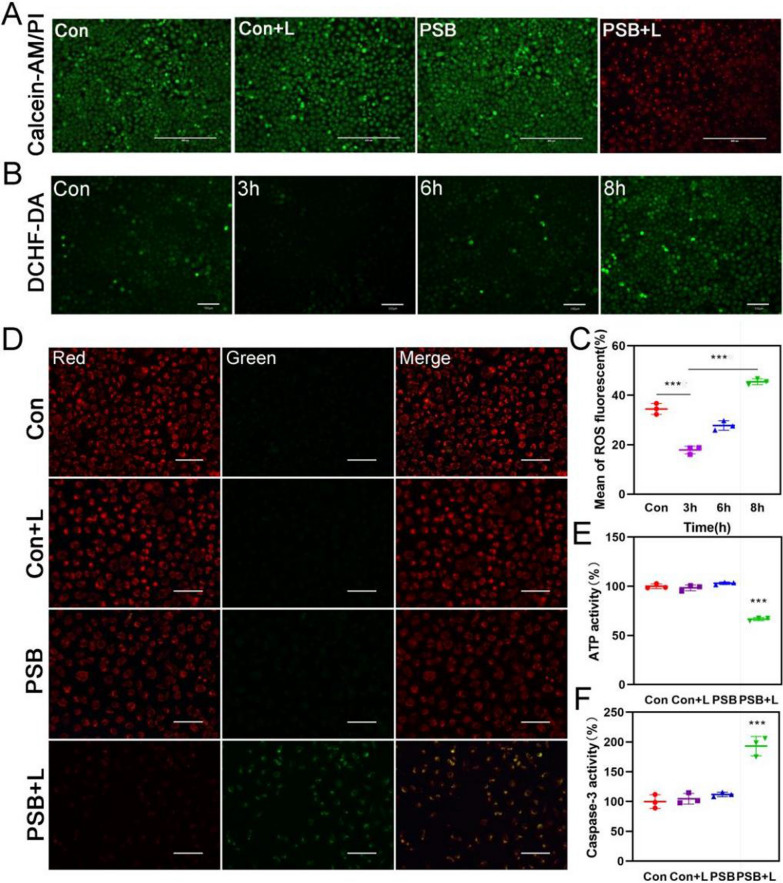
Photosynthetic bacteria (PSB) release a large amount of hydrogen to break the balance of oxidative stress. In addition, as a nontoxic bacterium, PSB could stimulate the immune response and increase the infiltration of CD4+ and CD8+ T cells. More interestingly, we found that hydrogen therapy induced by our live PSB did not lead to the up-regulation of PD-L1 after stimulating the immune response, which could avoid the tumor immune escape.
Hydrogen-immunotherapy significantly kills tumor cells. We believe that our live microbial hydrogen production system provides a new strategy for cancer hydrogen treatment combining with enhanced immunotherapy without up-regulating PD-L1.
作为一种抗氧化剂,氢气(H)可以选择性地与肿瘤细胞中具有高度毒性的羟自由基(·OH)反应,打破活性氧(ROS)的平衡,引起氧化应激。然而,由于氢气的高扩散性和存储困难,无法在肿瘤部位实现长期释放,这极大地限制了它们的治疗效果。
光合细菌(PSB)大量释放氢气以打破氧化应激的平衡。此外,作为一种无毒细菌,PSB 可以刺激免疫反应,增加 CD4+ 和 CD8+T 细胞的浸润。更有趣的是,我们发现我们的活体 PSB 诱导的氢气治疗在刺激免疫反应后不会导致 PD-L1 的上调,从而可以避免肿瘤免疫逃逸。
氢气免疫疗法可显著杀伤肿瘤细胞。我们相信,我们的活体微生物产氢系统为癌症氢气治疗提供了一种新的策略,结合增强免疫治疗而不会上调 PD-L1。