Department of Biophysics, The University of Texas Southwestern Medical Center, Dallas, United States.
Department of Biochemistry, University of Texas Southwestern Medical Center, Dallas, United States.
Elife. 2022 Jun 16;11:e76356. doi: 10.7554/eLife.76356.
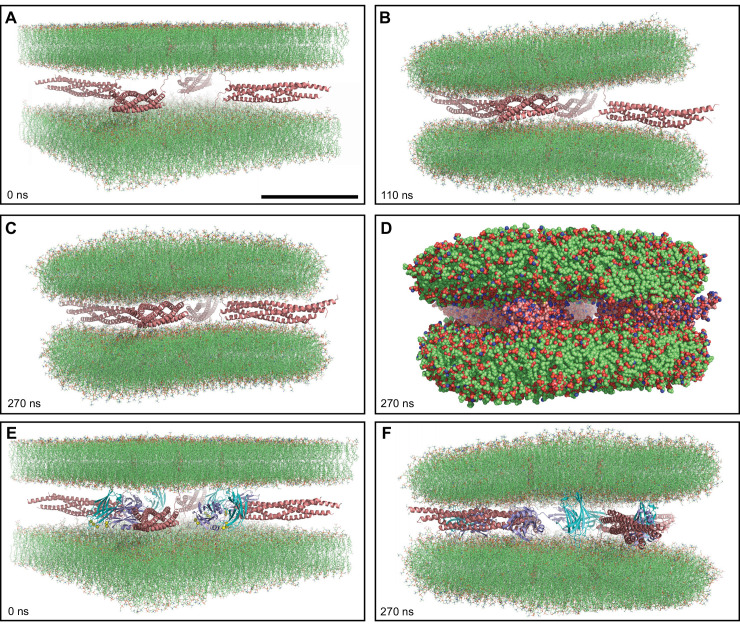
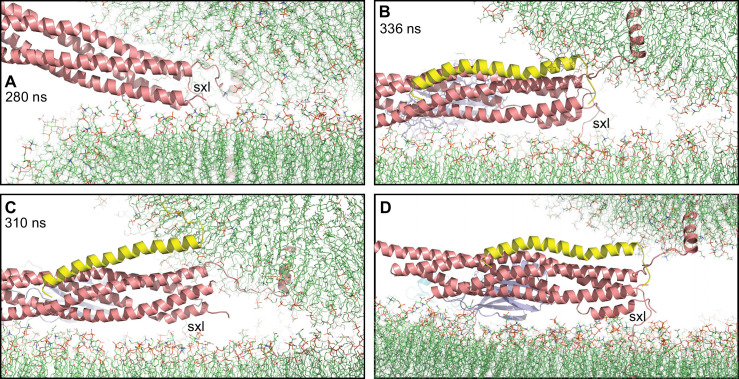
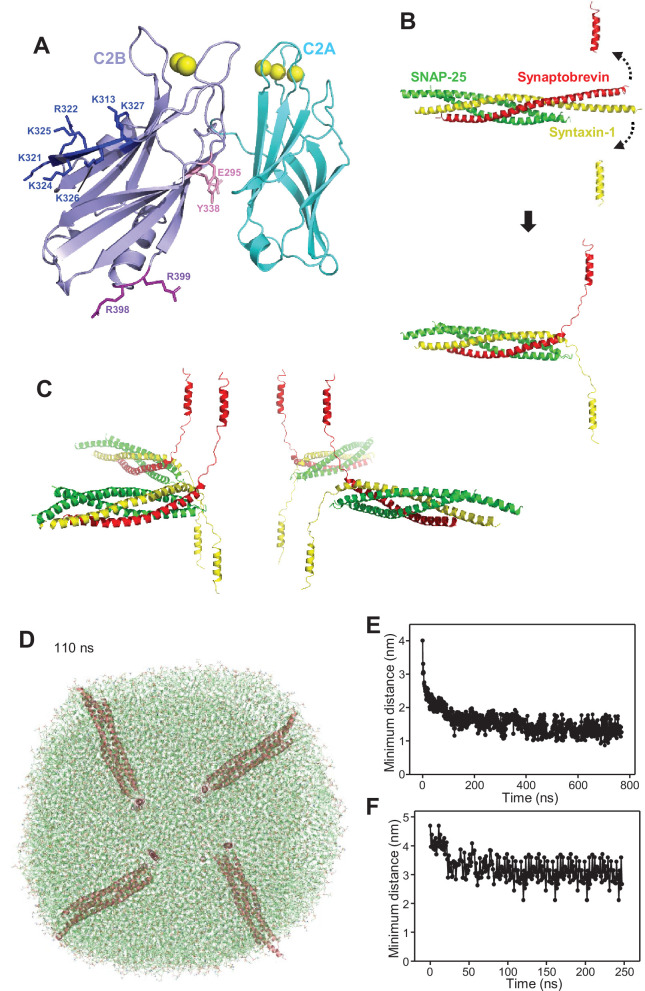
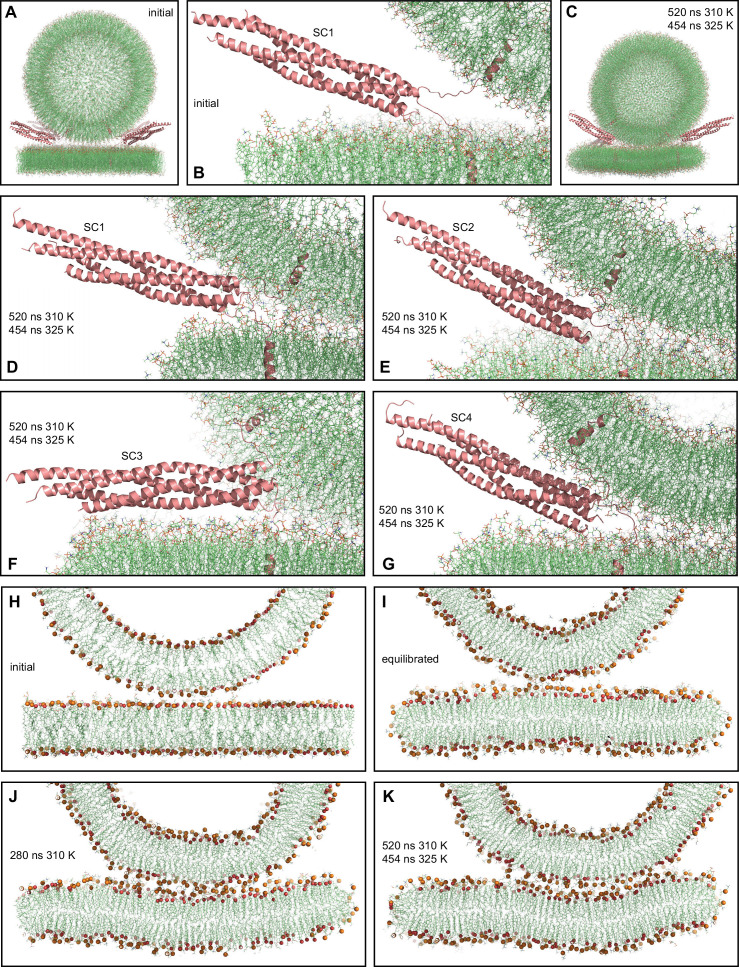
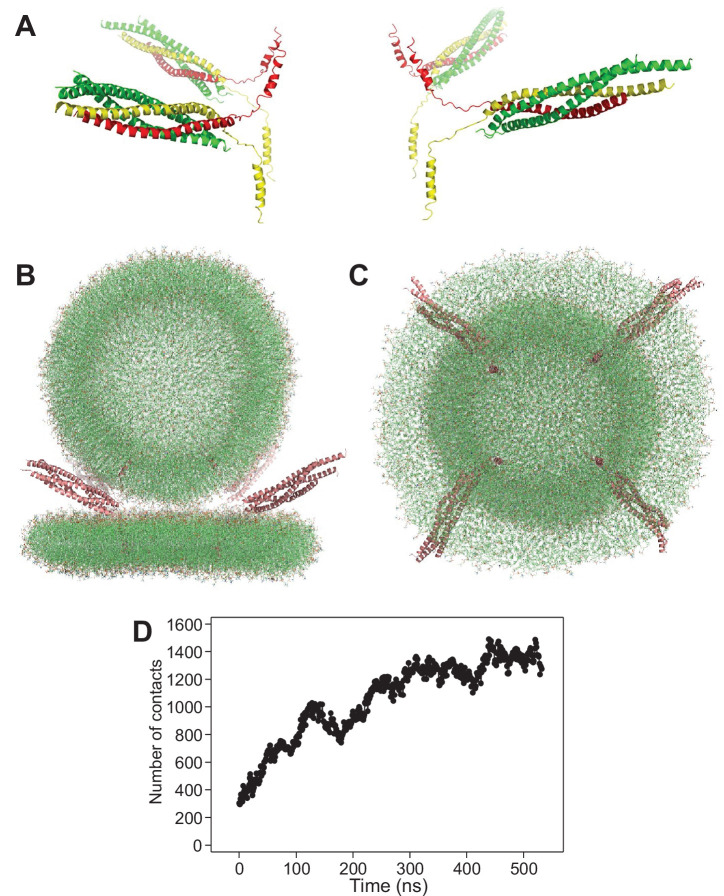
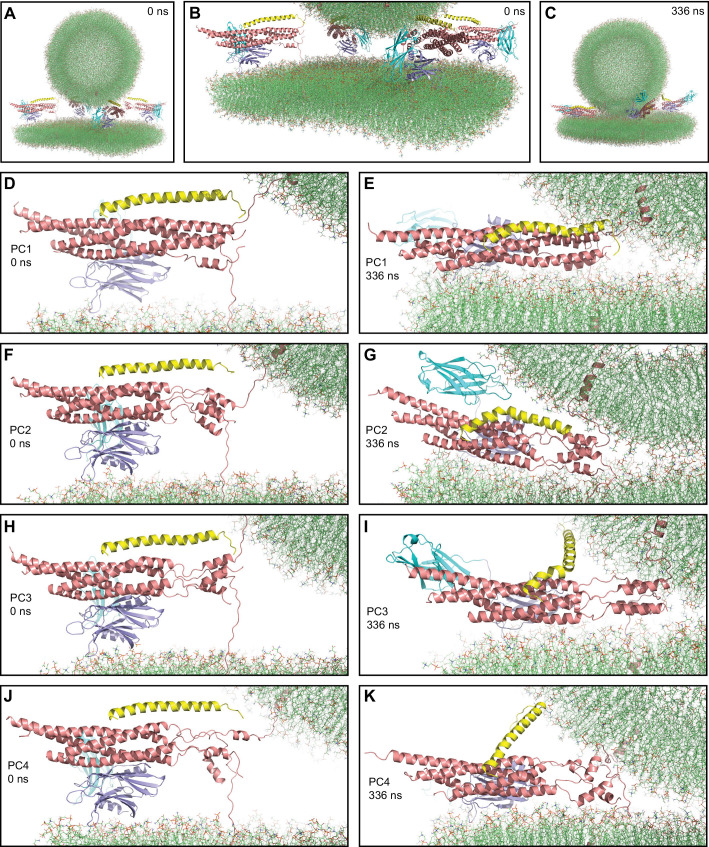
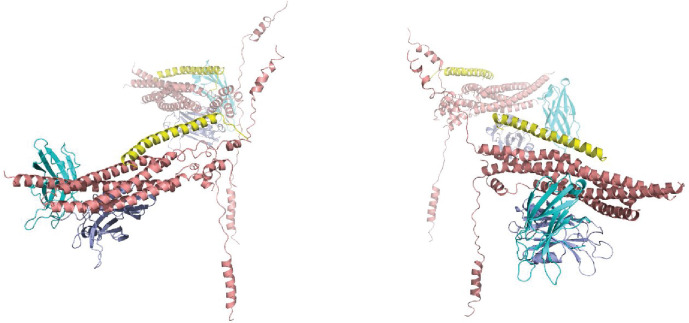
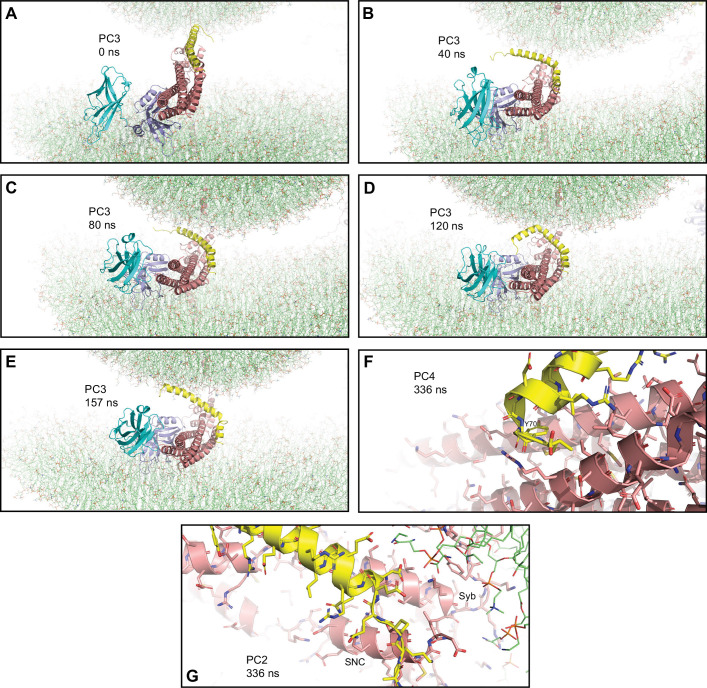
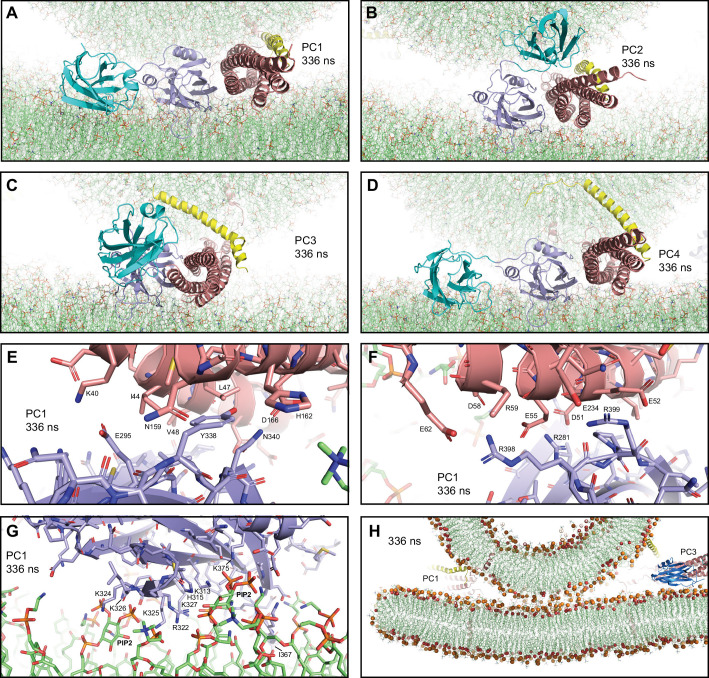
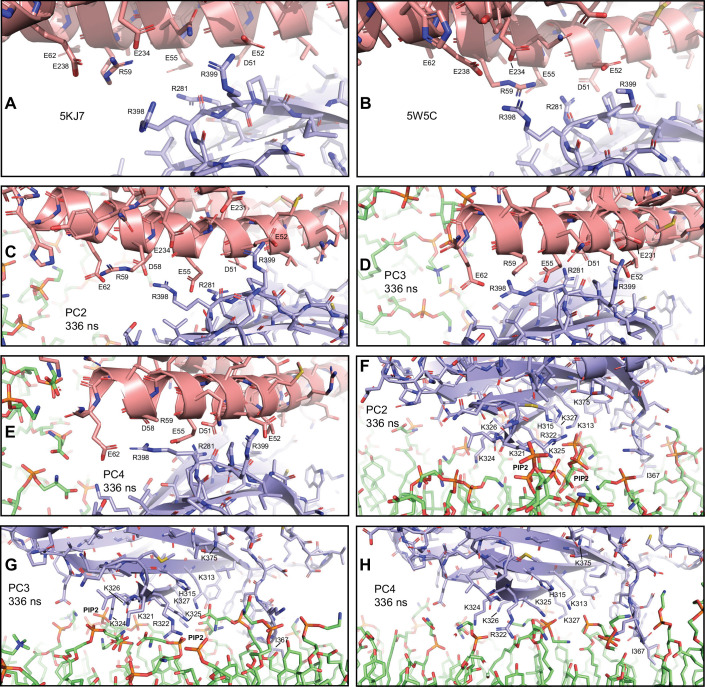
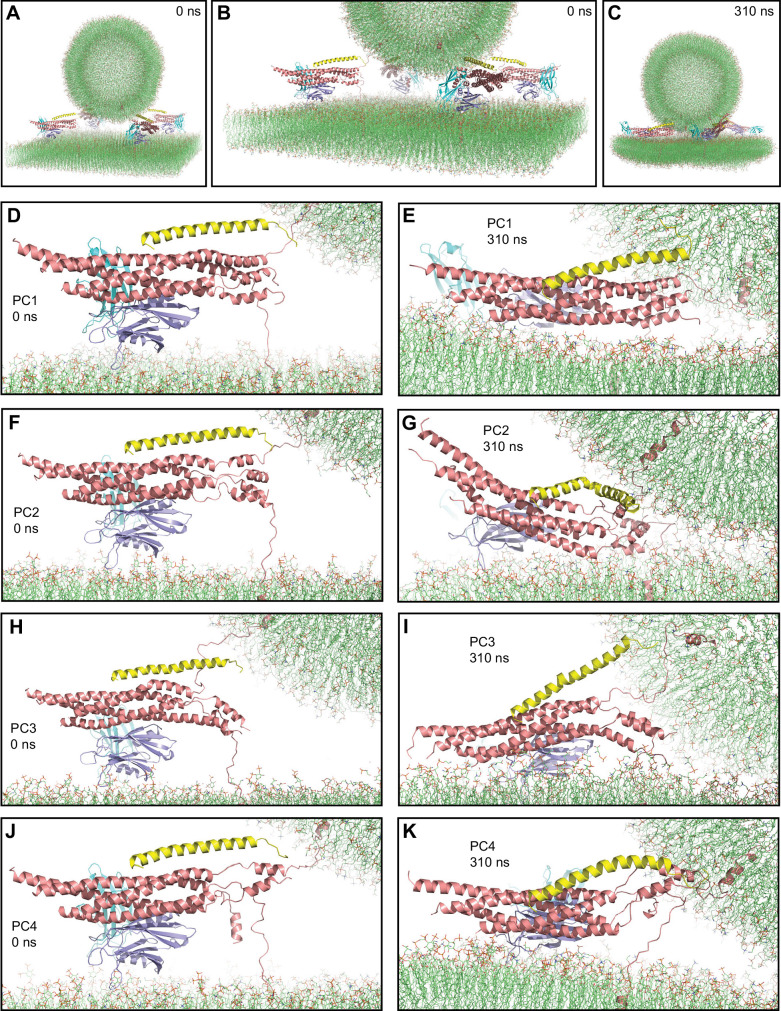
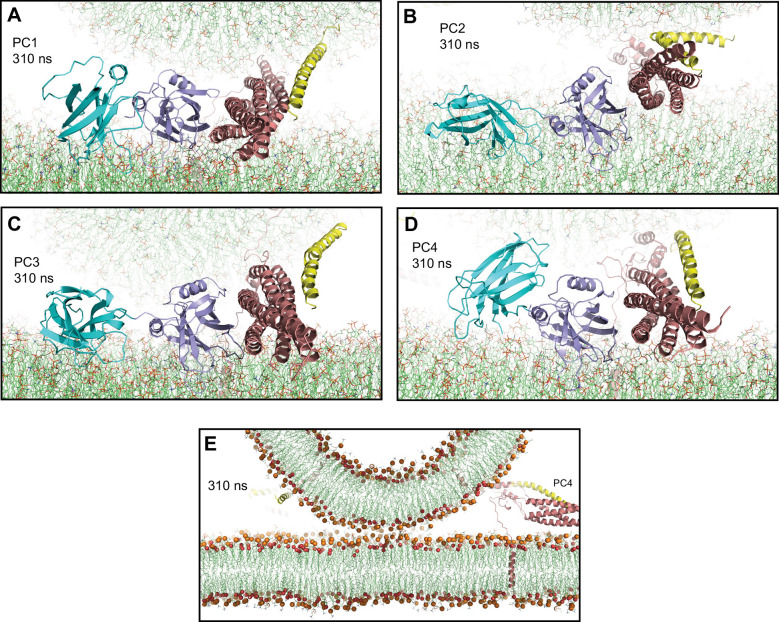
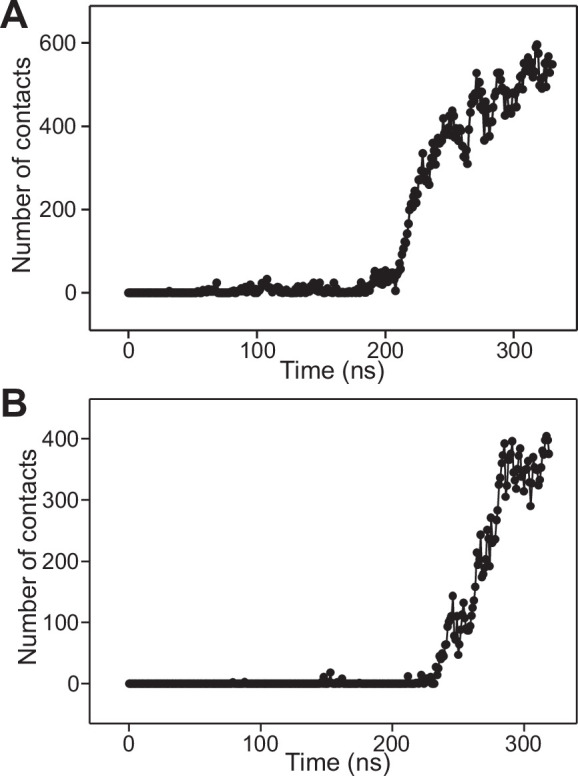
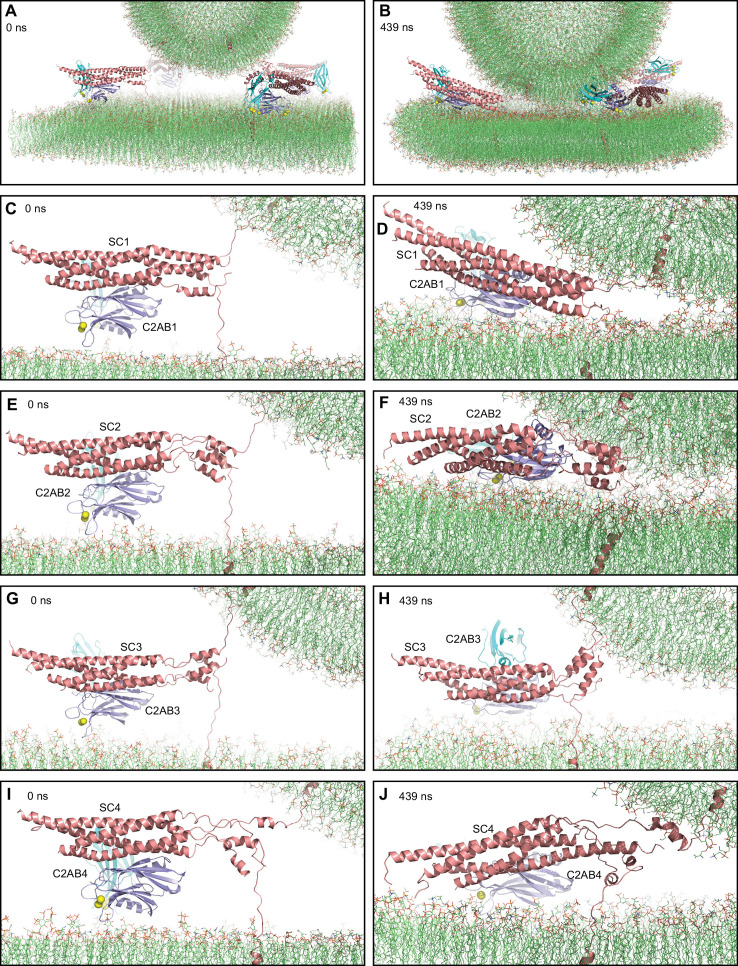
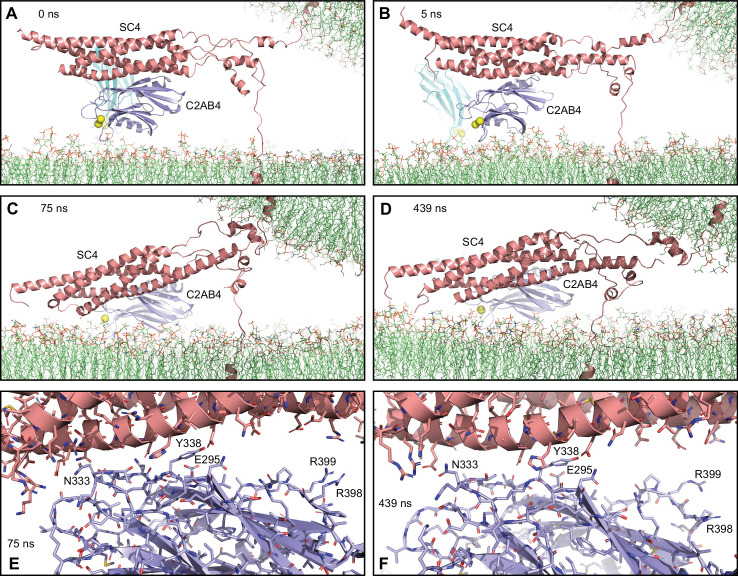
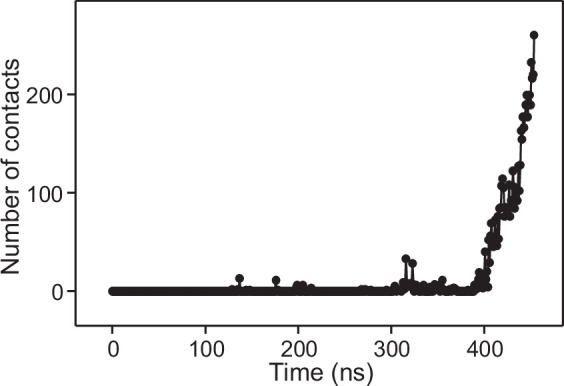
Synaptic vesicles are primed into a state that is ready for fast neurotransmitter release upon Ca-binding to Synaptotagmin-1. This state likely includes trans-SNARE complexes between the vesicle and plasma membranes that are bound to Synaptotagmin-1 and complexins. However, the nature of this state and the steps leading to membrane fusion are unclear, in part because of the difficulty of studying this dynamic process experimentally. To shed light into these questions, we performed all-atom molecular dynamics simulations of systems containing trans-SNARE complexes between two flat bilayers or a vesicle and a flat bilayer with or without fragments of Synaptotagmin-1 and/or complexin-1. Our results need to be interpreted with caution because of the limited simulation times and the absence of key components, but suggest mechanistic features that may control release and help visualize potential states of the primed Synaptotagmin-1-SNARE-complexin-1 complex. The simulations suggest that SNAREs alone induce formation of extended membrane-membrane contact interfaces that may fuse slowly, and that the primed state contains macromolecular assemblies of trans-SNARE complexes bound to the Synaptotagmin-1 CB domain and complexin-1 in a spring-loaded configuration that prevents premature membrane merger and formation of extended interfaces, but keeps the system ready for fast fusion upon Ca influx.
当钙离子与突触融合蛋白 1(Synaptotagmin-1)结合时,突触囊泡被预先置于一种准备快速释放神经递质的状态。这种状态可能包括与突触融合蛋白 1 和衔接蛋白结合的囊泡和质膜之间的跨 SNARE 复合物。然而,这种状态的本质以及导致膜融合的步骤尚不清楚,部分原因是由于实验研究这一动态过程的难度。为了阐明这些问题,我们对包含两个平面双层或一个囊泡和一个平面双层之间的跨 SNARE 复合物的系统进行了全原子分子动力学模拟,其中包含或不包含突触融合蛋白 1 和/或衔接蛋白 1 的片段。由于模拟时间有限且缺乏关键成分,我们的结果需要谨慎解释,但它们提出了可能控制释放的机械特征,并有助于可视化预先形成的突触融合蛋白 1-SNARE-衔接蛋白 1 复合物的潜在状态。模拟表明,SNARE 蛋白本身会诱导形成扩展的膜-膜接触界面,这些界面可能会缓慢融合,而预先形成的状态包含与突触融合蛋白 1 CB 结构域结合的跨 SNARE 复合物的大分子组装体和衔接蛋白 1,处于弹簧加载配置中,这种配置可防止过早的膜融合和扩展界面的形成,但使系统在钙离子流入时能够快速融合。