Institute of Experimental Immunology, University of Zurich, Zurich, Switzerland; German Cancer Consortium and German Cancer Research Center, Heidelberg, Partner Site Freiburg, Freiburg, Germany.
Institute of Experimental Immunology, University of Zurich, Zurich, Switzerland.
J Allergy Clin Immunol. 2022 Aug;150(2):312-324. doi: 10.1016/j.jaci.2022.05.019. Epub 2022 Jun 16.
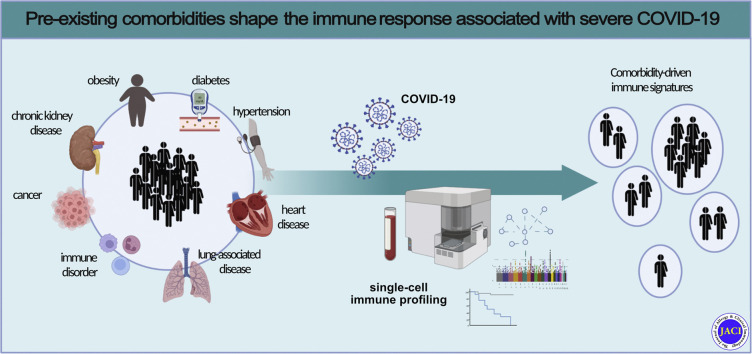
Comorbidities are risk factors for development of severe coronavirus disease 2019 (COVID-19). However, the extent to which an underlying comorbidity influences the immune response to severe acute respiratory syndrome coronavirus 2 remains unknown.
Our aim was to investigate the complex interrelations of comorbidities, the immune response, and patient outcome in COVID-19.
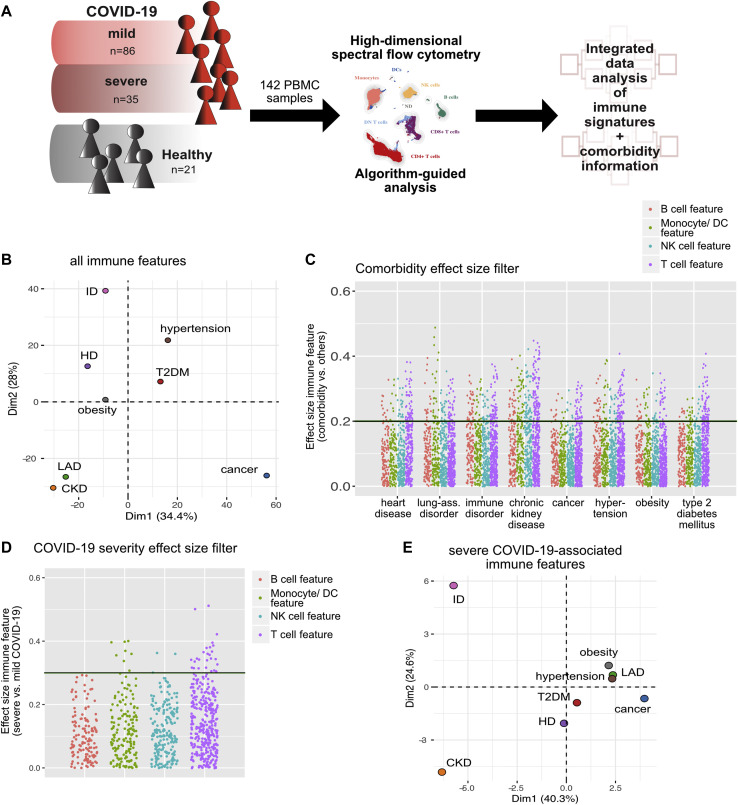
We used high-throughput, high-dimensional, single-cell mapping of peripheral blood leukocytes and algorithm-guided analysis.
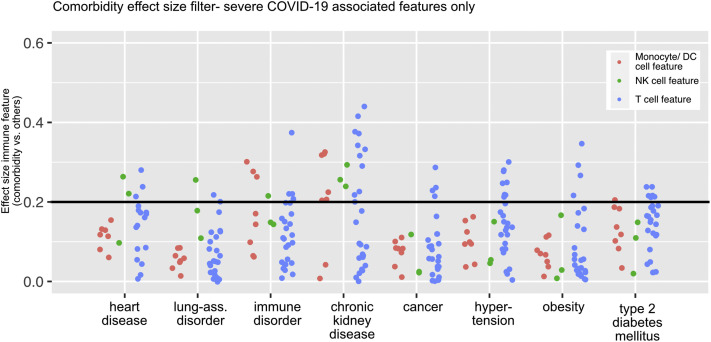
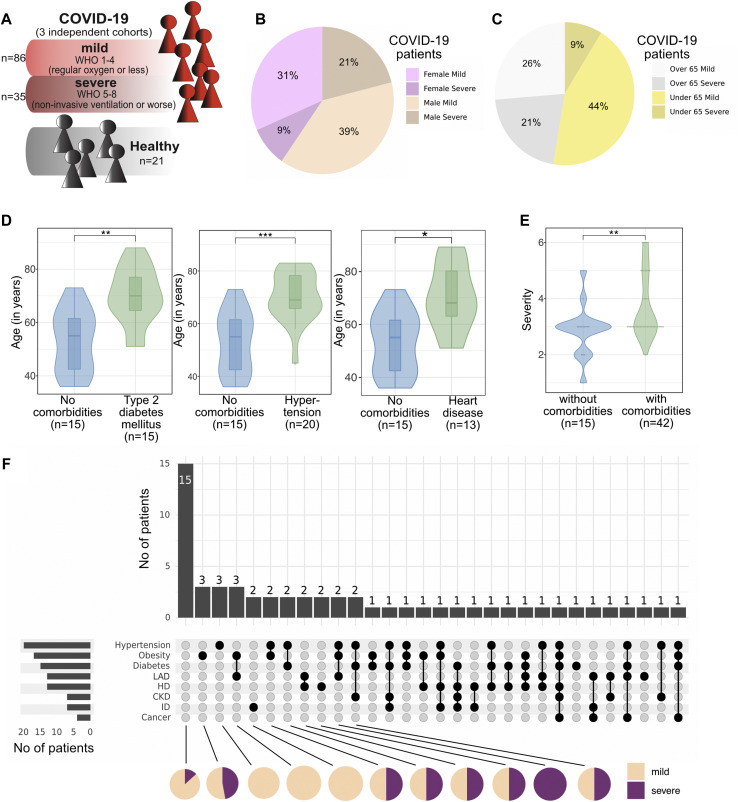
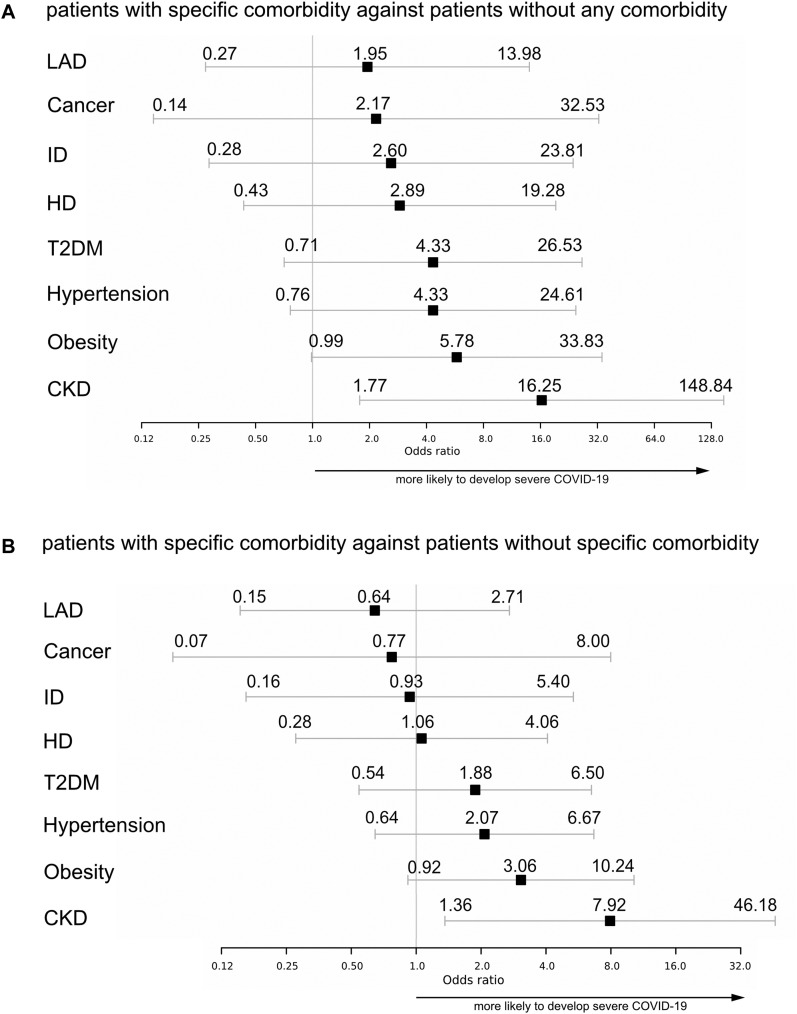
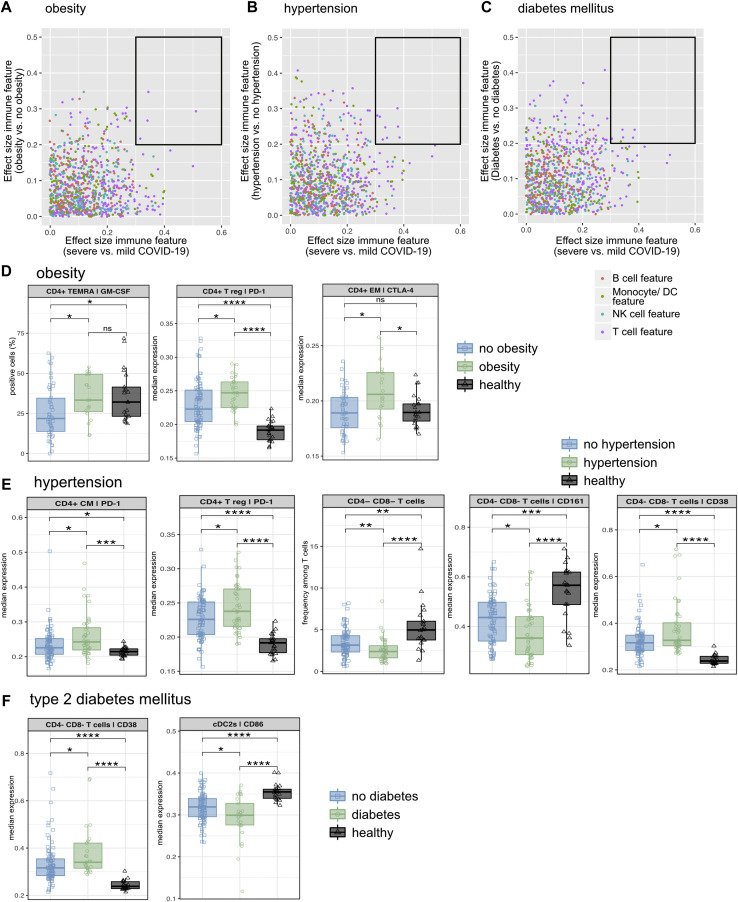
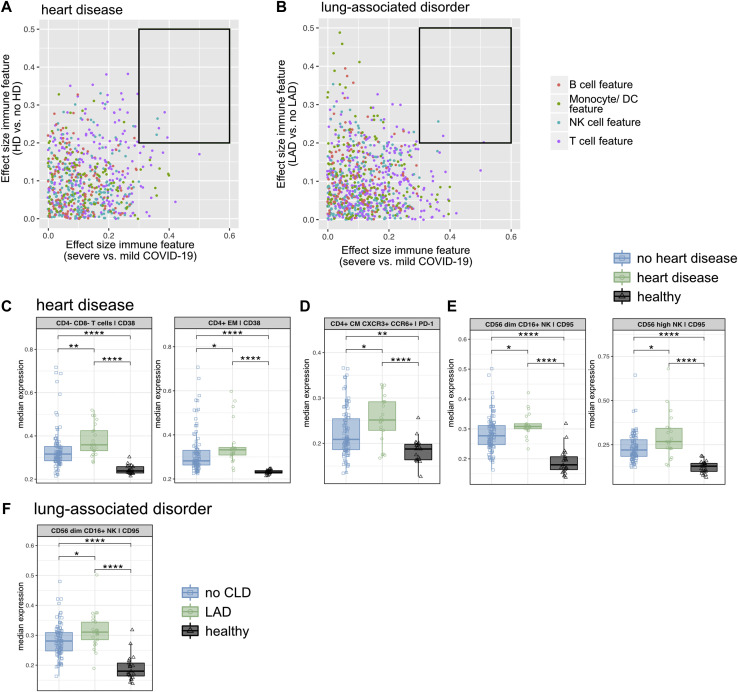
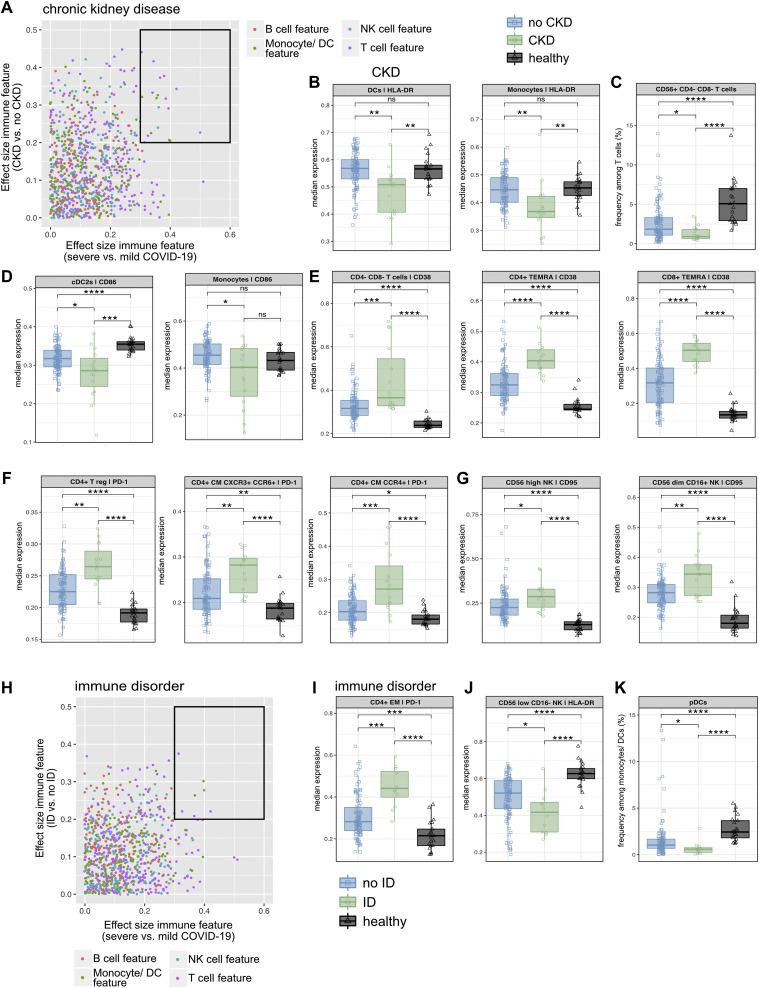
We discovered characteristic immune signatures associated not only with severe COVID-19 but also with the underlying medical condition. Different factors of the metabolic syndrome (obesity, hypertension, and diabetes) affected distinct immune populations, thereby additively increasing the immunodysregulatory effect when present in a single patient. Patients with disorders affecting the lung or heart, together with factors of metabolic syndrome, were clustered together, whereas immune disorder and chronic kidney disease displayed a distinct immune profile in COVID-19. In particular, severe acute respiratory syndrome coronavirus 2-infected patients with preexisting chronic kidney disease were characterized by the highest number of altered immune signatures of both lymphoid and myeloid immune branches. This overall major immune dysregulation could be the underlying mechanism for the estimated odds ratio of 16.3 for development of severe COVID-19 in this burdened cohort.
The combinatorial systematic analysis of the immune signatures, comorbidities, and outcomes of patients with COVID-19 has provided the mechanistic immunologic underpinnings of comorbidity-driven patient risk and uncovered comorbidity-driven immune signatures.
合并症是发展为严重 2019 年冠状病毒病(COVID-19)的危险因素。然而,潜在合并症对严重急性呼吸综合征冠状病毒 2 的免疫反应的影响程度尚不清楚。
我们旨在研究 COVID-19 中合并症、免疫反应和患者预后的复杂相互关系。
我们使用外周血白细胞的高通量、高维、单细胞图谱和算法指导的分析。
我们发现了与严重 COVID-19 相关的特征性免疫特征,也与潜在的医疗条件相关。代谢综合征的不同因素(肥胖、高血压和糖尿病)影响不同的免疫群体,因此当存在于单个患者中时会增加免疫失调的影响。患有影响肺或心脏的疾病以及代谢综合征因素的患者聚集在一起,而免疫紊乱和慢性肾脏病在 COVID-19 中显示出独特的免疫特征。特别是,患有先前存在的慢性肾脏病的严重急性呼吸综合征冠状病毒 2 感染患者的淋巴样和髓样免疫分支的改变免疫特征数量最多。这种整体的主要免疫失调可能是该受累队列中 COVID-19 发展严重的估计优势比为 16.3 的潜在机制。
对 COVID-19 患者的免疫特征、合并症和结局进行组合系统分析,为合并症驱动的患者风险提供了机制免疫学基础,并揭示了合并症驱动的免疫特征。