Laboratory of Immunothrombosis, Department of Biochemistry, Institute of Biological Sciences, Federal University of Juiz de Fora, Juiz de Fora, Brazil.
Laboratory of Immunology, Obesity and Infectious Diseases, Department of Parasitology, Microbiology and Immunology, Institute of Biological Sciences, Federal University of Juiz de Fora, Juiz de Fora, Brazil.
Front Cell Infect Microbiol. 2021 Mar 17;11:638852. doi: 10.3389/fcimb.2021.638852. eCollection 2021.
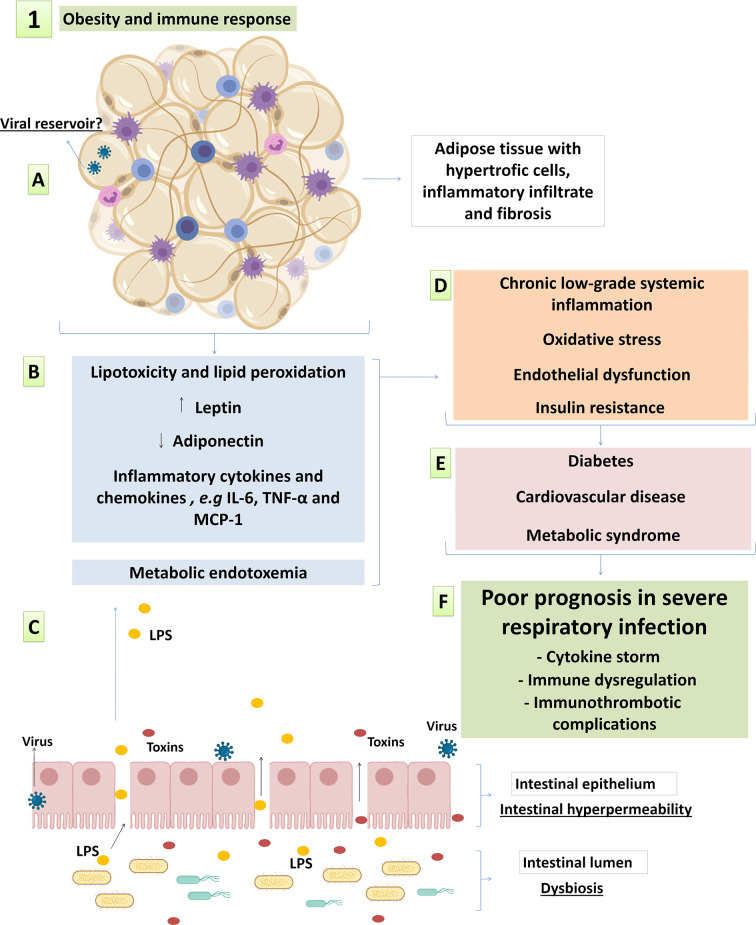
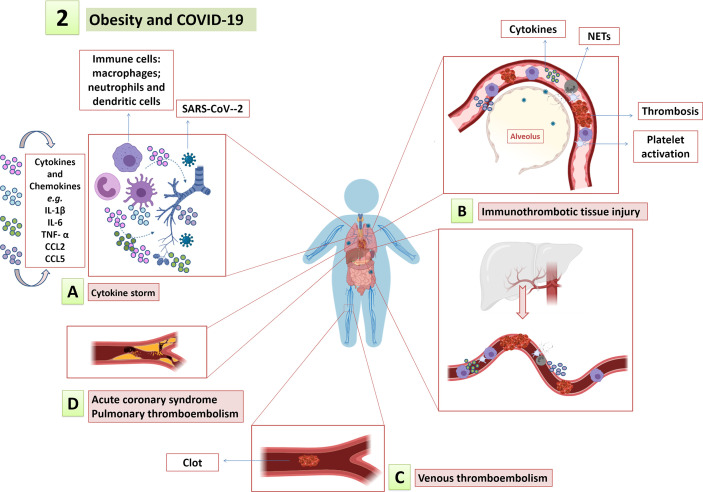
The severe acute respiratory syndrome coronavirus 2 (SARS-CoV-2) has emerged in December 2019 and rapidly outspread worldwide endangering human health. The coronavirus disease 2019 (COVID-19) manifests itself through a wide spectrum of symptoms that can evolve to severe presentations as pneumonia and several non-respiratory complications. Increased susceptibility to COVID-19 hospitalization and mortality have been linked to associated comorbidities as diabetes, hypertension, cardiovascular diseases and, recently, to obesity. Similarly, individuals living with obesity are at greater risk to develop clinical complications and to have poor prognosis in severe influenza pneumonia. Immune and metabolic dysfunctions associated with the increased susceptibility to influenza infection are linked to obesity-associated low-grade inflammation, compromised immune and endocrine systems, and to high cardiovascular risk. These preexisting conditions may favor virological persistence, amplify immunopathological responses and worsen hemodynamic instability in severe COVID-19 as well. In this review we highlight the main factors and the current state of the art on obesity as risk factor for influenza and COVID-19 hospitalization, severe respiratory manifestations, extrapulmonary complications and even death. Finally, immunoregulatory mechanisms of severe influenza pneumonia in individuals with obesity are addressed as likely factors involved in COVID-19 pathophysiology.
严重急性呼吸综合征冠状病毒 2(SARS-CoV-2)于 2019 年 12 月出现,并迅速在全球范围内传播,危害人类健康。2019 年冠状病毒病(COVID-19)表现为一系列广泛的症状,可发展为肺炎和多种非呼吸道并发症等严重表现。糖尿病、高血压、心血管疾病等相关合并症以及最近的肥胖与 COVID-19 住院和死亡率增加有关。同样,肥胖人群患严重流感肺炎的临床并发症和预后不良的风险更高。与流感感染易感性增加相关的免疫和代谢功能障碍与肥胖相关的低度炎症、免疫和内分泌系统受损以及心血管高风险有关。这些潜在疾病可能有利于病毒学持续存在、放大免疫病理反应,并使严重 COVID-19 中的血液动力学不稳定恶化。在这篇综述中,我们强调了肥胖作为流感和 COVID-19 住院、严重呼吸道表现、肺外并发症甚至死亡的危险因素的主要因素和最新进展。最后,还讨论了肥胖个体中严重流感肺炎的免疫调节机制,因为这些机制可能是 COVID-19 病理生理学的相关因素。