Asaduzzaman M D, Bhuia Mohammad Romel, Alam Zhm Nazmul, Bari Mohammad Zabed Jillul, Ferdousi Tasnim
Department of Medicine, Sylhet MAG Osmani Medical College Hospital, Sylhet-3100, Bangladesh.
Department of Statistics, Shahjalal University of Science and Technology, Sylhet-3114, Bangladesh.
IJID Reg. 2022 Jun;3:234-241. doi: 10.1016/j.ijregi.2022.04.011. Epub 2022 Apr 29.
As hyperinflammation is recognized as a driver of severe COVID-19 disease, checking markers of inflammation is gaining more attention. Our study aimed to evaluate the utility of cost-effective hemogram-derived ratios in predicting intensive care unit (ICU) admission in COVID-19 patients.
This multicenter retrospective study included hospitalized COVID-19 patients from four dedicated COVID-19 hospitals in Sylhet, Bangladesh. Data on demographics, clinical characteristics, laboratory parameters and survival outcomes were analyzed. Logistic regression analysis was used to identify the significance of each hemogram-derived ratio in predicting ICU admission.
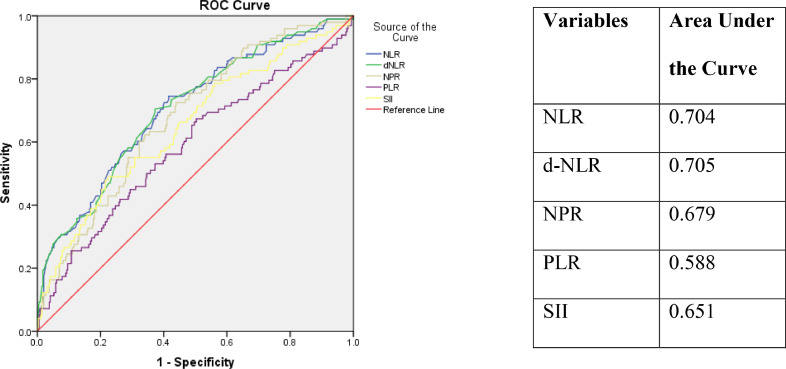
Of 442 included patients, 98 (22.17%) required ICU admission. At the time of admission, patients requiring ICU had a higher neutrophil count and lower lymphocyte and platelet counts than patients not requiring ICU. Peripheral capillary oxygen saturation at admission was significantly lower in those who subsequently required ICU admission. Neutrophil-to-lymphocyte ratio, derived neutrophil-to-lymphocyte ratio, neutrophil-to-platelet ratio, and systemic immune-inflammation index were significant predictors of ICU admission.
Hemogram-derived ratios can be an effective tool in facilitating the early categorization of at-risk patients, enabling timely measures to be taken early in the disease course.
由于高炎症被认为是重症 COVID-19 疾病的驱动因素,检测炎症标志物受到越来越多的关注。我们的研究旨在评估基于血常规得出的性价比高的比值在预测 COVID-19 患者入住重症监护病房(ICU)方面的效用。
这项多中心回顾性研究纳入了来自孟加拉国锡尔赫特四家专门收治 COVID-19 患者医院的住院 COVID-19 患者。分析了人口统计学、临床特征、实验室参数和生存结局数据。采用逻辑回归分析来确定每个基于血常规得出的比值在预测入住 ICU 方面的意义。
在纳入的 442 例患者中,98 例(22.17%)需要入住 ICU。入院时,需要入住 ICU 的患者中性粒细胞计数较高,淋巴细胞和血小板计数较低。随后需要入住 ICU 的患者入院时外周毛细血管血氧饱和度显著较低。中性粒细胞与淋巴细胞比值、衍生中性粒细胞与淋巴细胞比值、中性粒细胞与血小板比值以及全身免疫炎症指数是入住 ICU 的显著预测指标。
基于血常规得出的比值可以成为促进对高危患者进行早期分类的有效工具,从而能够在疾病进程早期及时采取措施。