Thakur Bhaskar, Dubey Pallavi, Benitez Joseph, Torres Joshua P, Reddy Sireesha, Shokar Navkiran, Aung Koko, Mukherjee Debabrata, Dwivedi Alok Kumar
Division of Biostatistics and Epidemiology, Department of Molecular and Translational Medicine, Paul L. Foster School of Medicine, Texas Tech University Health Sciences Center El Paso, 5001 El Paso Drive, El Paso, TX, 79905, USA.
Department of Obstetrics and Gynecology, Paul L. Foster School of Medicine, Texas Tech University Health Sciences Center El Paso, 4800 Alberta Avenue, El Paso, TX, 79905, USA.
Sci Rep. 2021 Apr 20;11(1):8562. doi: 10.1038/s41598-021-88130-w.
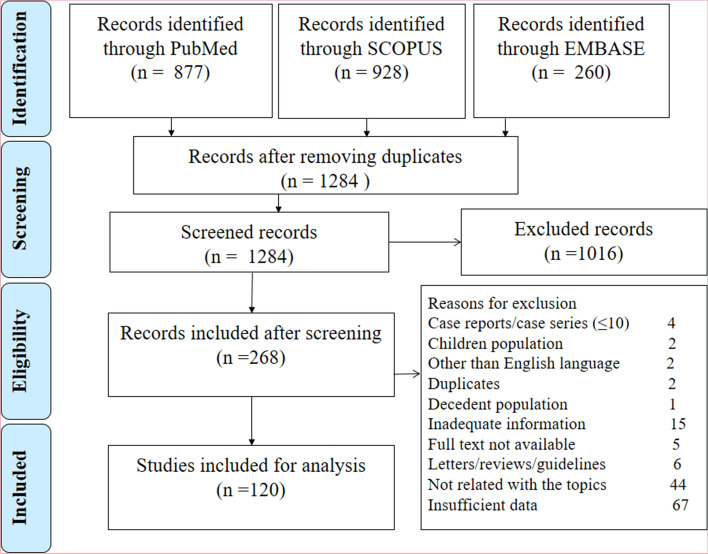
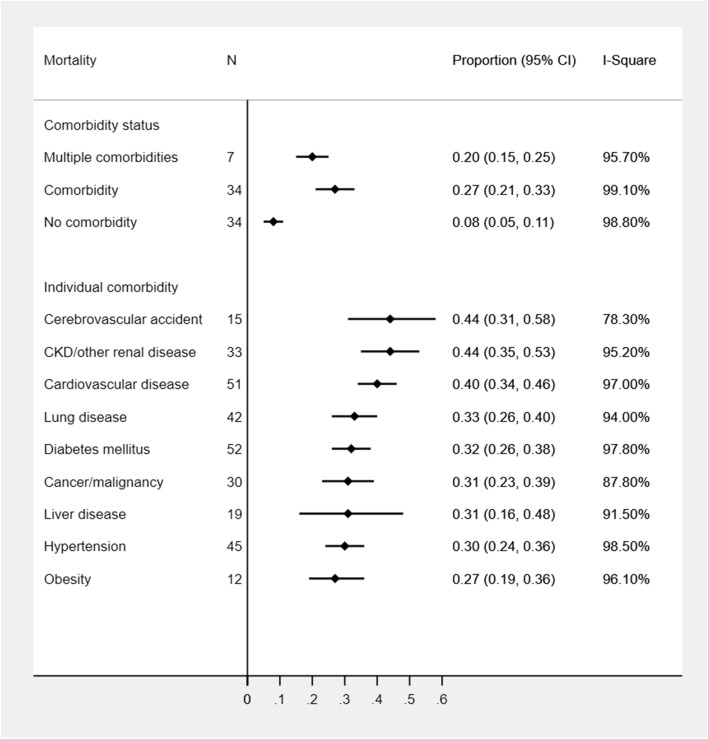
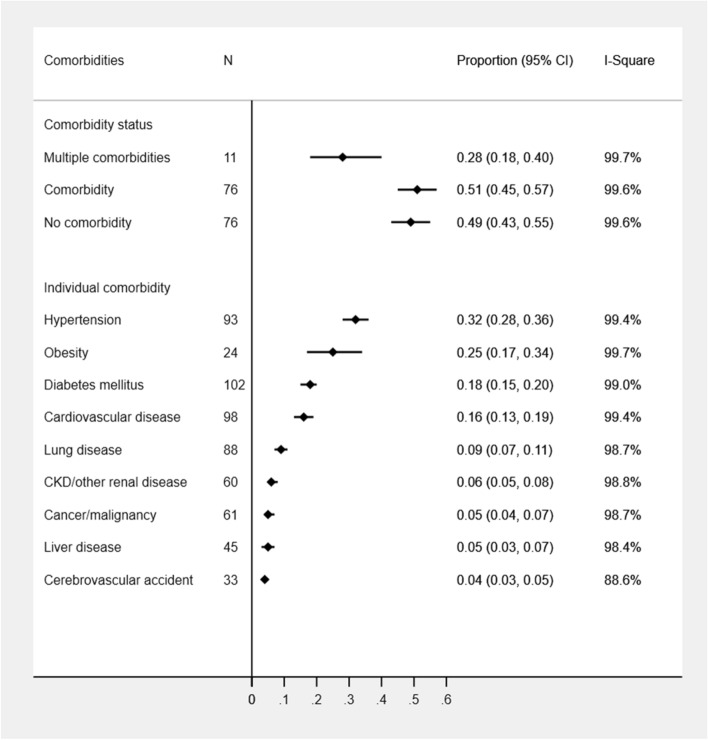
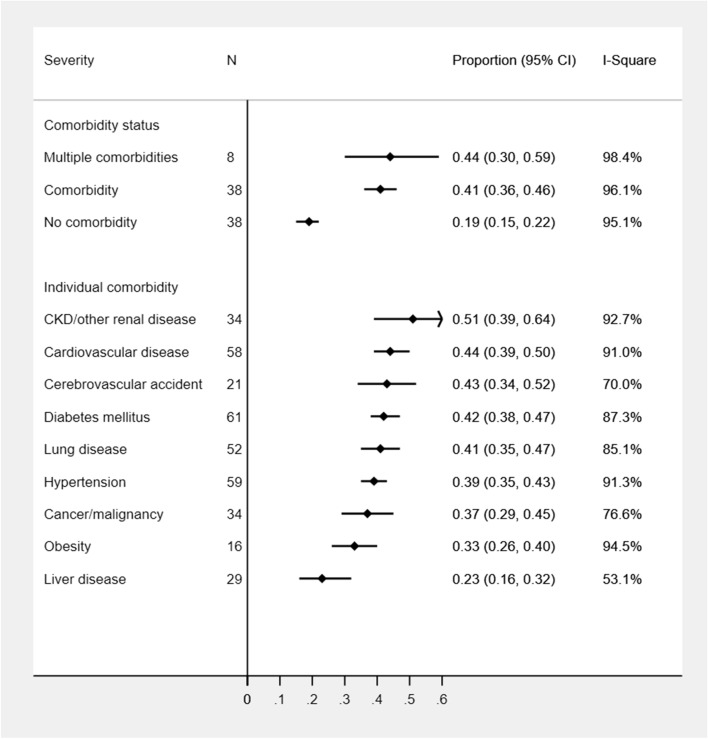
Several comorbidities have been shown to be associated with coronavirus disease 2019 (COVID-19) related severity and mortality. However, considerable variation in the prevalence estimates of comorbidities and their effects on COVID-19 morbidity and mortality have been observed in prior studies. This systematic review and meta-analysis aimed to determine geographical, age, and gender related differences in the prevalence of comorbidities and associated severity and mortality rates among COVID-19 patients. We conducted a search using PubMed, Scopus, and EMBASE to include all COVID-19 studies published between January 1st, 2020 to July 24th, 2020 reporting comorbidities with severity or mortality. We included studies reporting the confirmed diagnosis of COVID-19 on human patients that also provided information on comorbidities or disease outcomes. We used DerSimonian and Laird random effects method for calculating estimates. Of 120 studies with 125,446 patients, the most prevalent comorbidity was hypertension (32%), obesity (25%), diabetes (18%), and cardiovascular disease (16%) while chronic kidney or other renal diseases (51%, 44%), cerebrovascular accident (43%, 44%), and cardiovascular disease (44%, 40%) patients had more COVID-19 severity and mortality respectively. Considerable variation in the prevalence of comorbidities and associated disease severity and mortality in different geographic regions was observed. The highest mortality was observed in studies with Latin American and European patients with any medical condition, mostly older adults (≥ 65 years), and predominantly male patients. Although the US studies observed the highest prevalence of comorbidities in COVID-19 patients, the severity of COVID-19 among each comorbid condition was highest in Asian studies whereas the mortality was highest in the European and Latin American countries. Risk stratification and effective control strategies for the COVID-19 should be done according to comorbidities, age, and gender differences specific to geographical location.
多项合并症已被证明与2019冠状病毒病(COVID-19)的严重程度和死亡率相关。然而,先前的研究发现,合并症患病率估计及其对COVID-19发病率和死亡率的影响存在相当大的差异。本系统评价和荟萃分析旨在确定COVID-19患者合并症患病率、相关严重程度和死亡率在地理、年龄和性别方面的差异。我们使用PubMed、Scopus和EMBASE进行检索,纳入2020年1月1日至2020年7月24日发表的所有报告合并症与严重程度或死亡率的COVID-19研究。我们纳入了报告人类患者确诊COVID-19且提供合并症或疾病结局信息的研究。我们使用DerSimonian和Laird随机效应方法计算估计值。在120项涉及125446名患者的研究中,最常见的合并症是高血压(32%)、肥胖(25%)、糖尿病(18%)和心血管疾病(16%),而慢性肾脏或其他肾脏疾病患者(51%,44%)、脑血管意外患者(43%,44%)和心血管疾病患者(44%,40%)分别有更高的COVID-19严重程度和死亡率。观察到不同地理区域合并症患病率以及相关疾病严重程度和死亡率存在相当大的差异。在针对任何医疗状况的拉丁美洲和欧洲患者(大多为老年人(≥65岁),且主要为男性患者)的研究中观察到最高死亡率。尽管美国的研究发现COVID-19患者中合并症的患病率最高,但在亚洲的研究中,每种合并症情况下COVID-19的严重程度最高,而在欧洲和拉丁美洲国家死亡率最高。应根据地理位置特有的合并症、年龄和性别差异对COVID-19进行风险分层和制定有效的控制策略。