Department of Pharmacology and Toxicology, College of Pharmacy, King Saud University, Riyadh 11495, Saudi Arabia.
Department of Biochemistry, College of Pharmacy, Mansoura University, Mansoura 35516, Egypt.
Oxid Med Cell Longev. 2022 Jun 8;2022:9479456. doi: 10.1155/2022/9479456. eCollection 2022.
Nonalcoholic fatty liver disease (NAFLD) is the hepatic manifestation of metabolic syndrome, and if untreated, it may propagate into end-stage liver disease. The classical arm of the renin-angiotensin system (RAS) has a fundamental role in triggering oxidative stress and inflammation, which play potential roles in the pathogenesis of NAFLD. However, the nonclassical alternative axis of RAS, angiotensin- (Ang-) converting enzyme 2 (ACE2)/Ang (1-7)/Mas receptor, opposes the actions of the classical arm, mitigates the metabolic dysfunction, and improves hepatic lipid metabolism rendering it a promising protective target against NAFLD. The current study is aimed at investigating the impact of chrysin, a well-known antioxidant flavonoid, on this defensive RAS axis in NAFLD.
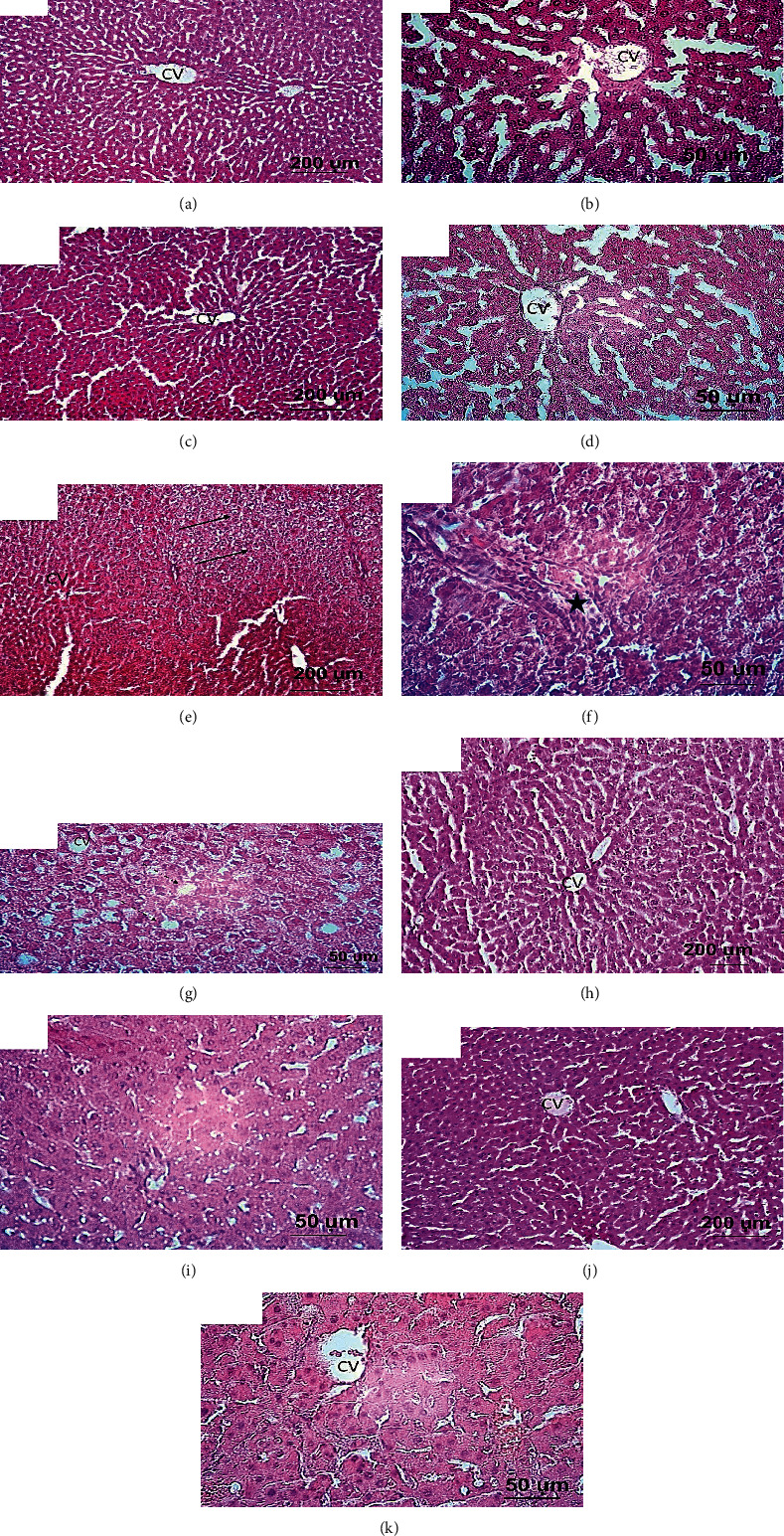
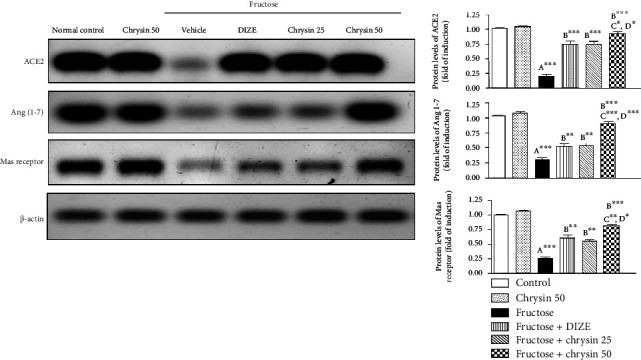
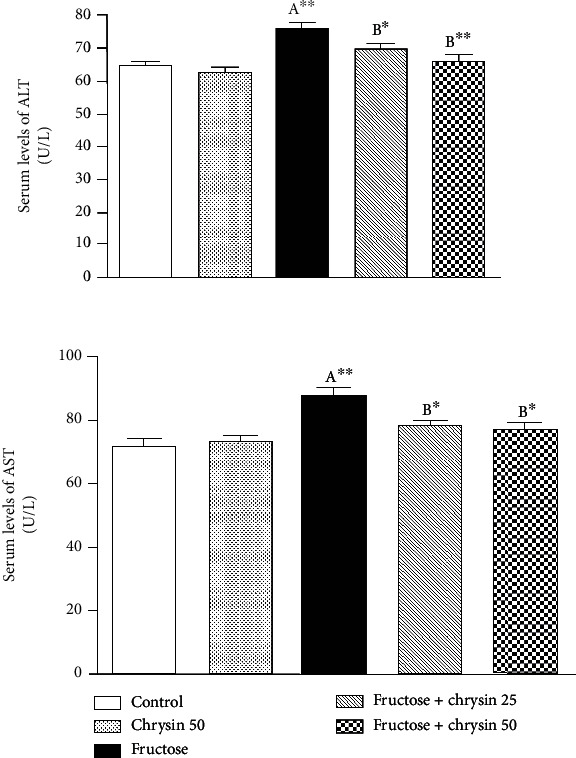
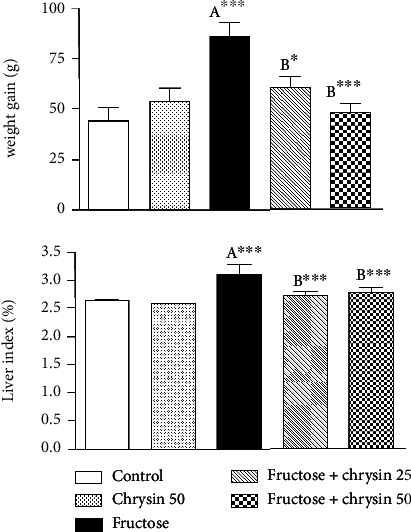
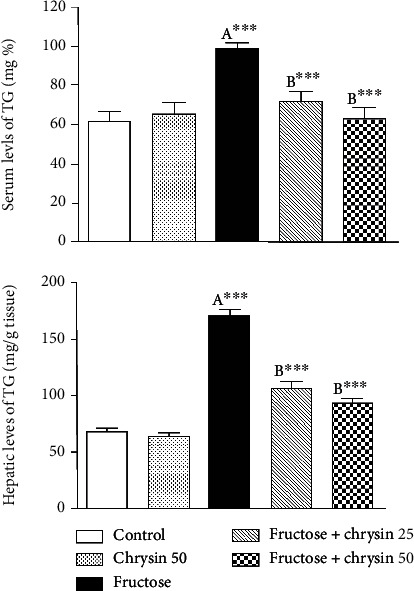
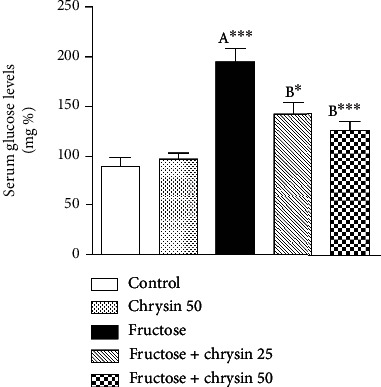
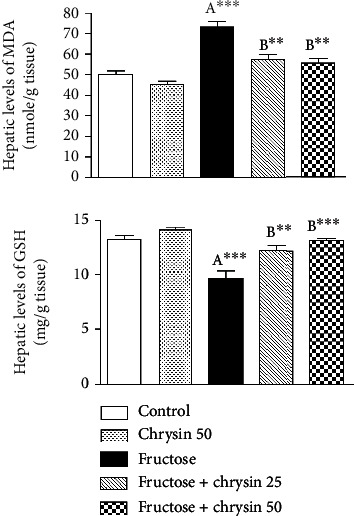
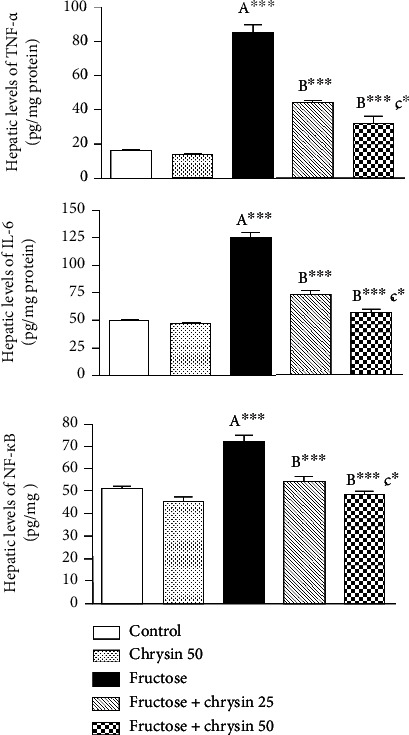
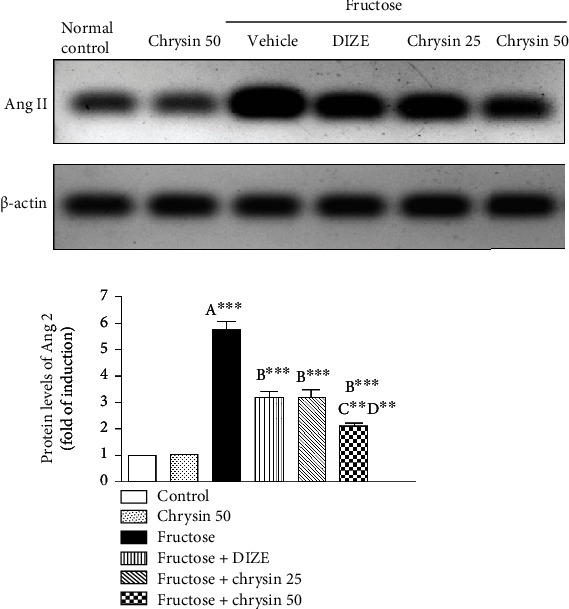
Rats were randomly distributed and treated daily for eight weeks as follows: the normal control, chrysin control (50 mg/kg, p.o), NAFLD group (received 20% fructose in drinking water), and treated groups (25 and 50 mg/kg chrysin given orally and concomitantly with fructose). Diminazene aceturate (DIZE) (15 mg/kg, s.c.) was used as a reference ACE2 activator. . High fructose induced significant weight gain, hepatocyte degeneration with fat accumulation, and inflammatory cell infiltration (as examined by H&E staining). This was accompanied by a substantial increase in liver enzymes, glucose, circulating and hepatic triglycerides, lipid peroxides, inflammatory cytokines, and Ang II (the main component of classical RAS). At the same time, protein levels of ACE2, Ang (1-7), and Mas receptors were markedly reduced. Chrysin (25 and 50 mg/kg) significantly ameliorated these abnormalities, with a prominent effect of the dose of 50 mg/kg over DIZE and the lower dose in improving ACE2, Ang (1-7), and Mas. . Chrysin is a promising efficient protective remedy against NAFLD; mechanisms include the activation of ACE2/Ang (1-7)/Mas axis.
非酒精性脂肪性肝病(NAFLD)是代谢综合征的肝脏表现,如果不治疗,它可能会发展为终末期肝病。经典的肾素-血管紧张素系统(RAS)在引发氧化应激和炎症方面起着至关重要的作用,这些在 NAFLD 的发病机制中起着潜在作用。然而,RAS 的非经典替代轴,血管紧张素转化酶 2(ACE2)/血管紧张素(1-7)/Mas 受体,与经典轴相反,减轻代谢功能障碍,改善肝脏脂质代谢,使其成为治疗 NAFLD 的有前途的保护靶点。本研究旨在探讨白杨素,一种著名的抗氧化黄酮类化合物,对 NAFLD 中这种防御性 RAS 轴的影响。
大鼠随机分组,每日处理 8 周,如下:正常对照组、白杨素对照组(50mg/kg,po)、NAFLD 组(饮用水中加入 20%果糖)和治疗组(25 和 50mg/kg 白杨素口服,同时给予果糖)。二甲氮嗪乙酸盐(DIZE)(15mg/kg,sc)用作 ACE2 激活剂的参考。高果糖诱导显著的体重增加、肝细胞变性伴脂肪堆积和炎症细胞浸润(H&E 染色检查)。这伴随着肝酶、血糖、循环和肝甘油三酯、脂质过氧化物、炎症细胞因子和 Ang II(经典 RAS 的主要成分)的大量增加。同时,ACE2、Ang(1-7)和 Mas 受体的蛋白水平显著降低。白杨素(25 和 50mg/kg)显著改善了这些异常,50mg/kg 剂量的效果明显优于 DIZE 和低剂量,在改善 ACE2、Ang(1-7)和 Mas 方面效果更为显著。白杨素是一种很有前途的治疗非酒精性脂肪性肝病的有效保护剂;其机制包括激活 ACE2/Ang(1-7)/Mas 轴。