Xiao Guilin, Zhang Qinghua, Zeng Xiangguo, Chen Xiyang, Liu Sijia, Han Yongchao
Hubei Key Laboratory of Vegetable Germplasm Enhancement and Genetic Improvement, Institute of Industrial Crops, Hubei Academy of Agricultural Sciences, Wuhan, China.
Front Plant Sci. 2022 May 27;13:888939. doi: 10.3389/fpls.2022.888939. eCollection 2022.
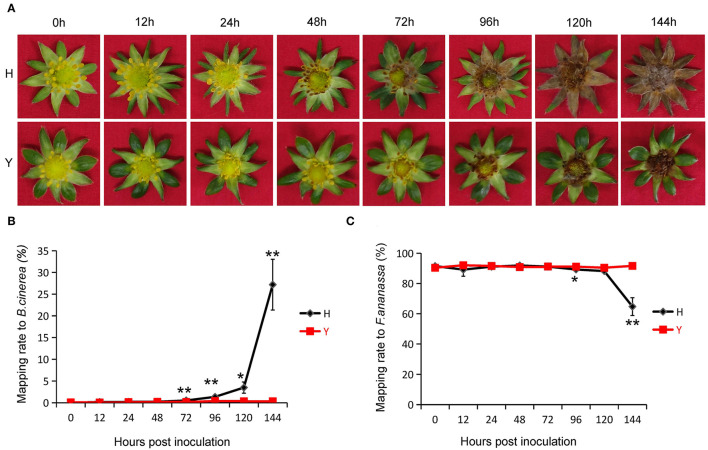
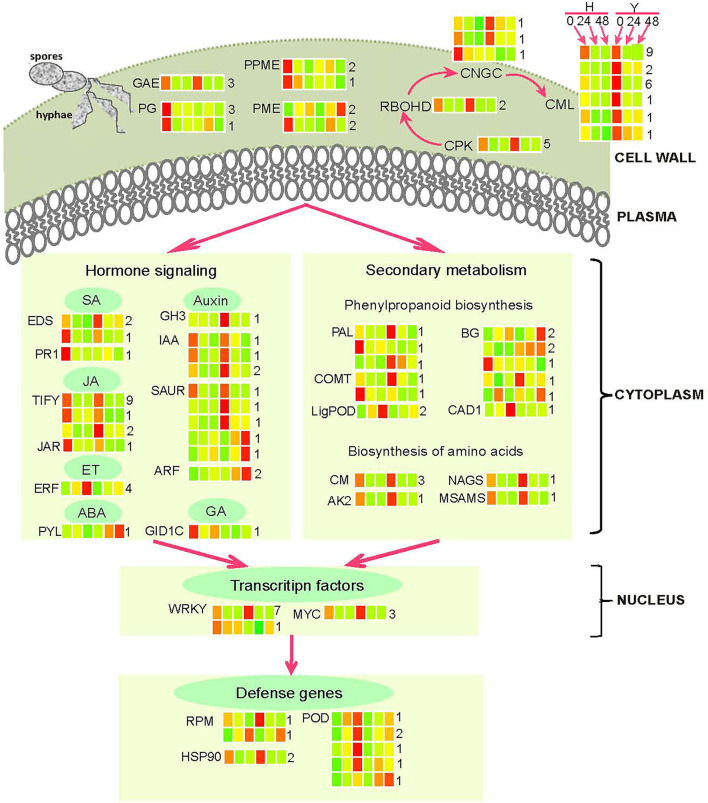
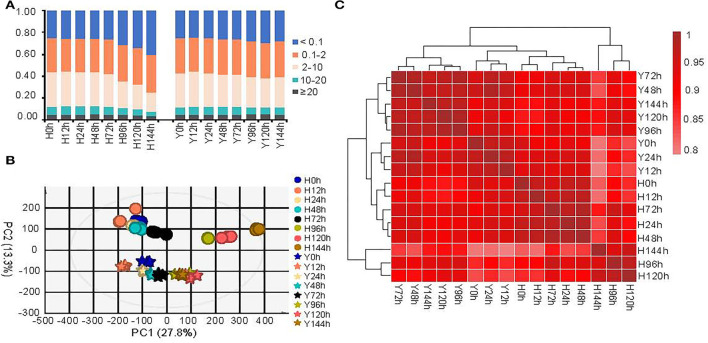
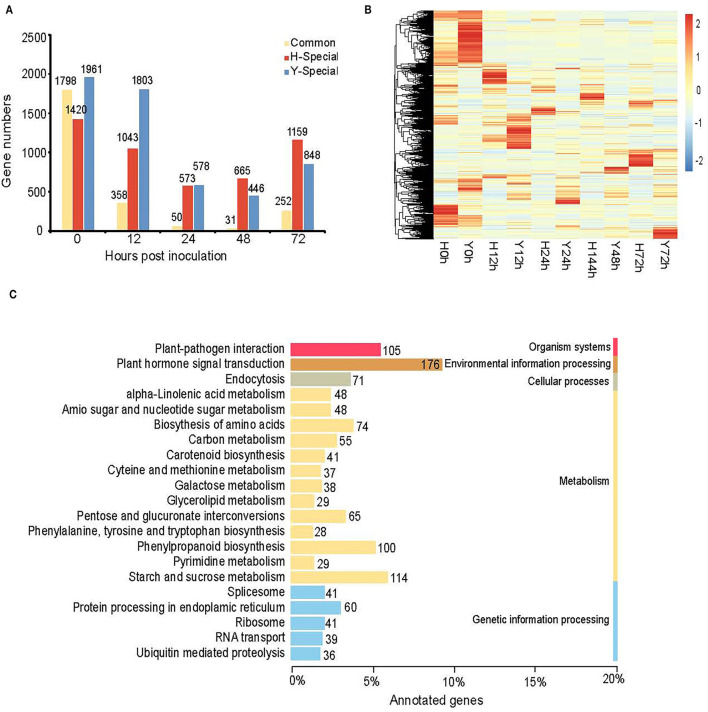
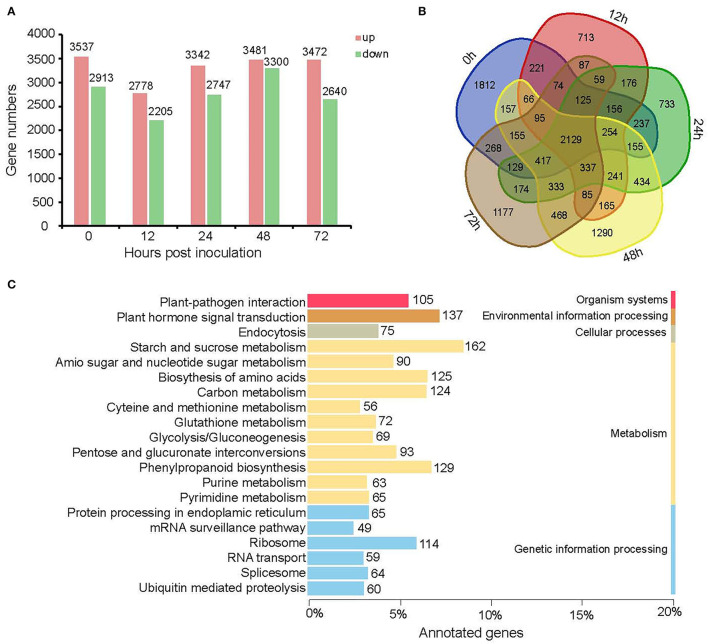
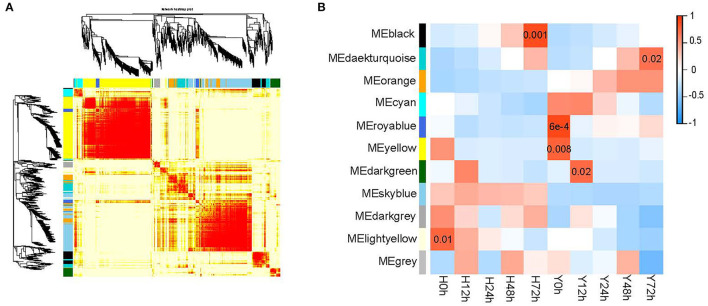
Gray mold caused by , which is considered to be the second most destructive necrotrophic fungus, leads to major economic losses in strawberry ( × ) production. preferentially infects strawberry flowers and fruits, leading to flower blight and fruit rot. Compared with those of the fruit, the mechanisms of flower defense against remain largely unexplored. Therefore, in this study, we aimed to unveil the resistance mechanisms of strawberry flower through dynamic and comparative transcriptome analysis with resistant and susceptible strawberry cultivars. Our experimental data suggest that resistance to in the strawberry flower is probably regulated at the transcriptome level during the early stages of infection and strawberry flower has highly complex and dynamic regulatory networks controlling a multi-layered defense response to . First of all, the higher expression of disease-resistance genes but lower expression of cell wall degrading enzymes and peroxidases leads to higher resistance to in the resistant cultivar. Interestingly, CPKs, RBOHDs, CNGCs, and CMLs comprised a calcium signaling pathway especially play a crucial role in enhancing resistance by increasing their expression. Besides, six types of phytohormones forming a complex regulatory network mediated flower resistance, especially JA and auxin. Finally, the genes involved in the phenylpropanoid and amino acids biosynthesis pathways were gene sets specially expressed or different expression genes, both of them contribute to the flower resistance to . These data provide the foundation for a better understanding of strawberry gray mold, along with detailed genetic information and resistant materials to enable genetic improvement of strawberry plant resistance to gray mold.
由[病原菌名称未给出]引起的灰霉病被认为是第二大最具破坏性的坏死营养型真菌,在草莓([草莓品种未给出]×[草莓品种未给出])生产中导致重大经济损失。[病原菌名称未给出]优先感染草莓花和果实,导致花腐和果腐。与果实相比,花对[病原菌名称未给出]的防御机制在很大程度上仍未得到探索。因此,在本研究中,我们旨在通过对抗性和易感草莓品种进行动态和比较转录组分析,揭示草莓花的抗性机制。我们的实验数据表明,草莓花对[病原菌名称未给出]的抗性可能在感染早期的转录组水平上受到调控,并且草莓花具有高度复杂和动态的调控网络,控制着对[病原菌名称未给出]的多层次防御反应。首先,抗病基因的高表达但细胞壁降解酶和过氧化物酶的低表达导致抗性品种对[病原菌名称未给出]具有更高的抗性。有趣的是,由CPKs、RBOHDs、CNGCs和CMLs组成的钙信号通路尤其通过增加它们的表达在增强抗性中发挥关键作用。此外,六种植物激素形成一个复杂的调控网络介导花的抗性,尤其是茉莉酸(JA)和生长素。最后,参与苯丙烷类和氨基酸生物合成途径的基因分别是特别表达的基因集或差异表达基因,它们都有助于花对[病原菌名称未给出]的抗性。这些数据为更好地理解草莓灰霉病提供了基础,同时提供了详细的遗传信息和抗性材料,以实现草莓植株对灰霉病抗性的遗传改良。