Department of Agricultural, Food and Environmental Sciences, Università Politecnica delle Marche, Ancona, Italy.
Department of Biotechnology, University of Verona, Strada Le Grazie, 15, 37134, Verona, Italy.
Plant Cell Rep. 2024 Jul 24;43(8):201. doi: 10.1007/s00299-024-03288-7.
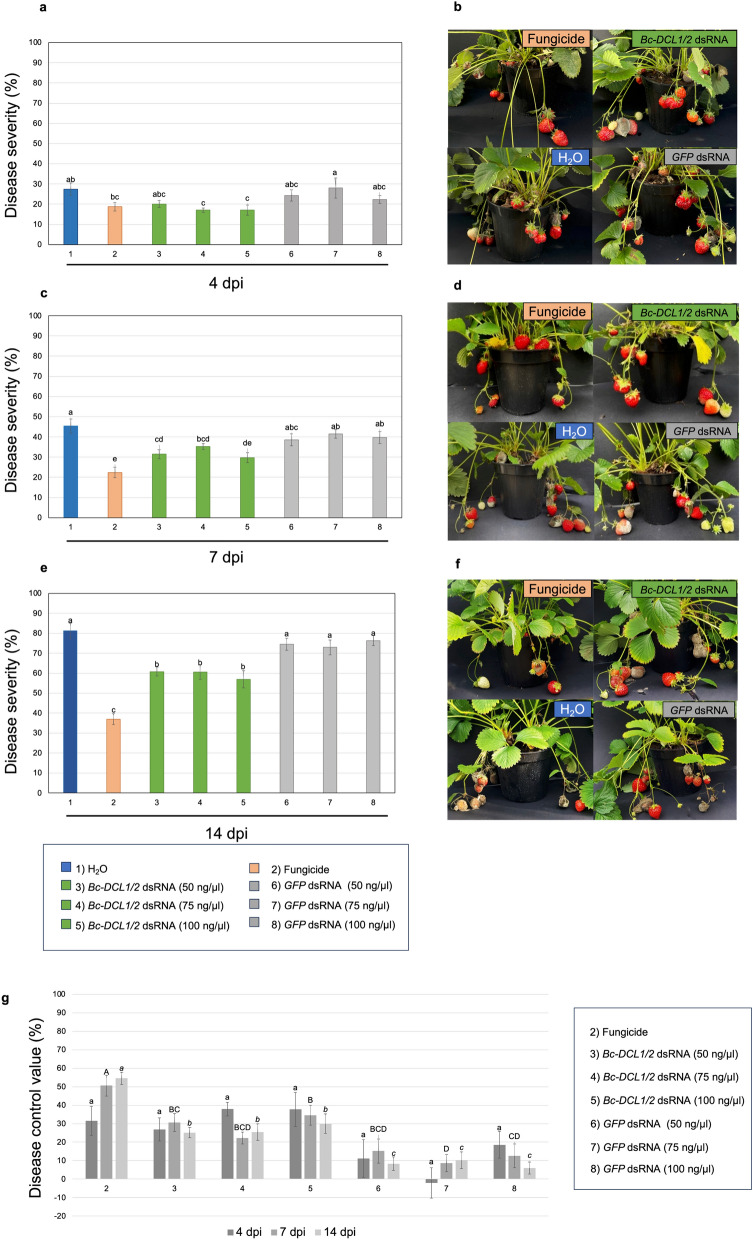
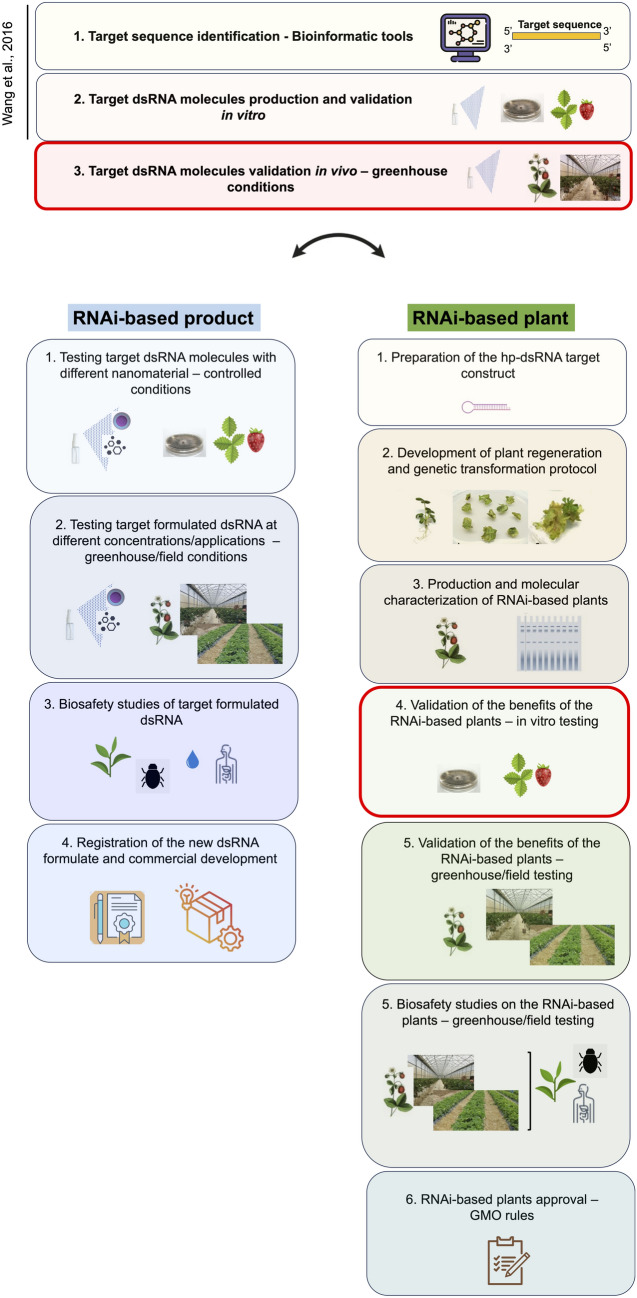
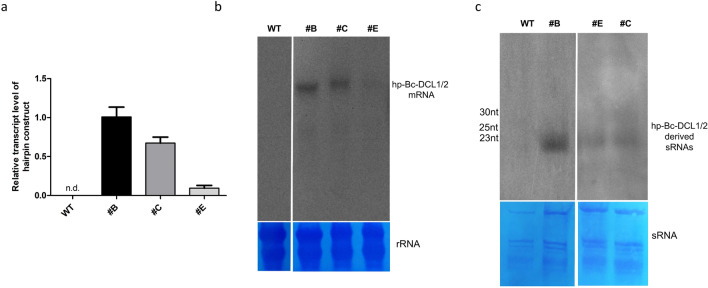
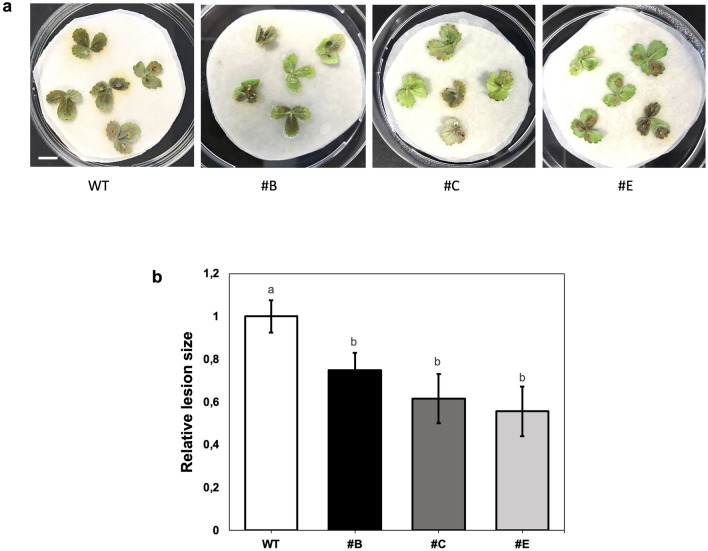
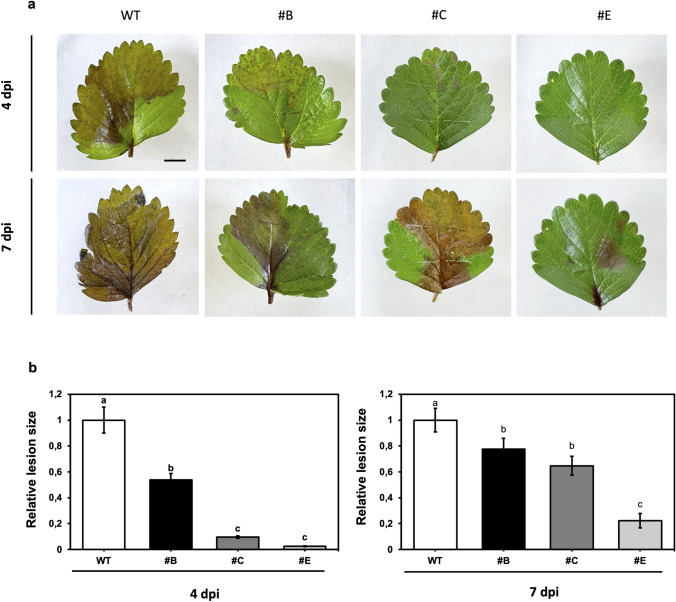
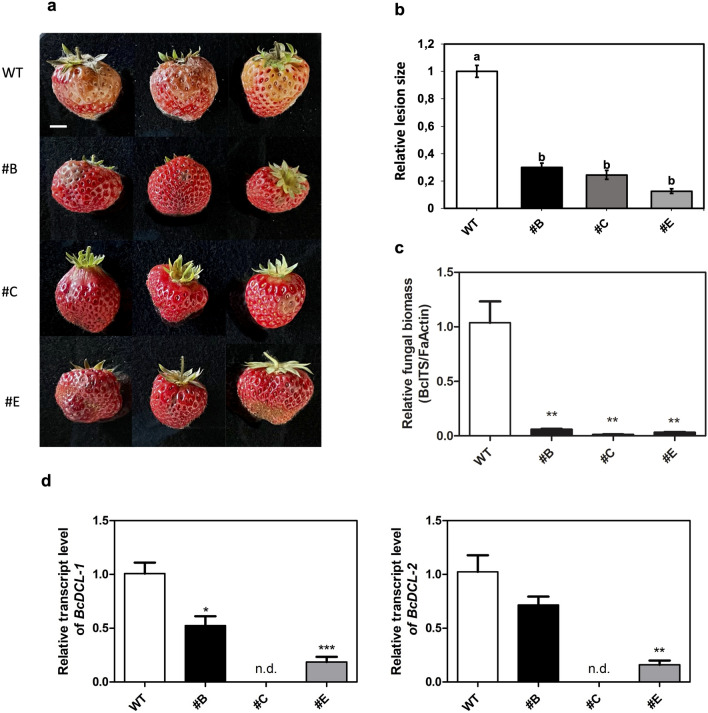
Gene silencing of BcDCL genes improves gray mold disease control in the cultivated strawberry. Gene silencing technology offers new opportunities to develop new formulations or new pathogen-resistant plants for reducing impacts of agricultural systems. Recent studies offered the proof of concept that the symptoms of gray mold can be reduced by downregulating Dicer-like 1 (DCL1) and 2 (DCL2) genes of Botrytis cinerea. In this study, we demonstrate that both solutions based on dsRNA topical treatment and in planta expression targeting BcDCL1 and BcDCL2 genes can be used to control the strawberry gray mold, the most harmful disease for different fruit crops. 50, 70 and 100 ng μL of naked BcDCL1/2 dsRNA, sprayed on plants of Fragaria x ananassa cultivar Romina in the greenhouse, displayed significant reduction of susceptibility, compared to the negative controls, but to a lesser extent than the chemical fungicide. Three independent lines of Romina cultivar were confirmed for their stable expression of the hairpin gene construct that targets the Bc-DCL1 and 2 sequences (hp-Bc-DCL1/2), and for the production of hp construct-derived siRNAs, by qRT-PCR and Northern blot analyses. In vitro and in vivo detached leaves, and fruits from the hp-Bc-DCL1/2 lines showed significantly enhanced tolerance to this fungal pathogen compared to the control. This decreased susceptibility was correlated to the reduced fungal biomass and the downregulation of the Bc-DCL1 and 2 genes in B. cinerea. These results confirm the potential of both RNAi-based products and plants for protecting the cultivated strawberry from B. cinerea infection, reducing the impact of chemical pesticides on the environment and the health of consumers.
BcDCL 基因的基因沉默可提高栽培草莓灰霉病的防治效果。基因沉默技术为开发新制剂或新的抗病原体植物提供了新的机会,以减少农业系统的影响。最近的研究提供了概念验证,即通过下调灰葡萄孢的 Dicer-like 1 (DCL1) 和 2 (DCL2) 基因,可以减少灰霉病的症状。在这项研究中,我们证明了基于 dsRNA 局部处理和针对 BcDCL1 和 BcDCL2 基因的体内表达的两种解决方案都可用于控制草莓灰霉病,这是对不同水果作物危害最大的疾病。与阴性对照相比,在温室中对 Fragaria x ananassa 品种 Romina 植物喷洒 50、70 和 100 ng μL 的裸露 BcDCL1/2 dsRNA,可显著降低易感性,但程度低于化学杀菌剂。通过 qRT-PCR 和 Northern blot 分析,证实了 Romina 品种的三个独立系稳定表达了针对 Bc-DCL1 和 2 序列的发夹基因构建体(hp-Bc-DCL1/2),并且产生了 hp 构建体衍生的 siRNA。与对照相比,体外和体内分离的叶片和果实来自 hp-Bc-DCL1/2 系表现出对这种真菌病原体的显著耐受性增强。这种易感性降低与真菌生物量减少以及 B. cinerea 中 Bc-DCL1 和 2 基因的下调有关。这些结果证实了基于 RNAi 的产品和植物保护栽培草莓免受 B. cinerea 感染的潜力,减少了化学农药对环境和消费者健康的影响。