Department of Hematology, Leiden University Medical Center, Leiden, The Netherlands.
Center for Proteomics and Metabolomics, Leiden University Medical Center, Leiden, The Netherlands.
J Immunother Cancer. 2022 Jun;10(6). doi: 10.1136/jitc-2021-004409.
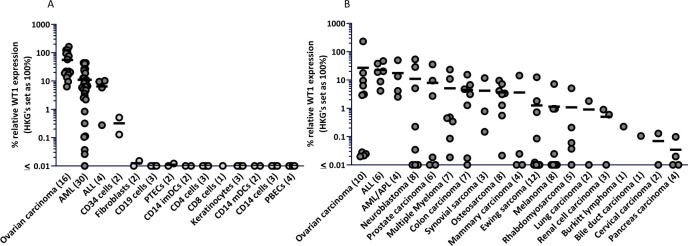
Transcription factor Wilms' tumor gene 1 (WT1) is an ideal tumor target based on its expression in a wide range of tumors, low-level expression in normal tissues and promoting role in cancer progression. In clinical trials, WT1 is targeted using peptide-based or dendritic cell-based vaccines and T-cell receptor (TCR)-based therapies. Antitumor reactivities were reported, but T-cell reactivity is hampered by self-tolerance to WT1 and limited number of WT1 peptides, which were thus far selected based on HLA peptide binding algorithms.
In this study, we have overcome both limitations by searching in the allogeneic T-cell repertoire of healthy donors for high-avidity WT1-specific T cells, specific for WT1 peptides derived from the HLA class I associated ligandome of primary leukemia and ovarian carcinoma samples.
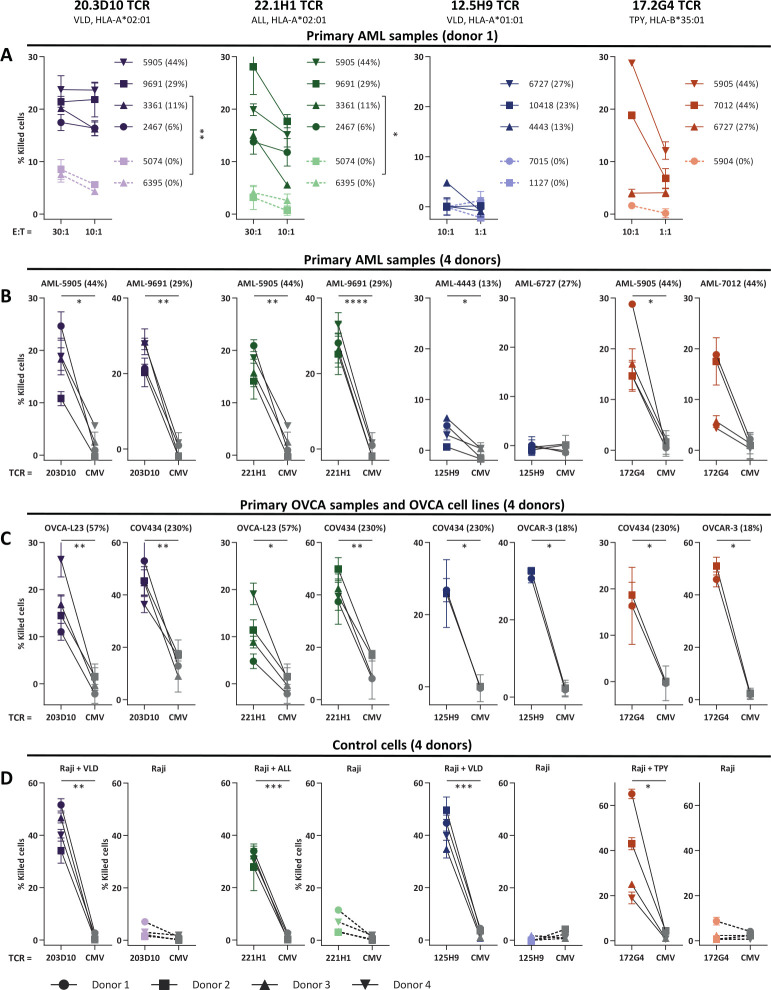
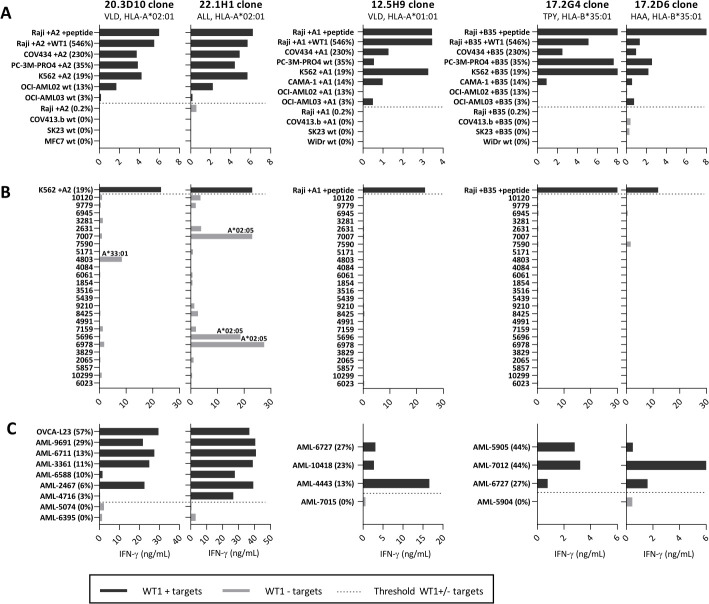
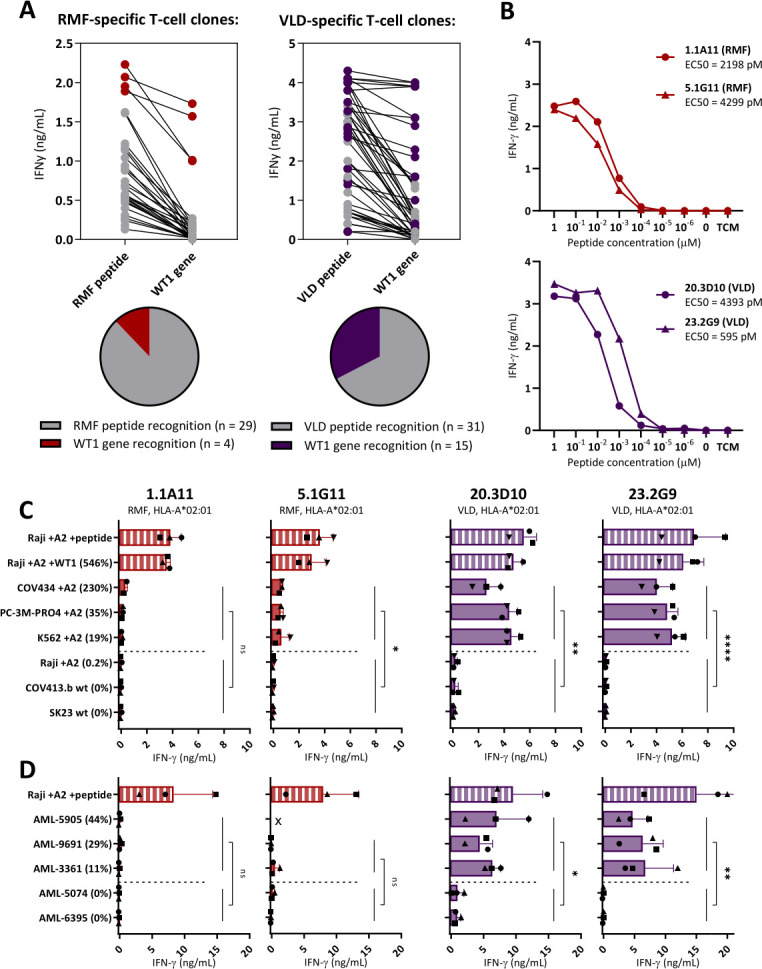
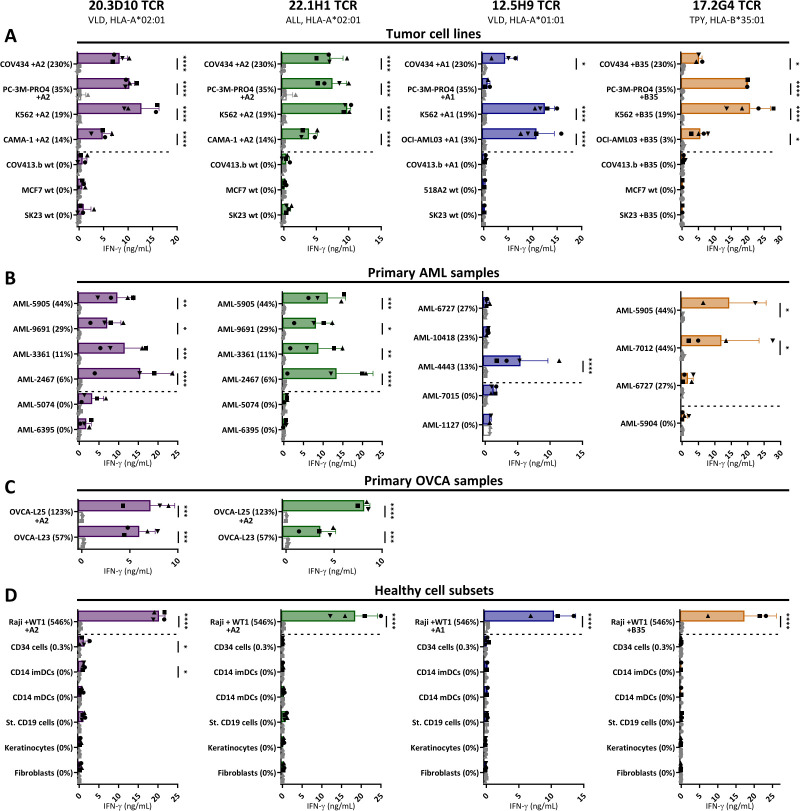
Using broad panels of malignant cells and healthy cell subsets, T-cell clones were selected that demonstrated potent and specific anti-WT1 T-cell reactivity against five of the eight newly identified WT1 peptides. Notably, T-cell clones for WT1 peptides previously used in clinical trials lacked reactivity against tumor cells, suggesting limited processing and presentation of these peptides. The TCR sequences of four T-cell clones were analyzed and TCR gene transfer into CD8+ T cells installed antitumor reactivity against WT1-expressing solid tumor cell lines, primary acute myeloid leukemia (AML) blasts, and ovarian carcinoma patient samples.
Our approach resulted in a set of naturally expressed WT1 peptides and four TCRs that are promising candidates for TCR gene transfer strategies in patients with WT1-expressing tumors, including AML and ovarian carcinoma.
转录因子 Wilms 瘤基因 1(WT1)是一个理想的肿瘤靶点,因为它在广泛的肿瘤中表达,在正常组织中低水平表达,并促进癌症进展。在临床试验中,WT1 是通过基于肽的或树突状细胞疫苗和基于 T 细胞受体(TCR)的疗法来靶向的。已经报道了抗肿瘤反应性,但 T 细胞反应性受到对 WT1 的自身耐受性和 WT1 肽数量有限的阻碍,迄今为止,这些肽是根据 HLA 肽结合算法选择的。
在这项研究中,我们通过在健康供体的同种异体 T 细胞库中搜索高亲和力 WT1 特异性 T 细胞,克服了这两个限制,这些 T 细胞针对源自原发性白血病和卵巢癌样本 HLA Ⅰ类相关配体组的 WT1 肽。
使用广泛的恶性细胞和健康细胞亚群面板,选择了 T 细胞克隆,这些克隆对五种新鉴定的 WT1 肽表现出强大且特异性的抗 WT1 T 细胞反应性。值得注意的是,先前在临床试验中使用的 WT1 肽的 T 细胞克隆对肿瘤细胞缺乏反应性,表明这些肽的加工和呈递有限。对四个 T 细胞克隆的 TCR 序列进行了分析,并将 TCR 基因转移到 CD8+T 细胞中,对表达 WT1 的实体肿瘤细胞系、原发性急性髓系白血病(AML)母细胞和卵巢癌患者样本安装了抗肿瘤反应性。
我们的方法产生了一组天然表达的 WT1 肽和四个 TCR,它们是在表达 WT1 的肿瘤患者中进行 TCR 基因转移策略的有前途的候选物,包括 AML 和卵巢癌。