Institute for Medical Microbiology and Hospital Epidemiology, Hannover Medical School (MHH), Carl-Neuberg-Straße 1, 30625, Hannover, Germany.
Institute for Medical Microbiology, Virology and Hygiene, University Medical Center Hamburg-Eppendorf, Martinistraße 52, 20246, Hamburg, Germany.
Antimicrob Resist Infect Control. 2022 Jun 21;11(1):88. doi: 10.1186/s13756-022-01120-z.
Respiratory syncytial virus (RSV) causes community-acquired respiratory tract infections during winter. However, outbreaks in hospitals also occur repeatedly. In particular, patients with hematologic malignancies are at an increased risk for a severe and potentially fatal course of RSV infection. Here we present the investigation of an RSV outbreak in a hematology ward for adults following the ORION statement.
An epidemiologic and molecular outbreak analysis was performed. We developed and employed a minimal oligonucleotide probe set in target capture probe sequencing that allows cost-effective RSV-A or -B capturing to reconstruct RSV genomes from clinical samples.
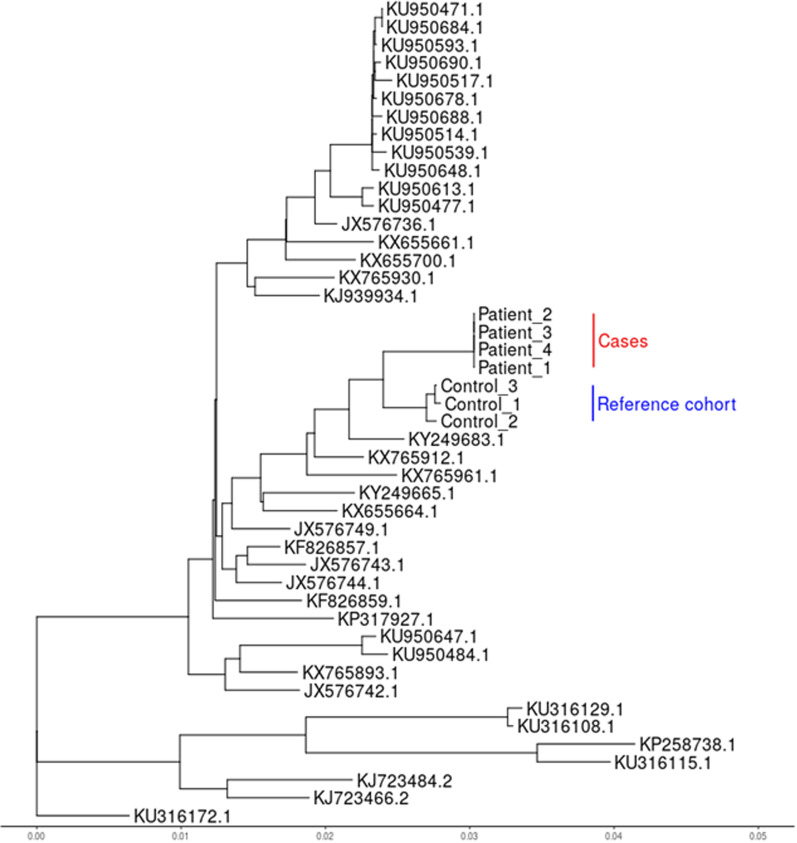
Four adult patients were involved in the outbreak caused by RSV-B in March 2019. The enforcement of the pre-existing infection control measures by effective training of hospital staff contributed to a successful containment. PCR-based RSV screening on the ward enabled early detection of new cases and rapid isolation measures. The molecular analysis demonstrated that the outbreak sequences were highly related and distinct to other RSV-B strains circulating at the same time.
A multimodal infection control concept is essential for the timely detection and control of RSV outbreaks in patients with hematological disease. Among other measures, preventive screening for respiratory viruses is recommended. Furthermore, the integration of conventional and molecular epidemiology, such as whole-genome sequencing and variant calling, significantly contributes to the understanding of transmission pathways. Based on this, appropriate conclusions can be drawn for targeted prevention measures that have prepared us for the COVID-19 pandemic beyond the RSV approach described here.
呼吸道合胞病毒(RSV)在冬季引起社区获得性呼吸道感染。然而,医院也会反复爆发此类感染。特别是血液系统恶性肿瘤患者,RSV 感染的严重程度和潜在致命风险更高。本研究根据 ORION 声明,对血液科成人病房的 RSV 暴发进行了调查。
进行了流行病学和分子暴发分析。我们开发并使用了目标捕获探针测序中的最小寡核苷酸探针集,该探针集允许以具有成本效益的方式捕获 RSV-A 或 -B,从而从临床样本中重建 RSV 基因组。
2019 年 3 月,4 名成年患者感染 RSV-B 暴发。通过对医院工作人员进行有效的培训来执行现有的感染控制措施,有助于成功控制疫情。病房内进行基于 PCR 的 RSV 筛查,能够早期发现新病例并采取快速隔离措施。分子分析表明,暴发序列高度相关,与同时流行的其他 RSV-B 株明显不同。
针对血液系统疾病患者的 RSV 暴发,多模式感染控制概念至关重要。除其他措施外,建议对呼吸道病毒进行预防性筛查。此外,整合常规和分子流行病学,如全基因组测序和变异调用,有助于深入了解传播途径。在此基础上,可以得出有针对性的预防措施结论,这些措施使我们为 COVID-19 大流行做好了准备,不仅限于本文所述的 RSV 方法。