Lunsky Yona, Redquest Brianne, Albaum Carly, Hutton Sue, Share Maxine, Share-Strom Daniel, Weiss Jonathan
Azrieli Adult Neurodevelopmental Centre, Campbell Family Mental Health Research Institute, Centre for Addiction and Mental Health, Toronto, ON Canada.
Department of Psychiatry, Temerty Faculty of Medicine, University of Toronto, Toronto, Canada.
Mindfulness (N Y). 2022;13(7):1706-1718. doi: 10.1007/s12671-022-01909-4. Epub 2022 Jun 13.
Although mindfulness-based interventions have been shown to be helpful in reducing psychological distress in autistic adults, limited research has explored virtual delivery in the autism community. We designed an adapted virtual group-based mindfulness intervention, based on input from autistic adults, and evaluated its feasibility in terms of demand, acceptability, implementation, practicality, adaptation, and limited efficacy testing.
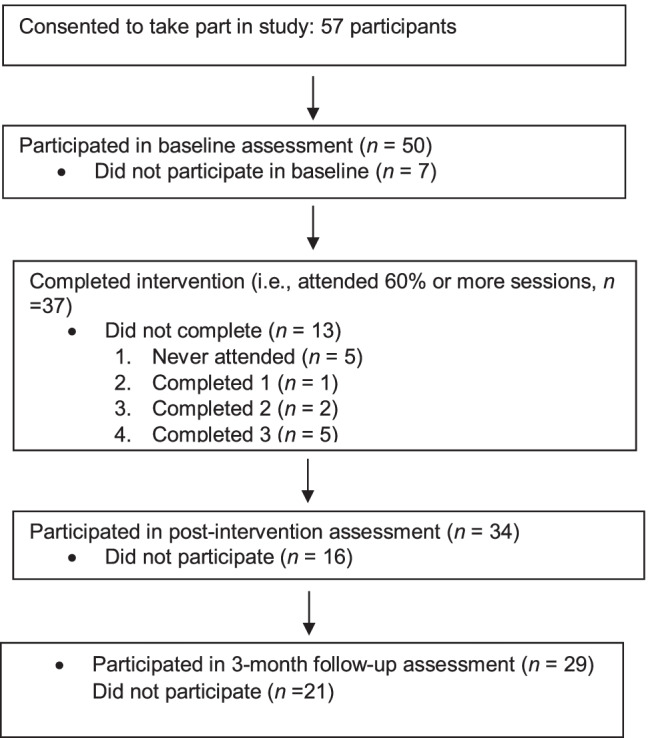
Informed by an online needs assessment survey of 77 autistic adults, 37 individuals completed a six-week autism informed manualized course delivered virtually. Participants completed pre, post, and 12-week follow up, and also provided qualitative feedback.
There was a demand for the course, adaptations were successful, and participants indicated good acceptability of the intervention. Open-ended feedback highlighted advantages and challenges with the technology, the benefits of connecting with other autistic adults, and unique aspects of the mindfulness instruction. Participants reported reduced levels of distress which were maintained at three-month follow-up, and increased mindfulness, and self-compassion.
Autism-informed adaptations to standard mindfulness-based interventions can lead to self-reported improvements in mindfulness, self-compassion, and distress by autistic adults. Continued research with outcome measures tailored toward autistic adults will be important, during and post-pandemic.
尽管基于正念的干预措施已被证明有助于减轻自闭症成年人的心理困扰,但在自闭症群体中探索虚拟方式提供此类干预的研究有限。我们根据自闭症成年人的意见设计了一种经过改编的基于虚拟小组的正念干预措施,并从需求、可接受性、实施、实用性、适应性以及有限的疗效测试等方面评估了其可行性。
在对77名自闭症成年人进行的在线需求评估调查的基础上,37人完成了一个为期六周的、根据自闭症情况定制的、以手册为指导的虚拟课程。参与者完成了课前、课后及12周的随访,并提供了定性反馈。
对该课程有需求,改编很成功,参与者表示该干预措施具有良好的可接受性。开放式反馈突出了技术方面的优势和挑战、与其他自闭症成年人建立联系的益处以及正念指导的独特之处。参与者报告称困扰程度有所降低,且在三个月的随访中仍保持这一水平,同时正念和自我同情有所增强。
针对标准的基于正念的干预措施进行自闭症情况相关的改编,可使自闭症成年人自我报告在正念、自我同情和困扰方面有所改善。在疫情期间及之后,继续采用针对自闭症成年人定制的结果测量方法进行研究将很重要。