Bai Shurui, Hew Khe Foon, Gonda Donn Emmanuel, Huang Biyun, Liang Xinyi
Faculty of Education, The University of Hong Kong, Pok Fu Lam, Hong Kong SAR.
The University of Hong Kong, Room 322, Runme Shaw Building, Pokfulam Road, Pok Fu Lam, Hong Kong SAR.
Int J Educ Technol High Educ. 2022;19(1):29. doi: 10.1186/s41239-022-00335-9. Epub 2022 Jun 14.
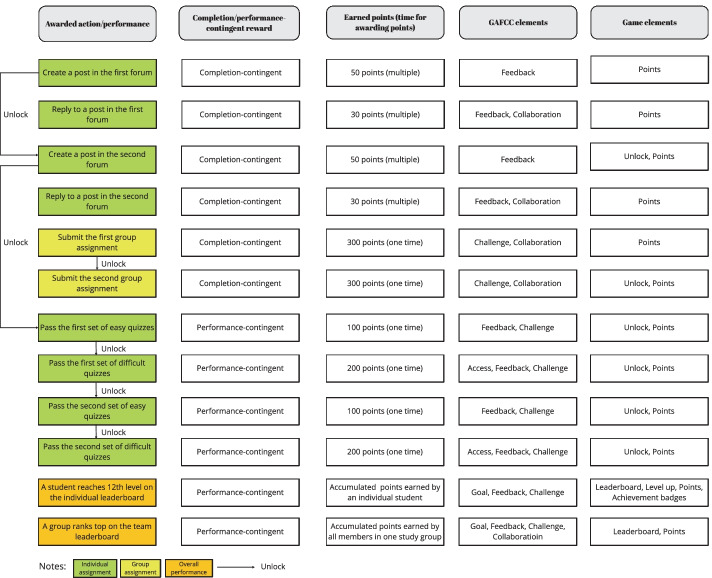
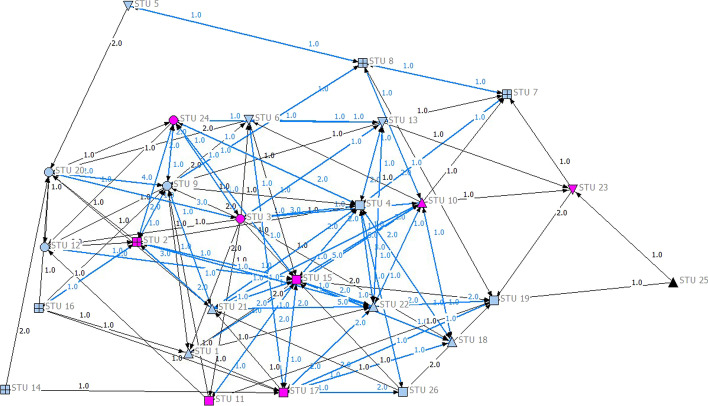
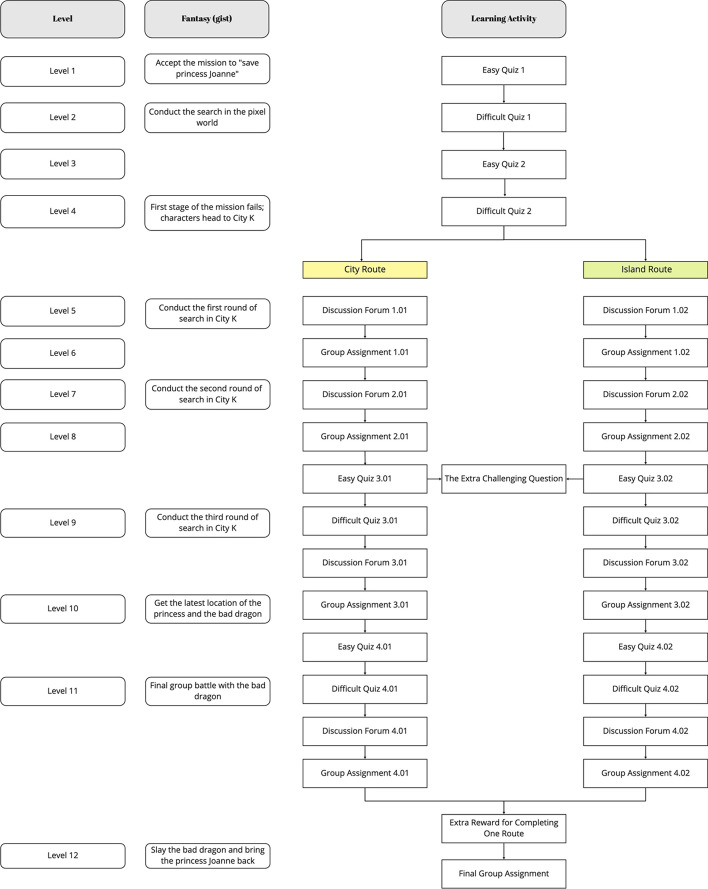
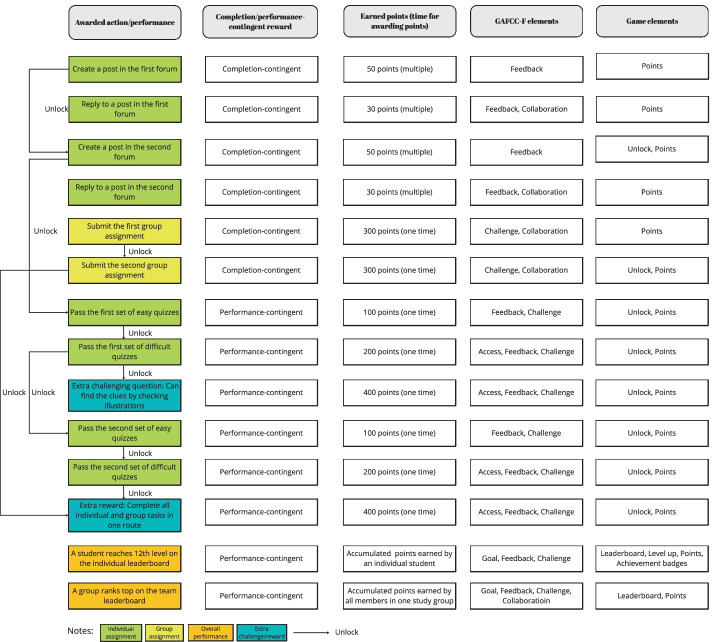
We used the design-based research approach to test and refine a theoretically grounded goal-access-feedback-challenge-collaboration gamification model. The testbed was a 10-week, university-level e-learning design course offered in two consecutive semesters. In Study 1, we implemented the initial goal-access-feedback-challenge-collaboration model in semester one of the 2020-2021 academic year ( = 26). The aim was to enhance student behavioral engagement in online discussion forums, affective engagement in the class, and learning performance. The results of Study 1 showed that although most participants were engaged in this gamified learning experience during the first two sessions, they gradually lost interest and their participation in online discussions dropped over the next eight weeks. Thus, we introduced a new element, , into the original model. In Study 2, we tested the effectiveness of the goal-access-feedback-challenge-collaboration-fantasy model on students' learning outcomes in semester two of 2020-2021 ( = 23). The results of Study 2 suggested that, compared to the original model, the goal-access-feedback-challenge-collaboration-fantasy model can better promote students' engagement in online discussion, as measured by increased interaction with peers, learning experience, and learning performance.
我们采用基于设计的研究方法来测试和完善一个基于理论的目标-获取-反馈-挑战-协作游戏化模型。测试平台是一门为期10周的大学水平的电子学习设计课程,连续两个学期开设。在研究1中,我们在2020-2021学年的第一学期实施了初始的目标-获取-反馈-挑战-协作模型(n = 26)。目的是提高学生在在线讨论论坛中的行为参与度、在课堂中的情感参与度以及学习成绩。研究1的结果表明,尽管大多数参与者在前两节课中参与了这种游戏化学习体验,但他们逐渐失去了兴趣,并且在接下来的八周里他们在在线讨论中的参与度下降了。因此,我们在原始模型中引入了一个新元素,即“幻想”。在研究2中,我们在2020-2021学年的第二学期测试了目标-获取-反馈-挑战-协作-幻想模型对学生学习成果的有效性(n = 23)。研究2的结果表明,与原始模型相比,目标-获取-反馈-挑战-协作-幻想模型能够更好地促进学生在在线讨论中的参与度,这通过与同伴互动的增加、学习体验和学习成绩来衡量。