Department of Microbiology, Boston University School of Medicine, Boston, Massachusetts, United States of America.
National Emerging Infectious Diseases Laboratories (NEIDL), Boston University, Boston, Massachusetts, United States of America.
PLoS Pathog. 2022 Jun 22;18(6):e1010451. doi: 10.1371/journal.ppat.1010451. eCollection 2022 Jun.
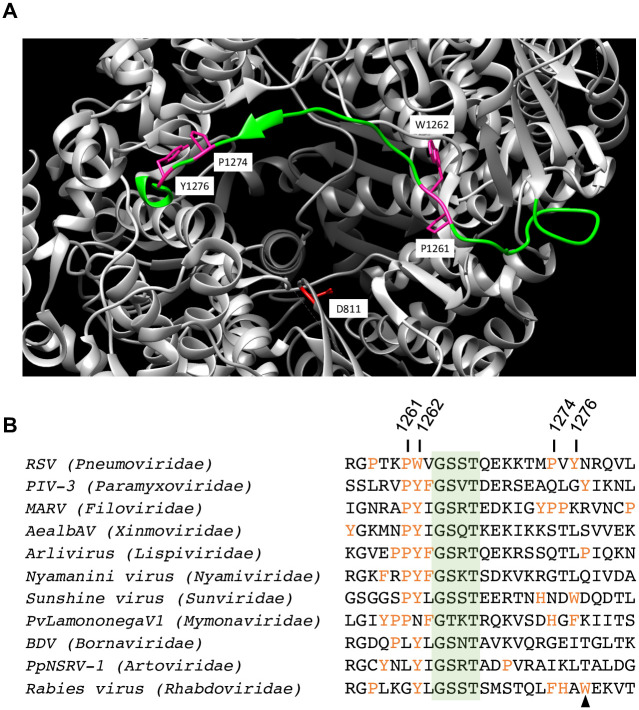
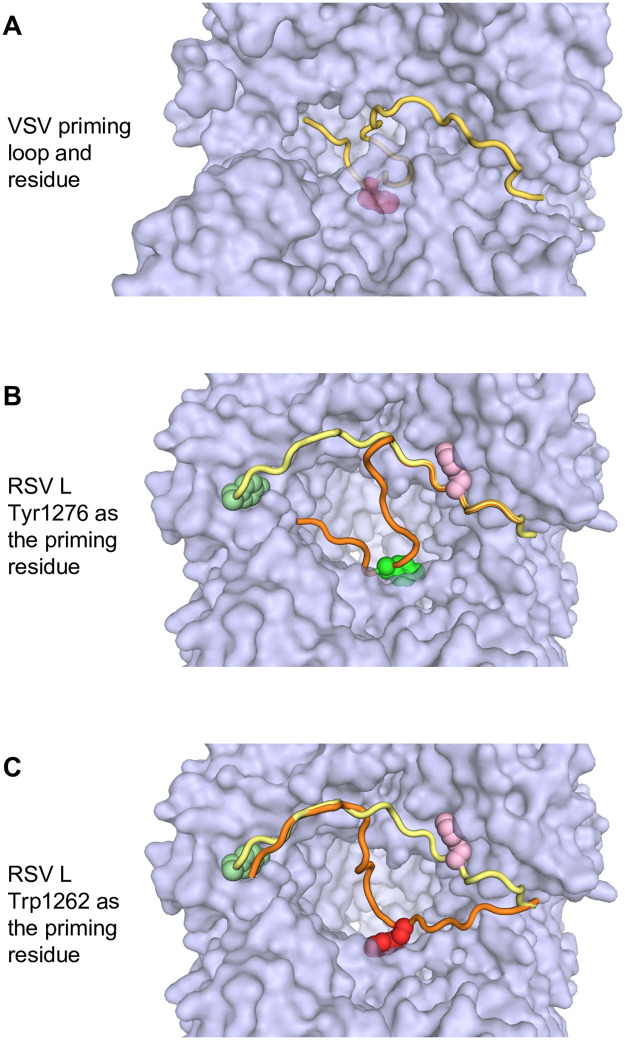
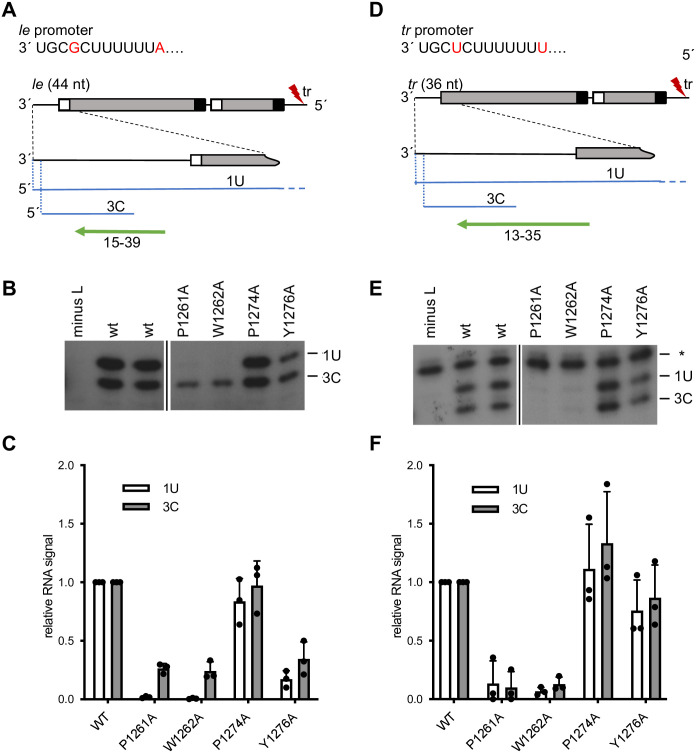
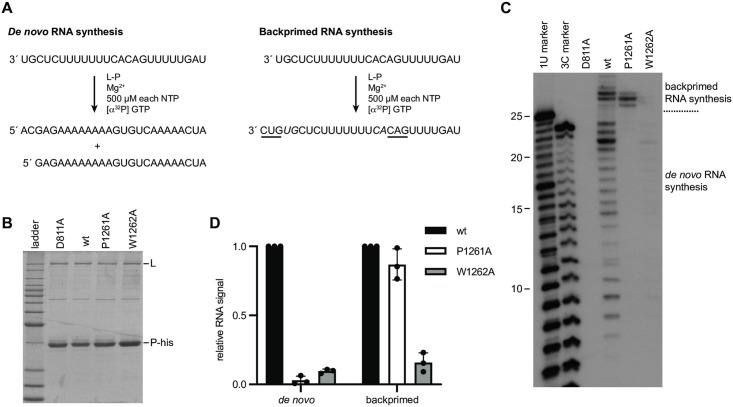
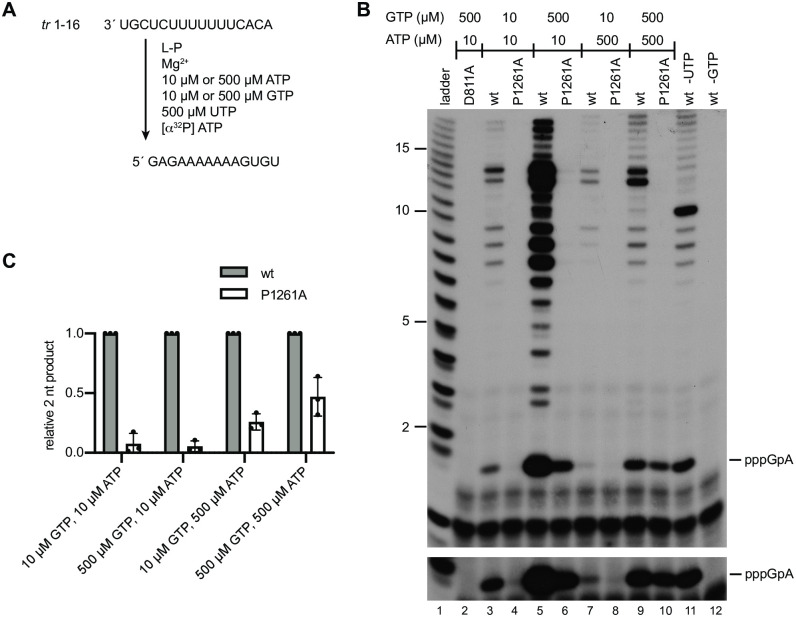
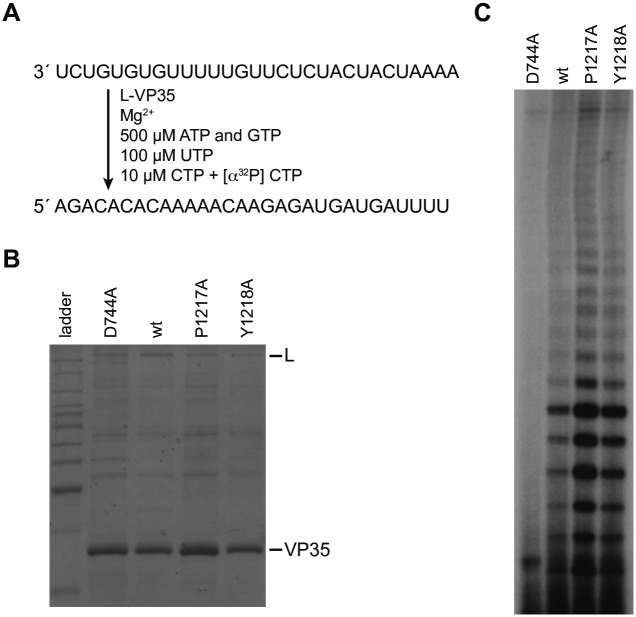
De novo initiation by viral RNA-dependent RNA polymerases often requires a polymerase priming residue, located within a priming loop, to stabilize the initiating NTPs. Polymerase structures from three different non-segmented negative strand RNA virus (nsNSV) families revealed putative priming loops in different conformations, and an aromatic priming residue has been identified in the rhabdovirus polymerase. In a previous study of the respiratory syncytial virus (RSV) polymerase, we found that Tyr1276, the L protein aromatic amino acid residue that most closely aligns with the rhabdovirus priming residue, is not required for RNA synthesis but two nearby residues, Pro1261 and Trp1262, were required. In this study, we examined the roles of Pro1261 and Trp1262 in RNA synthesis initiation. Biochemical studies showed that substitution of Pro1261 inhibited RNA synthesis initiation without inhibiting back-priming, indicating a defect in initiation. Biochemical and minigenome experiments showed that the initiation defect incurred by a P1261A substitution could be rescued by factors that would be expected to increase the stability of the initiation complex, specifically increased NTP concentration, manganese, and a more efficient promoter sequence. These findings indicate that Pro1261 of the RSV L protein plays a role in initiation, most likely in stabilizing the initiation complex. However, we found that substitution of the corresponding proline residue in a filovirus polymerase had no effect on RNA synthesis initiation or elongation. These results indicate that despite similarities between the nsNSV polymerases, there are differences in the features required for RNA synthesis initiation.
病毒 RNA 依赖性 RNA 聚合酶的从头起始通常需要聚合酶引发残基,该残基位于引发环内,以稳定起始的 NTP。来自三个不同的非分段负链 RNA 病毒(nsNSV)家族的聚合酶结构揭示了不同构象的推定引发环,并且在弹状病毒聚合酶中已经鉴定出芳香族引发残基。在之前对呼吸道合胞病毒(RSV)聚合酶的研究中,我们发现 L 蛋白芳香族氨基酸残基 Tyr1276与弹状病毒引发残基最接近,它不是 RNA 合成所必需的,但两个附近的残基 Pro1261 和 Trp1262 是必需的。在这项研究中,我们研究了 Pro1261 和 Trp1262 在 RNA 合成起始中的作用。生化研究表明,Pro1261 的取代抑制了 RNA 合成起始,而不抑制后引发,表明起始有缺陷。生化和小基因实验表明,P1261A 取代引起的起始缺陷可以通过预期会增加起始复合物稳定性的因素来挽救,特别是增加 NTP 浓度、锰和更有效的启动子序列。这些发现表明 RSV L 蛋白的 Pro1261 在起始中起作用,最可能在稳定起始复合物中起作用。然而,我们发现,在丝状病毒聚合酶中取代相应的脯氨酸残基对 RNA 合成起始或延伸没有影响。这些结果表明,尽管 nsNSV 聚合酶之间存在相似性,但 RNA 合成起始所需的特征存在差异。