Sasaki K, Muramatsu M, Hirayama K, Endo K, Murayama M
Department of Science for Open and Environmental Systems, Graduate School of Keio University, 3-14-1, Hiyoshi, Kohoku-ku, Kanagawa, 233-8522, Japan.
Department of Materials Science and Engineering, Virginia Tech, Blacksburg, VA, 24061, USA.
Sci Rep. 2022 Jun 22;12(1):10525. doi: 10.1038/s41598-022-13878-8.
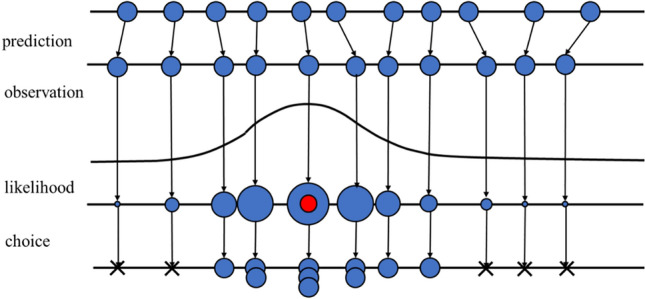
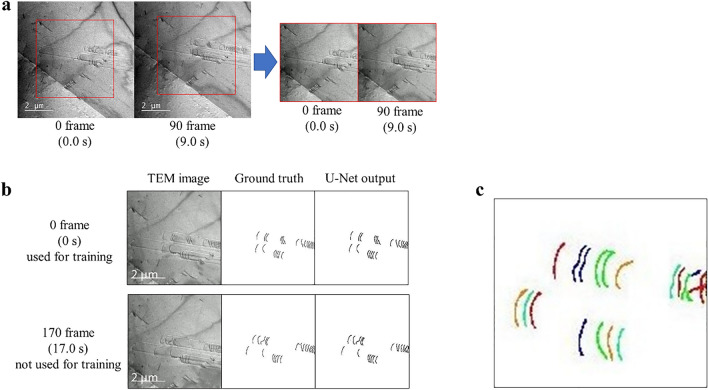
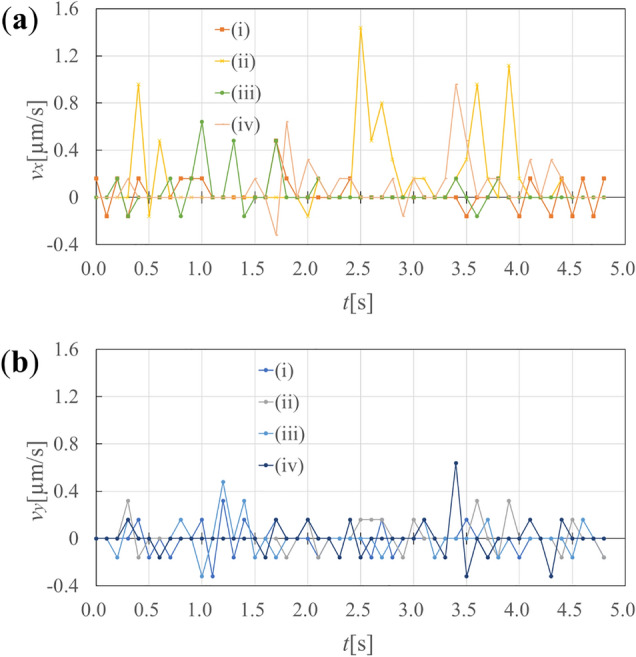
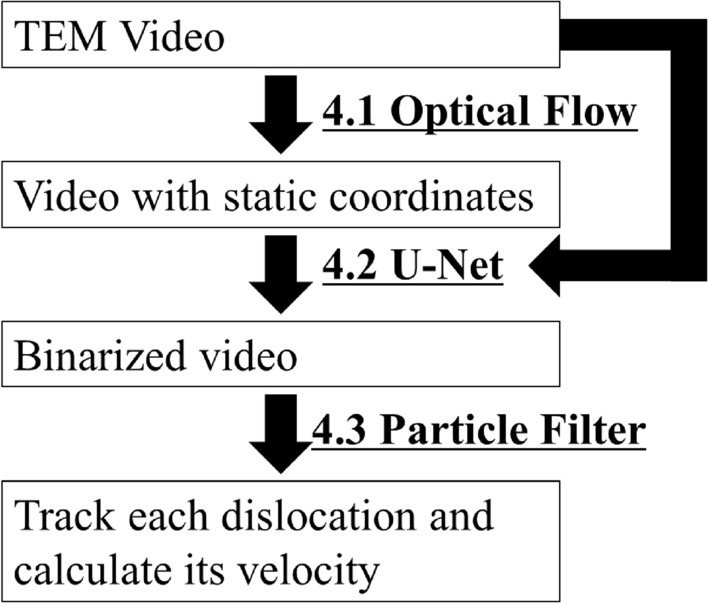
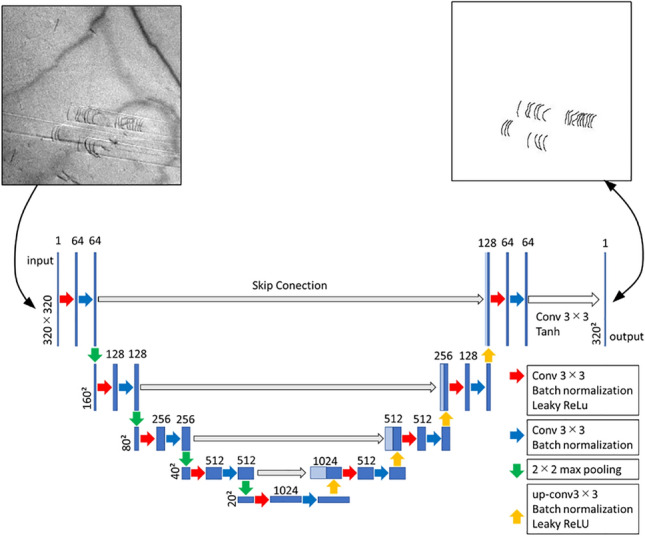
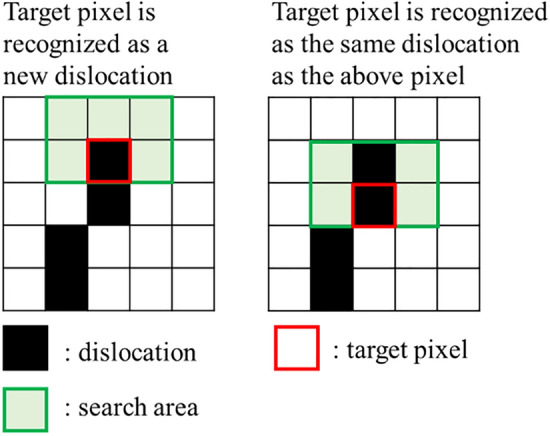
Observation of dynamic processes by transmission electron microscopy (TEM) is an attractive technique to experimentally analyze materials' nanoscale phenomena and understand the microstructure-properties relationships in nanoscale. Even if spatial and temporal resolutions of real-time TEM increase significantly, it is still difficult to say that the researchers quantitatively evaluate the dynamic behavior of defects. Images in TEM video are a two-dimensional projection of three-dimensional space phenomena, thus missing information must be existed that makes image's uniquely accurate interpretation challenging. Therefore, even though they are still a clustering high-dimensional data and can be compressed to two-dimensional, conventional statistical methods for analyzing images may not be powerful enough to track nanoscale behavior by removing various artifacts associated with experiment; and automated and unbiased processing tools for such big-data are becoming mission-critical to discover knowledge about unforeseen behavior. We have developed a method to quantitative image analysis framework to resolve these problems, in which machine learning and particle filter estimation are uniquely combined. The quantitative and automated measurement of the dislocation velocity in an Fe-31Mn-3Al-3Si autunitic steel subjected to the tensile deformation was performed to validate the framework, and an intermittent motion of the dislocations was quantitatively analyzed. The framework is successfully classifying, identifying and tracking nanoscale objects; these are not able to be accurately implemented by the conventional mean-path based analysis.
通过透射电子显微镜(TEM)观察动态过程是一种颇具吸引力的技术,可用于实验分析材料的纳米级现象,并理解纳米级的微观结构与性能之间的关系。即便实时TEM的空间和时间分辨率显著提高,但要说研究人员能够定量评估缺陷的动态行为仍非易事。TEM视频中的图像是三维空间现象的二维投影,因此必然存在缺失信息,这使得对图像进行唯一准确的解释颇具挑战性。所以,尽管它们仍是聚类的高维数据且可压缩为二维,但用于分析图像的传统统计方法可能不足以通过去除与实验相关的各种伪像来追踪纳米级行为;而针对此类大数据的自动化且无偏差的处理工具对于发现意外行为的知识正变得至关重要。我们开发了一种定量图像分析框架方法来解决这些问题,其中机器学习和粒子滤波器估计被独特地结合在一起。对经拉伸变形的Fe-31Mn-3Al-3Si奥氏体钢中的位错速度进行了定量和自动化测量,以验证该框架,并对位错的间歇运动进行了定量分析。该框架成功地对纳米级物体进行了分类、识别和跟踪;而这些通过传统的基于平均路径的分析无法准确实现。