Speech Therapy Service, Hospital Geral de Fortaleza, Fortaleza, Brazil.
Department of Clinical Medicine, Universidade Federal do Ceará, Fortaleza, Brazil.
BMC Neurol. 2022 Jun 22;22(1):231. doi: 10.1186/s12883-022-02753-8.
Stroke is the main cause of oropharyngeal neurogenic dysphagia. Electrostimulation has been used as a therapeutic tool in these cases. However, there are few studies that prove its effectiveness. We evaluated the effect of functional electrostimulation as a complement to conventional speech therapy in patients with dysphagia after a stroke in a stroke unit.
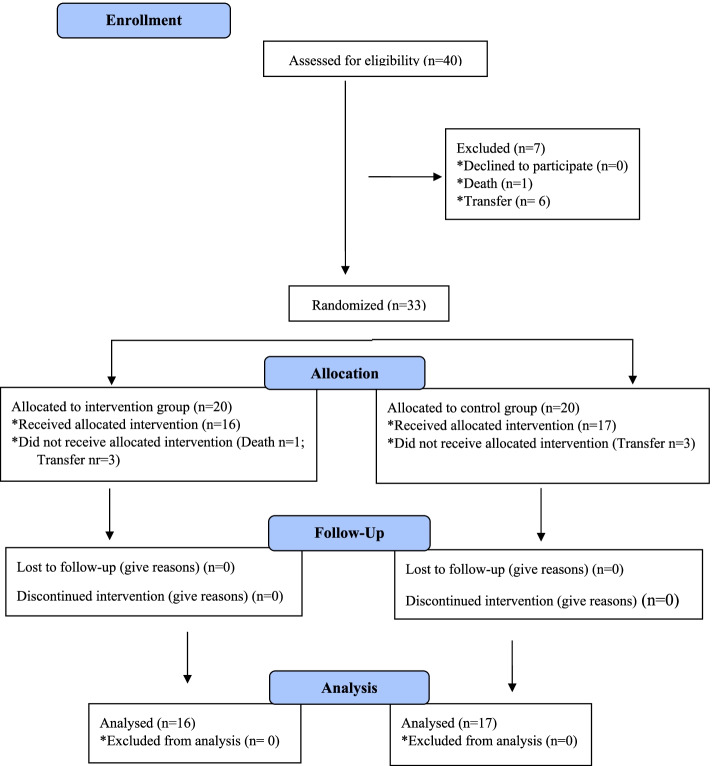
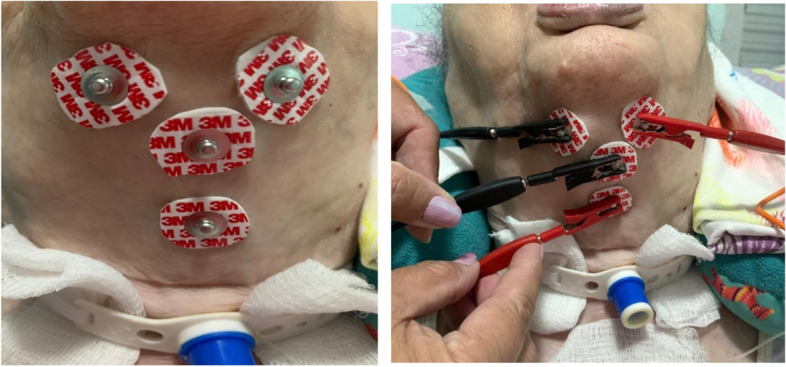
We performed a clinical, randomized, and controlled trial divided into intervention group (IG) (n = 16) and control group (CG) (n = 17). All patients were treated with conventional speech therapy, and the IG also was submitted to the functional electrotherapy. Primary outcomes were Functional Oral Ingestion Scale (FOIS) and Swallowing videoendoscopy (FEES). The degree of dysphagia was scored in functional, mild, moderate and severe dysphagia according to FEES procedure. Dysphagia Risk Evaluation Protocol (DREP) was considered a secondary outcome.
There was a significant difference regarding FOIS scores after 5 days of intervention in groups. Both groups also showed a tendency to improve dysphagia levels measured by FEES, although not statistically significant. Improvements on oral feeding was seen in both groups. No significant differences between groups before and after the intervention were detected by DREP scores. Electrical stimulation did not show additional benefits beyond conventional therapy when comparing outcomes between groups.
Conventional speech therapy improved oral ingestion even regardless the use of electrostimulation in a stroke unit.
This research was registered in ClinicalTrials.gov (Identifier: NCT03649295 ) in 28/08/2018 and in the Brazilian Registry of Clinical Trials (ReBEC) (Register Number: RBR-56QK5J), approval date: 18/12/2018. HGF Ethics Committee Approval Number: N. 2.388.931.
中风是口咽神经性吞咽困难的主要原因。电刺激已被用作这些病例的治疗工具。然而,很少有研究证明其有效性。我们评估了在中风病房中,对中风后吞咽困难的患者进行功能性电刺激作为常规言语治疗的补充的效果。
我们进行了一项临床、随机、对照试验,分为干预组(IG)(n=16)和对照组(CG)(n=17)。所有患者均接受常规言语治疗,IG 还接受功能性电疗。主要结局为功能性口腔摄入量表(FOIS)和吞咽视频内镜检查(FEES)。根据 FEES 程序,将吞咽困难程度分为功能、轻度、中度和重度吞咽困难。吞咽风险评估方案(DREP)被视为次要结局。
干预后 5 天,FOIS 评分两组间有显著差异。两组通过 FEES 测量的吞咽困难程度也都有改善的趋势,但无统计学意义。两组的经口喂养能力均有所改善。干预前后 DREP 评分两组间无显著差异。在比较组间结果时,电刺激并未显示出比常规治疗更有益的效果。
在中风病房中,即使使用电刺激,常规言语治疗也能改善经口摄入。
本研究于 2018 年 8 月 28 日在 ClinicalTrials.gov(标识符:NCT03649295)注册,并在巴西临床试验注册中心(ReBEC)注册(注册号:RBR-56QK5J),批准日期:2018 年 12 月 18 日。HGF 伦理委员会批准文号:N. 2.388.931。