Department of Microbiology and Immunology, Faculty of Tropical Medicine, Mahidol University, Bangkok, Thailand.
BMC Microbiol. 2022 Jun 22;22(1):162. doi: 10.1186/s12866-022-02579-x.
Cryptococcosis is a life-threatening infection is primarily caused by two sibling species Cryptococcus neoformans and Cryptococcus gattii. Several virulence-related factors of these cryptococci have been widely investigated in Caenorhabditis elegans, representing a facile in vivo model of host-pathogen interaction. While recent studies elucidated cryptococcal virulence factors, intrinsic host factors that affect susceptibility to infections by cryptococci remain unclear and poorly investigated.
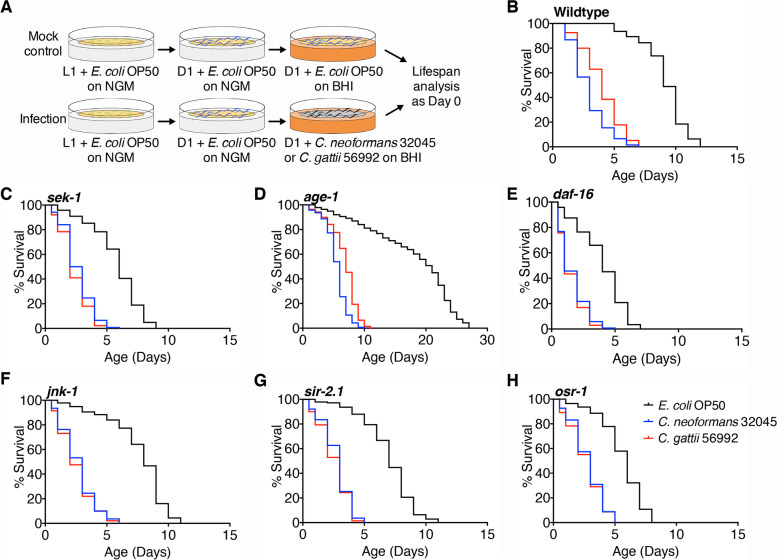
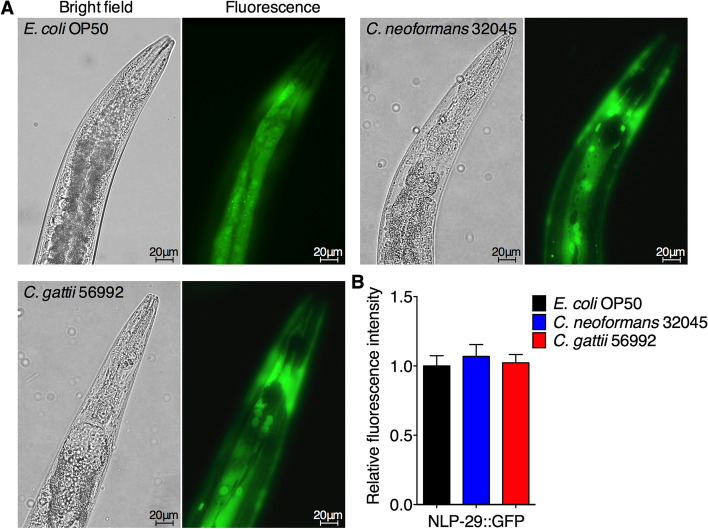
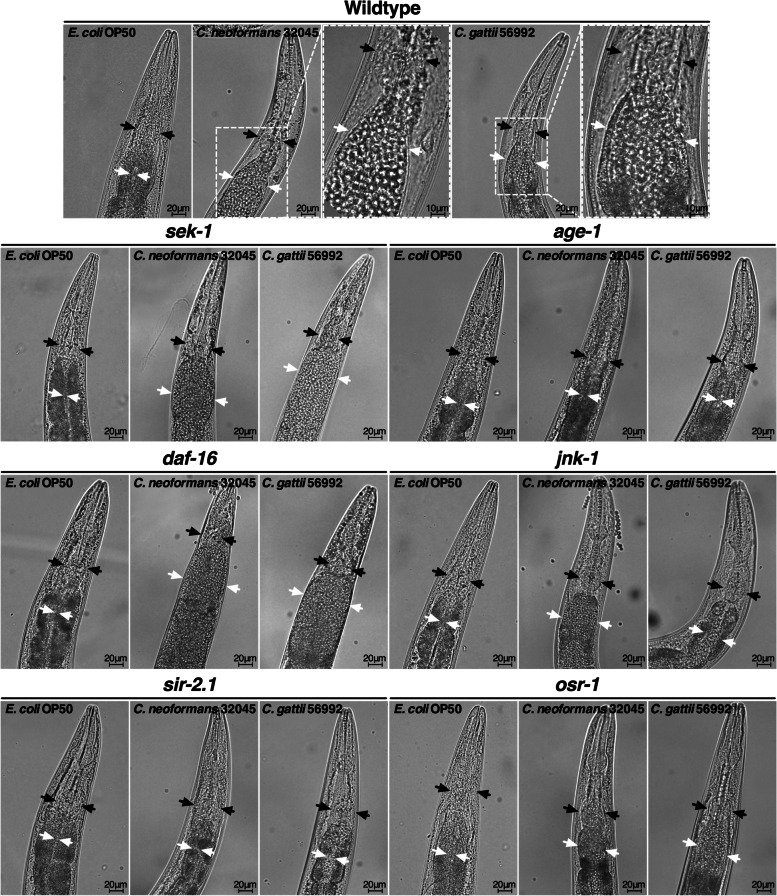
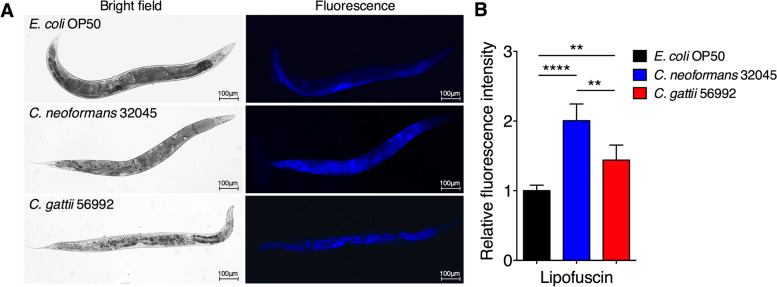
Here, we showed that defects in C. elegans insulin/insulin-like growth factor-1 (IGF-1) signaling (IIS) pathway influenced animal lifespan and mechanisms of host resistance in cryptococcal infections, which required the activation of aging regulator DAF-16/Forkhead box O transcription factor. Moreover, accumulation of lipofuscin, DAF-16 nuclear localization, and expression of superoxide dismutase (SOD-3) were elevated in C. elegans due to host defenses during cryptococcal infections.
The present study demonstrated the relationship between longevity and immunity, which may provide a possibility for novel therapeutic intervention to improve host resistance against cryptococcal infections.
隐球菌病是一种危及生命的感染,主要由两个亲缘种Cryptococcus neoformans 和 Cryptococcus gattii 引起。这些隐球菌的许多毒力相关因素已在秀丽隐杆线虫中得到广泛研究,这是一种宿主-病原体相互作用的简单体内模型。虽然最近的研究阐明了隐球菌的毒力因素,但影响宿主对隐球菌感染易感性的内在宿主因素仍不清楚且研究甚少。
在这里,我们表明,秀丽隐杆线虫胰岛素/胰岛素样生长因子-1(IGF-1)信号通路(IIS)缺陷影响动物寿命和对隐球菌感染的宿主抗性机制,这需要衰老调节因子 DAF-16/Forkhead box O 转录因子的激活。此外,由于隐球菌感染期间宿主防御,秀丽隐杆线虫中的脂褐素积累、DAF-16 核定位和超氧化物歧化酶(SOD-3)的表达增加。
本研究表明了长寿和免疫之间的关系,这可能为改善宿主对隐球菌感染的抵抗力提供了新的治疗干预的可能性。