Guo Zhaohua, Zhang Jintao, Liu Xuemei, Unsinger Jacqueline, Hotchkiss Richard S, Cao Yu-Qing
Department of Anesthesiology, Washington University School of Medicine, St. Louis, MO, United States.
Washington University Pain Center, Washington University School of Medicine, St. Louis, MO, United States.
Neurobiol Pain. 2022 Jun 13;12:100096. doi: 10.1016/j.ynpai.2022.100096. eCollection 2022 Aug-Dec.
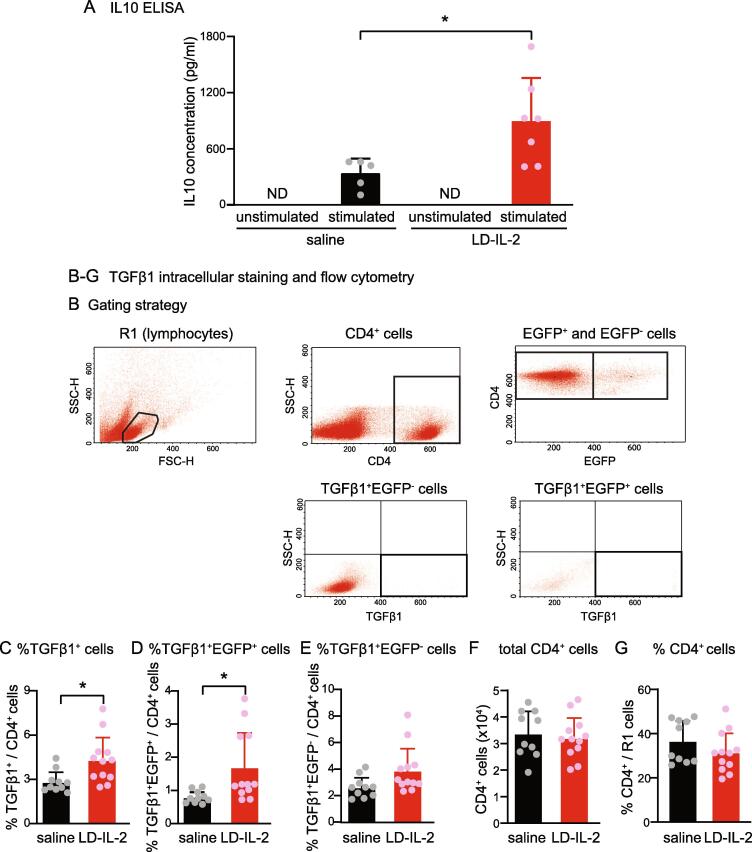
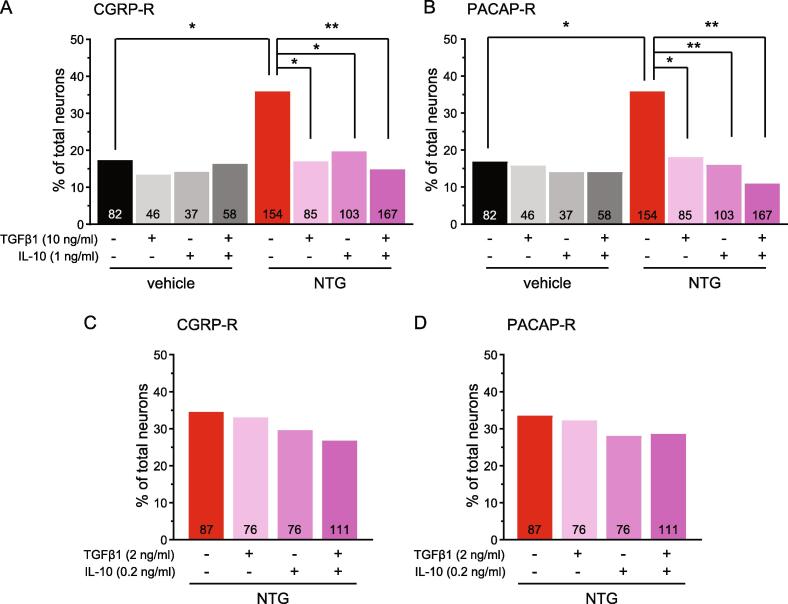
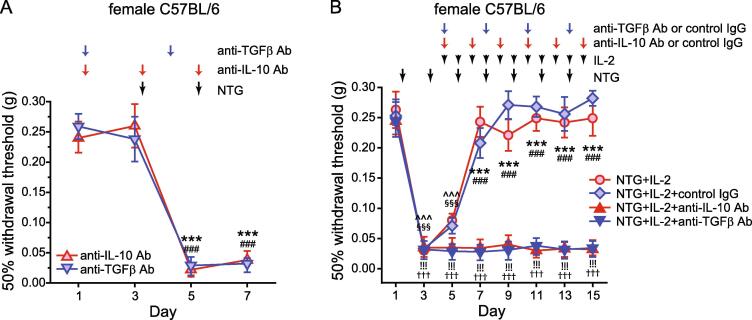
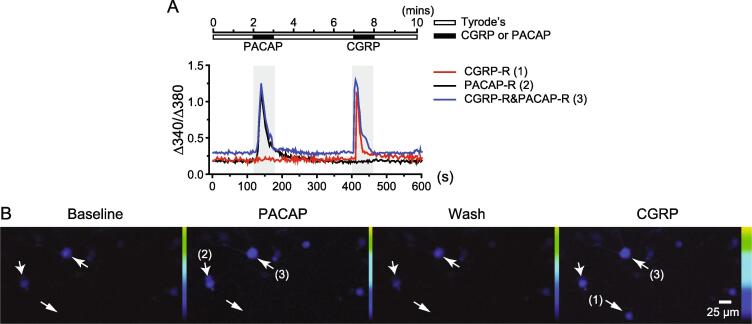
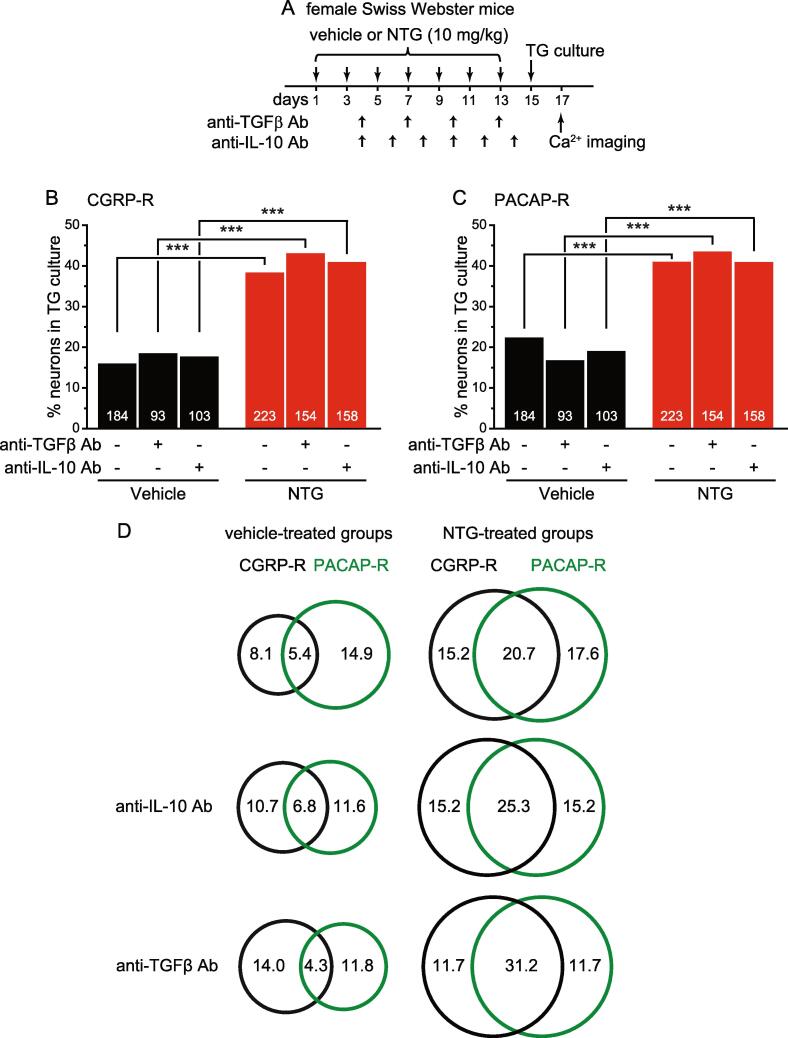
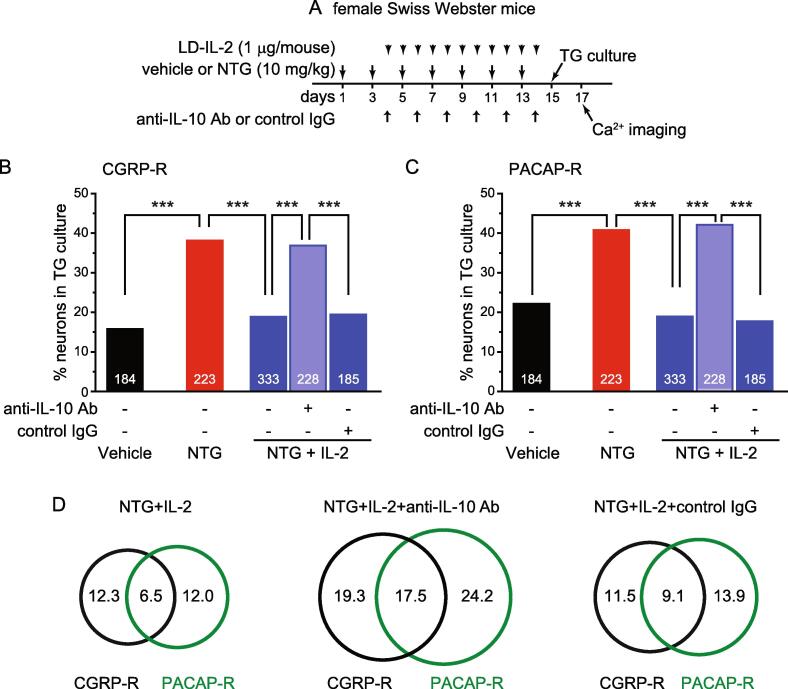
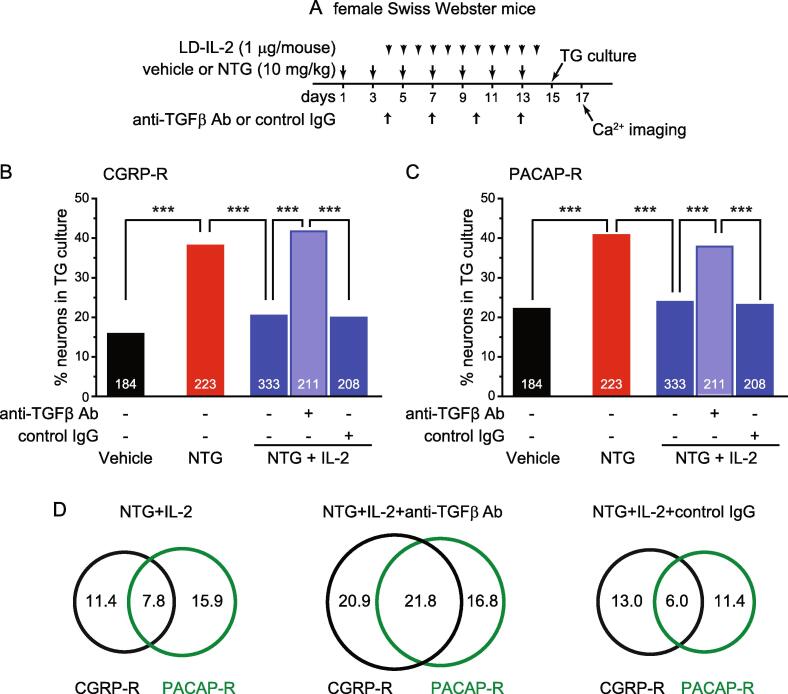
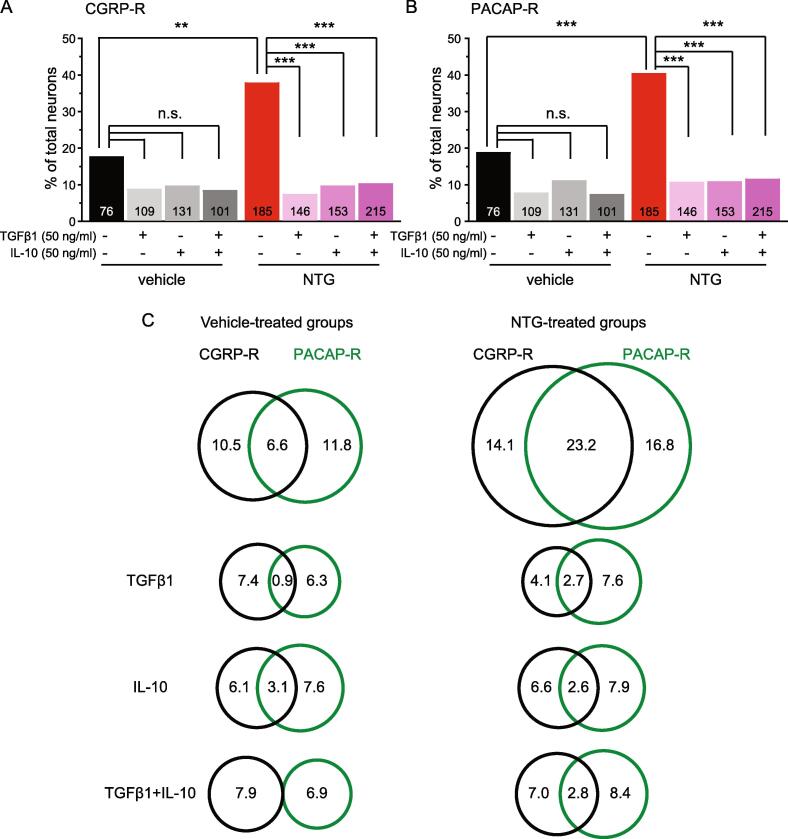
Low-dose interleukin-2 (LD-IL-2) treatment has been shown to effectively reverse chronic migraine-related behaviors and the sensitization of trigeminal ganglion (TG) neurons through expansion and activation of peripheral regulatory T cells (Tregs) in mice. In this study, we investigated the molecular mechanisms underlying the effects of LD-IL-2 and Treg cells. LD-IL-2 treatment increases the production of cytokines interleukin-10 (IL-10) and transforming growth factor beta-1 (TGFβ1) in T cells, especially Treg cells, suggesting that they may mediate the therapeutic effect of LD-IL-2. Indeed, neutralizing antibodies against either IL-10 or TGFβ completely blocked the effects of LD-IL-2 on the facial mechanical hypersensitivity as well as the sensitization of TG neurons resulting from repeated nitroglycerin (NTG, a reliable trigger of migraine in patients) administration in mice, indicating that LD-IL-2 and Treg cells engage both peripheral IL-10 and TGFβ signaling pathways to reverse chronic-migraine related sensitizations. In an assay, incubation of TG culture with exogenous IL-10 or TGFβ1 fully reversed NTG-induced sensitization of TG neurons, suggesting that the IL-10 and TGFβ1 signaling in TG neurons contribute to LD-IL-2's therapeutic effects. Collectively, these results not only elucidate the molecular mechanisms through which LD-IL-2 and Treg cells reverse chronic-migraine related sensitizations, but also suggest that the IL-10 and TGFβ1 signaling pathways in TG neurons are potential targets for chronic migraine therapy.
低剂量白细胞介素-2(LD-IL-2)治疗已被证明可通过扩增和激活小鼠外周调节性T细胞(Tregs)有效逆转慢性偏头痛相关行为以及三叉神经节(TG)神经元的敏化。在本研究中,我们调查了LD-IL-2和Treg细胞作用的分子机制。LD-IL-2治疗增加了T细胞尤其是Treg细胞中细胞因子白细胞介素-10(IL-10)和转化生长因子β1(TGFβ1)的产生,这表明它们可能介导LD-IL-2的治疗作用。事实上,针对IL-10或TGFβ的中和抗体完全阻断了LD-IL-2对小鼠面部机械性超敏反应以及反复给予硝酸甘油(NTG,患者偏头痛的可靠触发因素)后导致的TG神经元敏化的影响,表明LD-IL-2和Treg细胞参与外周IL-10和TGFβ信号通路以逆转慢性偏头痛相关的敏化。在一项实验中,用外源性IL-10或TGFβ1孵育TG培养物可完全逆转NTG诱导的TG神经元敏化,这表明TG神经元中的IL-10和TGFβ1信号通路有助于LD-IL-2的治疗效果。总的来说,这些结果不仅阐明了LD-IL-2和Treg细胞逆转慢性偏头痛相关敏化的分子机制,还表明TG神经元中的IL-10和TGFβ1信号通路是慢性偏头痛治疗的潜在靶点。