Pu Dan, Zhang Zhe, Feng Baisui
Department of Gastroenterology, The Second Affiliated Hospital of Zhengzhou University, Zhengzhou, China.
Front Pharmacol. 2022 Jun 6;13:906419. doi: 10.3389/fphar.2022.906419. eCollection 2022.
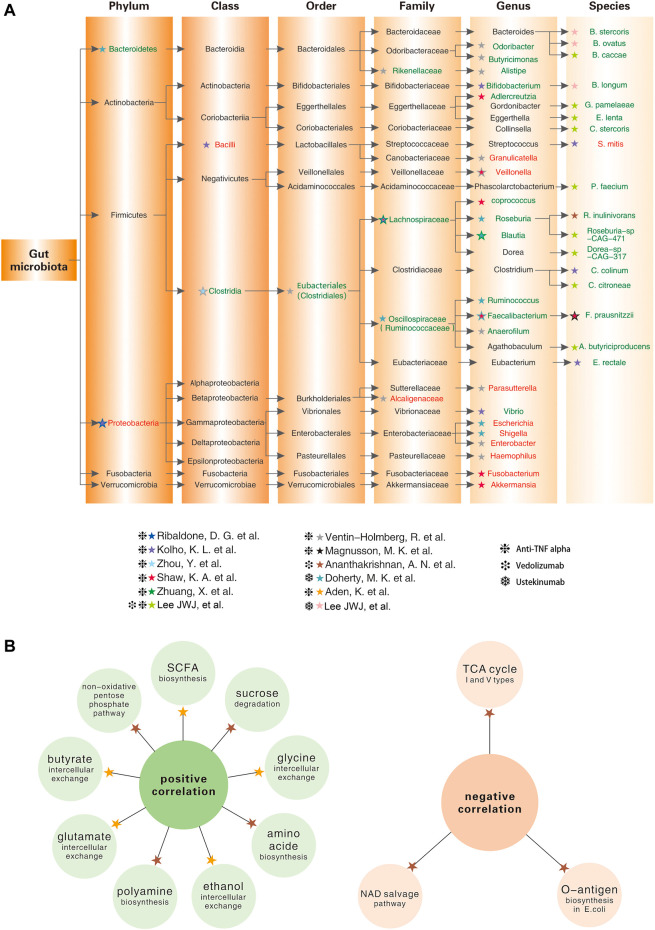
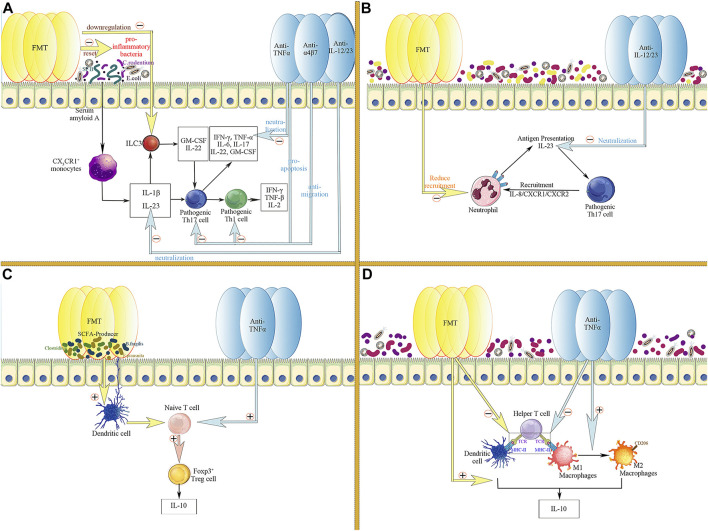
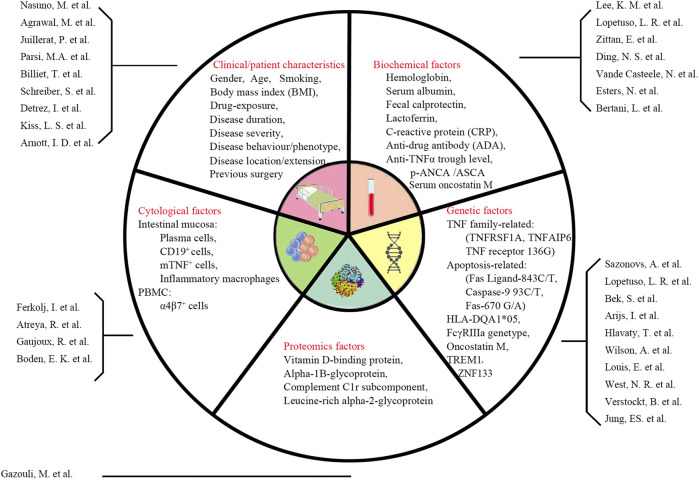
Inflammatory bowel disease (IBD), including Crohn's disease and ulcerative colitis, is a chronic immune-mediated inflammatory disorder of the gastrointestinal tract that is closely associated with dysbiosis of the intestinal microbiota. Currently, biologic agents are the mainstream therapies for IBD. With the increasing incidence of IBD, limitations of biologic agents have gradually emerged during treatment. Recent studies have indicated that gut microbiota is highly correlated with the efficacy of biologic agents. This review focuses on alterations in both the components and metabolites of gut microbiota during biological therapy for IBD, systematically summarises the specific gut microbiota closely related to the clinical efficacy, and compares current predictive models for the efficacy of biologics, further highlighting the predictive value of intestinal microbiota. Based on the mechanistic analysis of faecal microbiota transplantation (FMT) and biologic agents, a new therapeutic strategy, comprising a combination of FMT and biologics, has been proposed as a promising treatment for IBD with improved efficacy.
炎症性肠病(IBD),包括克罗恩病和溃疡性结肠炎,是一种慢性免疫介导的胃肠道炎症性疾病,与肠道微生物群失调密切相关。目前,生物制剂是IBD的主流治疗方法。随着IBD发病率的增加,生物制剂在治疗过程中的局限性逐渐显现。最近的研究表明,肠道微生物群与生物制剂的疗效高度相关。本综述重点关注IBD生物治疗期间肠道微生物群的组成和代谢产物的变化,系统总结与临床疗效密切相关的特定肠道微生物群,并比较当前生物制剂疗效的预测模型,进一步突出肠道微生物群的预测价值。基于对粪便微生物群移植(FMT)和生物制剂的机制分析,提出了一种新的治疗策略,即FMT与生物制剂联合使用,作为一种有前景的IBD治疗方法,有望提高疗效。