Wang Lixin, Yuan Pu-Qing, Challis Collin, Ravindra Kumar Sripriya, Taché Yvette
Vatche and Tamar Manoukian Division of Digestive Diseases, Department of Medicine, CURE/Digestive Diseases Research Center, David Geffen School of Medicine, University of California, Los Angeles, Los Angeles, CA, United States.
Veterans Affairs Greater Los Angeles Healthcare System, Los Angeles, CA, United States.
Front Neuroanat. 2022 Jun 6;16:884280. doi: 10.3389/fnana.2022.884280. eCollection 2022.
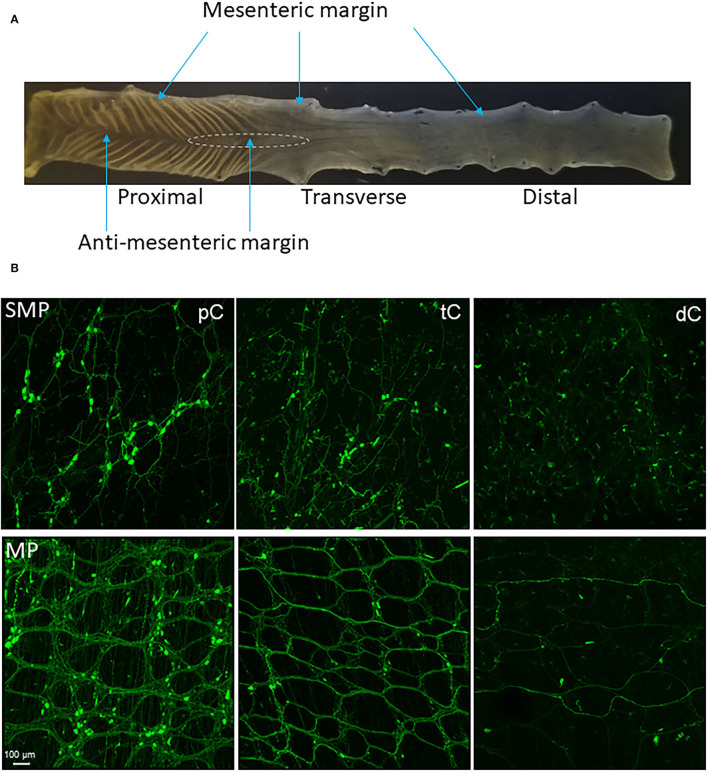
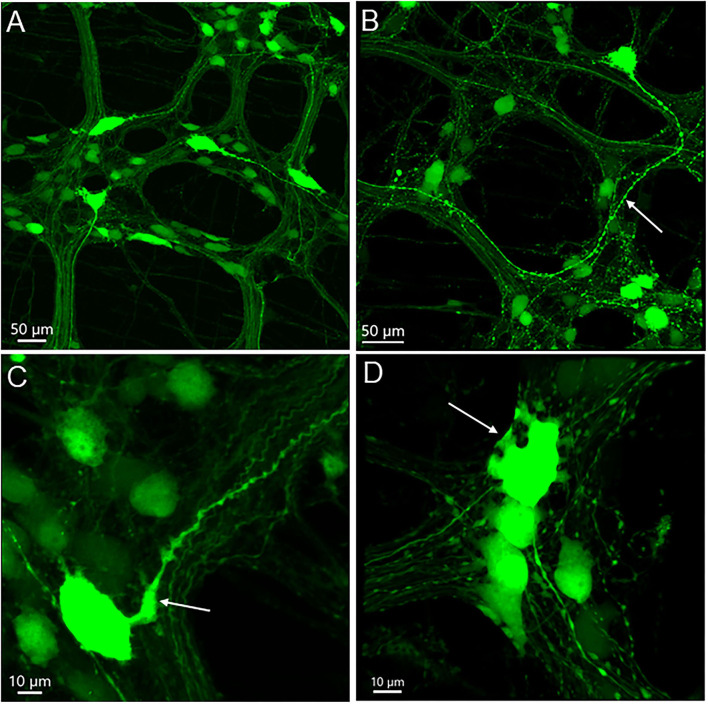
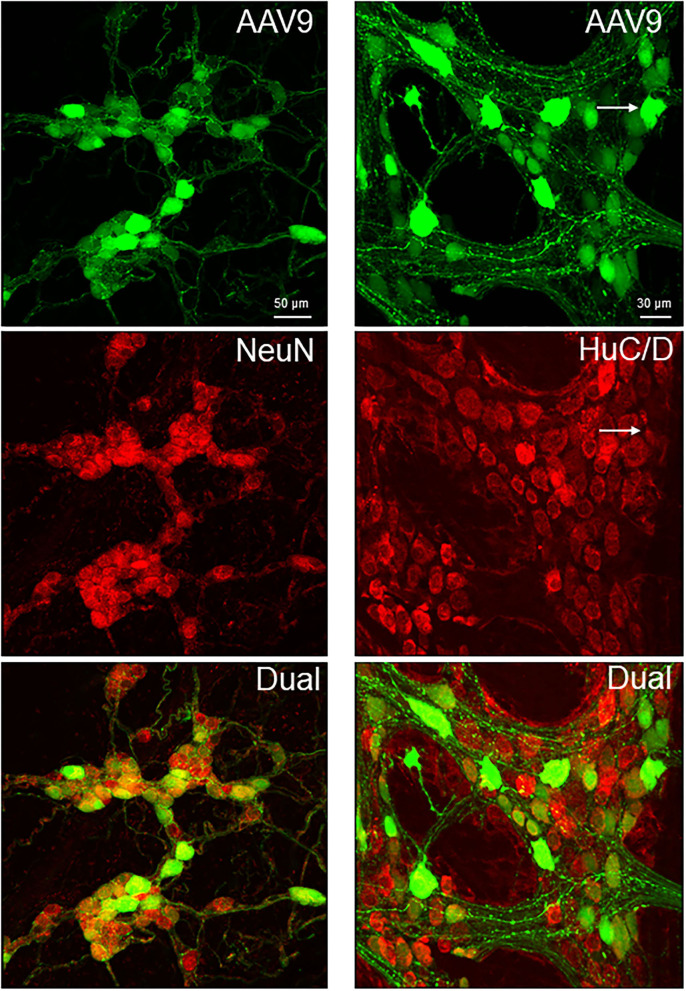
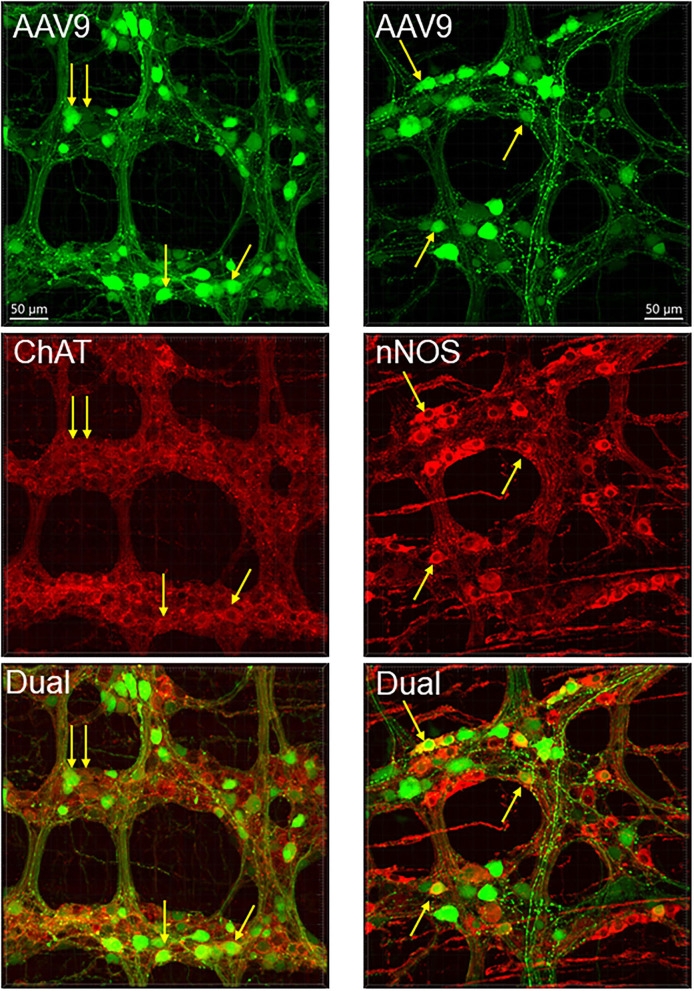
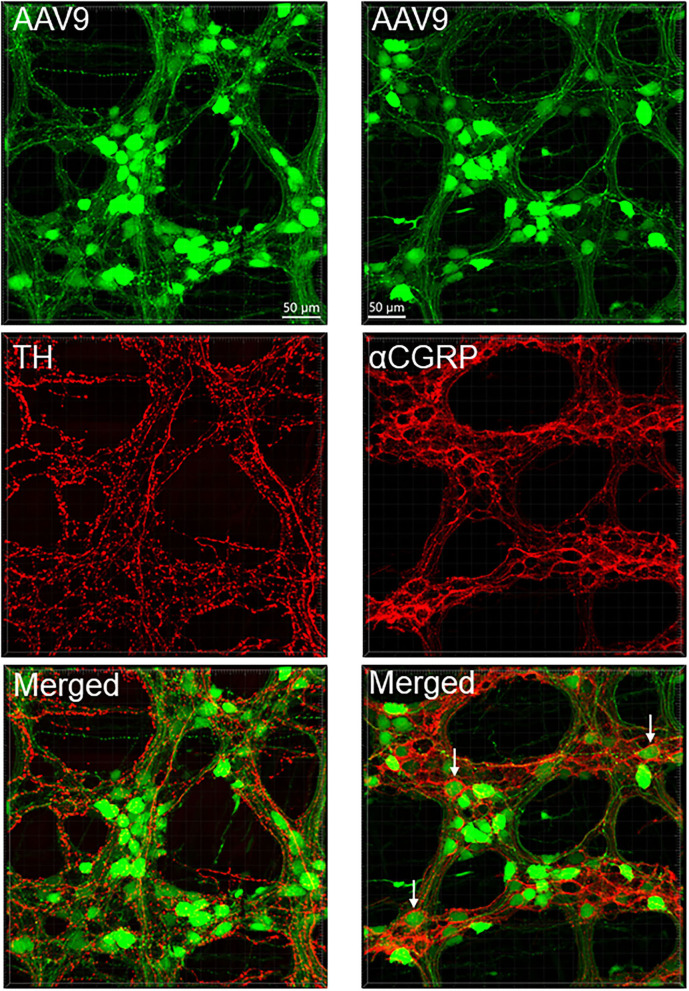
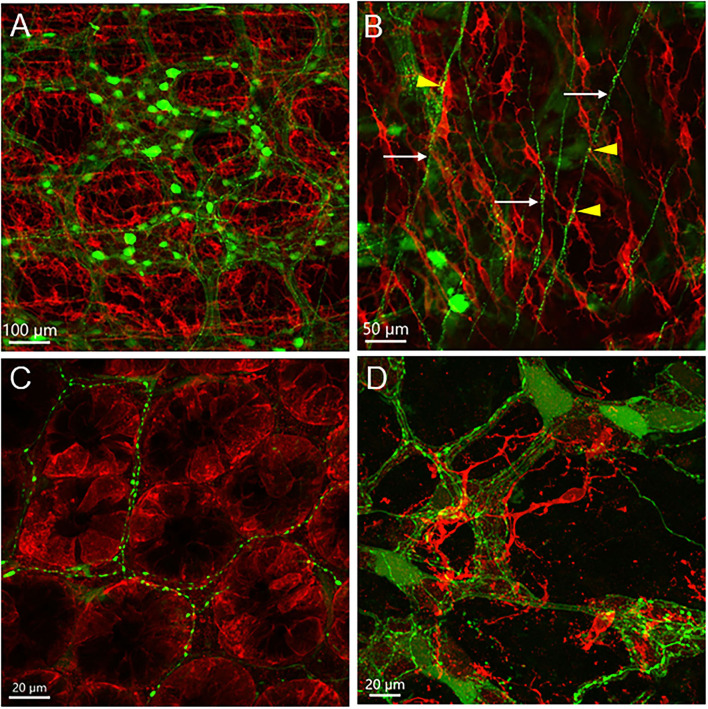
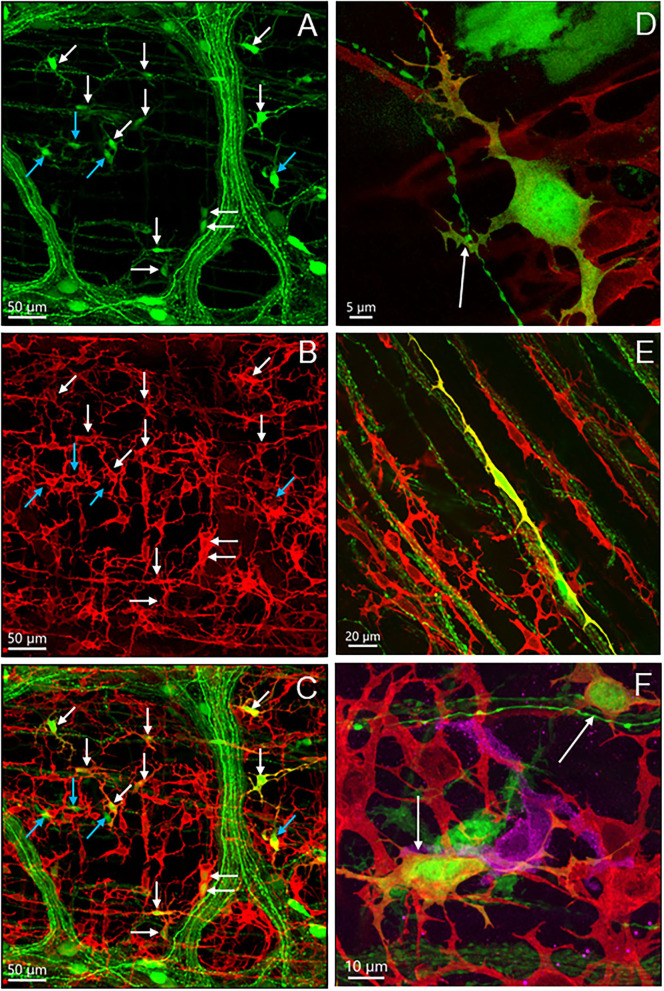
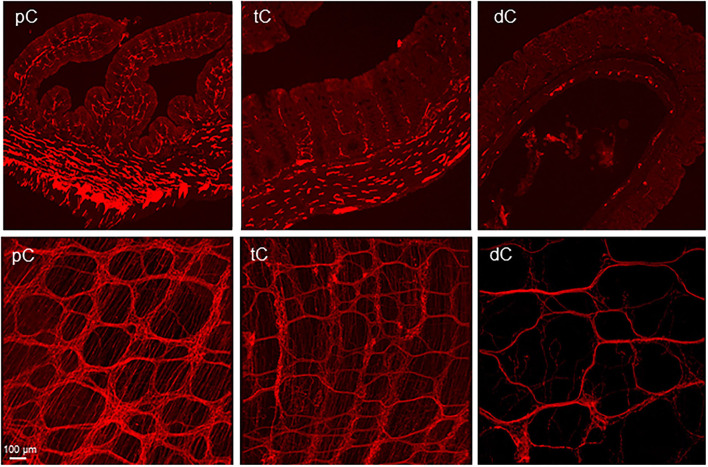
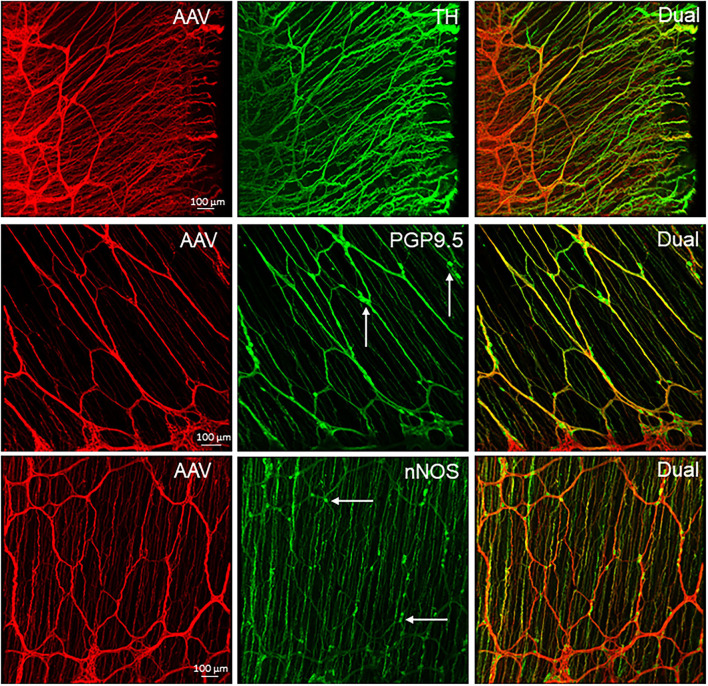
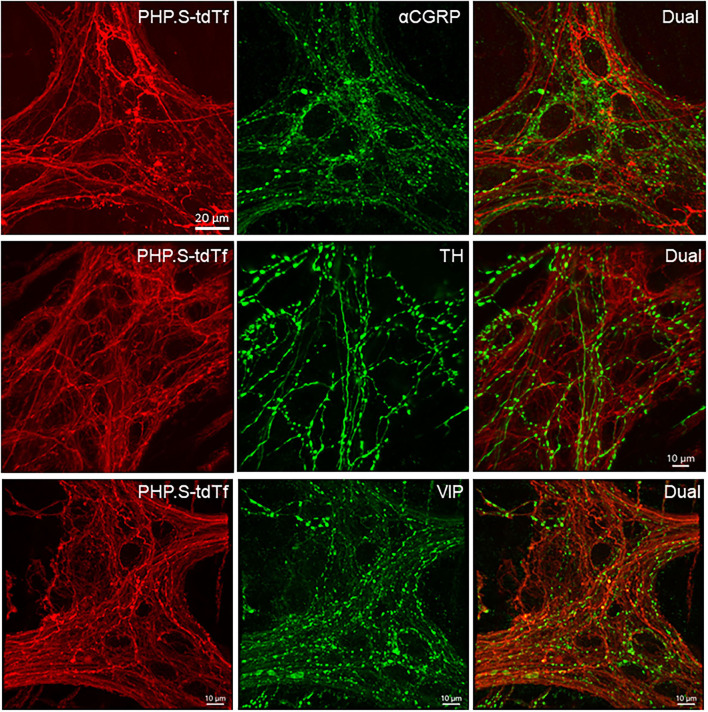
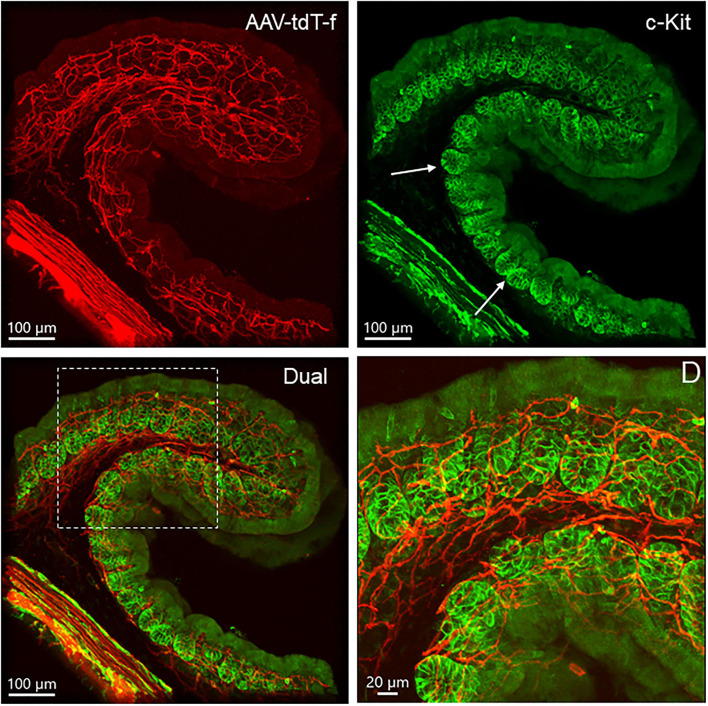
Systemic delivery of adeno-associated virus (AAV) vectors transduces the enteric nervous system. However, less is known on the mapping and morphological and neurochemical characterization in the adult mouse colon. We used AAV9-CAG-GFP (AAV9) and AAV-PHP.S-hSyn1-tdTomato farnesylated (PHP.S-tdTf) to investigate the segmental distribution, morphologies and neurochemical coding of the transduction. The vectors were retro-orbitally injected in male and female adult mice, and 3 weeks later, the colon was prepared for microcopy with or without immunohistochemistry for neuronal and non-neuronal markers. In contrast to the distributions in neonatal and juvenile rodents, the AAV transduction in neurons and/or nerve fibers was the highest in the proximal colon, decreased gradually in the transverse, and was sparse in the distal colon without difference between sexes. In the proximal colon, the AAV9-transduced myenteric neurons were unevenly distributed. The majority of enteric neurons did not have AAV9 expression in their processes, except those with big soma with or without variously shaped dendrites, and a long axon. Immunolabeling demonstrated that about 31% neurons were transduced by AAV9, and the transduction was in 50, 28, and 31% of cholinergic, nitrergic, and calbindin-positive myenteric neurons, respectively. The nerve fiber markers, calcitonin gene-related peptide alpha, tyrosine hydroxylase or vasoactive intestinal polypeptide co-localized with AAV9 or PHP.S-tdTf in the mucosa, and rarely in the myenteric plexus. Unexpectedly, AAV9 expression appeared also in a few c-Kit immunoreactive cells among the heavily populated interstitial cells of Cajal (ICC). In the distal colon, the AAV transduction appeared in a few nerve fibers mostly the interganglionic strands. Other types of AAV9 and AAV-PHP vectors induced a similar colonic segmental difference which is not colon specific since neurons were transduced in the small intestine and gastric antrum, while little in the gastric corpus and none in the lower esophagus.
These findings demonstrate that in adult mice colon that there is a rostro-caudal decrease in the transduction of systemic delivery of AAV9 and its variants independent of sex. The characterization of AAV transduction in the proximal colon in cholinergic and nitrergic myenteric neurons along with a few ICC suggests implications in circuitries regulating motility.
腺相关病毒(AAV)载体的全身递送可转导肠神经系统。然而,关于成年小鼠结肠的图谱绘制以及形态学和神经化学特征的了解较少。我们使用AAV9-CAG-GFP(AAV9)和AAV-PHP.S-hSyn1-tdTomato法尼基化(PHP.S-tdTf)来研究转导的节段分布、形态和神经化学编码。将载体经眶后注射到成年雄性和雌性小鼠体内,3周后,对结肠进行显微镜检查,同时或不进行针对神经元和非神经元标记物的免疫组织化学检查。与新生和幼年啮齿动物的分布情况不同,AAV在神经元和/或神经纤维中的转导在近端结肠中最高,在横结肠中逐渐降低,在远端结肠中稀疏,且两性之间无差异。在近端结肠中,AAV9转导的肌间神经丛神经元分布不均。大多数肠神经元在其突起中没有AAV9表达,除了那些具有大细胞体、有或没有各种形状树突以及长轴突的神经元。免疫标记显示,约31%的神经元被AAV9转导,并且分别在50%、28%和31%的胆碱能、一氧化氮能和钙结合蛋白阳性肌间神经丛神经元中发生转导。神经纤维标记物降钙素基因相关肽α、酪氨酸羟化酶或血管活性肠肽与AAV9或PHP.S-tdTf在黏膜中共定位,而在肌间神经丛中很少共定位。出乎意料的是,在密集的Cajal间质细胞(ICC)中,少数 c-Kit免疫反应性细胞中也出现了AAV9表达。在远端结肠中,AAV转导出现在少数神经纤维中,主要是神经节间束。其他类型的AAV9和AAV-PHP载体也诱导了类似的结肠节段差异,这并非结肠特异性的,因为在小肠和胃窦中神经元被转导,而在胃体中很少,在食管下段则没有。
这些发现表明,在成年小鼠结肠中,AAV9及其变体全身递送的转导存在从头至尾的降低,且与性别无关。近端结肠中胆碱能和一氧化氮能肌间神经丛神经元以及少数ICC中AAV转导的特征表明其在调节运动的神经回路中具有重要意义。