Sama Srikar, Le Thuy, Ullah Asad, Elhelf Islam A, Kavuri Sravan K, Karim Nagla Abdel
Georgia Cancer Center, Medical College of Georgia Augusta University, Augusta, GA 30912, USA.
Clin Pract. 2022 Jun 10;12(3):419-424. doi: 10.3390/clinpract12030046.
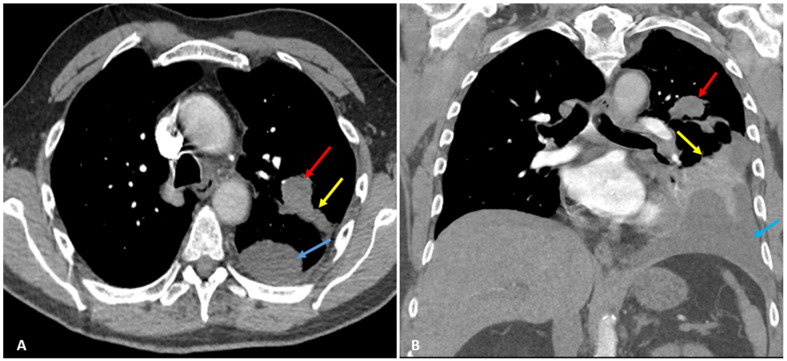
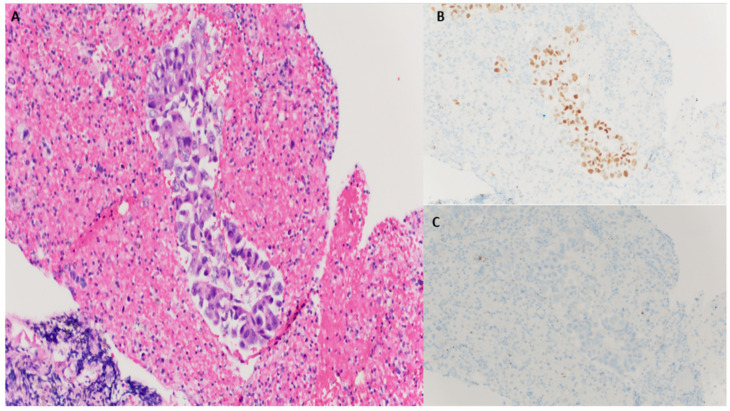
Lung cancer is the leading cause of cancer-related deaths. Surgery remains the best option to treat lung cancer when feasible. However, many cases are diagnosed beyond the initial stages. There has been tremendous progress in the treatment of lung cancer over the last few years. Studies have shown that biomarker-driven targeted therapies lead to better outcomes. Due to the technical difficulties and significant procedural risk associated with repeated tissue biopsies, analysis of tumor constituents circulating in the blood, such as circulating tumor DNA (ctDNA) and various proteins, is becoming more widely recognized as an alternative method of tumor sampling, i.e., liquid biopsy. Liquid biopsy is superior to tissue biopsy, as it is minimally invasive and easily repeatable. Given the recent data on changes in mutations as the disease progresses or responds to treatment, liquid biopsies can help monitor the changes and guide us in giving targeted drugs. Here we present a case of advanced NSCLC who was initially started on Alectinib based on positivity for gene rearrangement found in the FISH study. At the time of progression, molecular profiling liquid biopsy was obtained, which revealed - mutation. Thus, the patient's therapy was later on changed to sotorasib after the FDA approved a mutation inhibitor.
肺癌是癌症相关死亡的主要原因。在可行的情况下,手术仍然是治疗肺癌的最佳选择。然而,许多病例在初始阶段之后才被诊断出来。在过去几年中,肺癌治疗取得了巨大进展。研究表明,生物标志物驱动的靶向治疗能带来更好的治疗效果。由于与重复组织活检相关的技术困难和重大操作风险,对血液中循环的肿瘤成分(如循环肿瘤DNA(ctDNA)和各种蛋白质)进行分析,正越来越被广泛认可为一种肿瘤采样的替代方法,即液体活检。液体活检优于组织活检,因为它微创且易于重复。鉴于最近关于疾病进展或对治疗反应时突变变化的数据,液体活检有助于监测这些变化,并指导我们给予靶向药物。在此,我们报告一例晚期非小细胞肺癌病例,该患者最初基于FISH研究中发现的基因重排阳性开始使用阿来替尼治疗。在疾病进展时,进行了分子谱分析液体活检,结果显示了 - 突变。因此,在FDA批准一种 突变抑制剂后,该患者的治疗后来改为索托拉西布。