Adolf Lea A, Heilbronner Simon
Interfaculty Institute for Microbiology and Infection Medicine, Institute for Medical Microbiology and Hygiene, UKT Tübingen, 72076 Tübingen, Germany.
German Centre for Infection Research (DZIF), Partner Site Tübingen, 72076 Tübingen, Germany.
Metabolites. 2022 May 27;12(6):489. doi: 10.3390/metabo12060489.
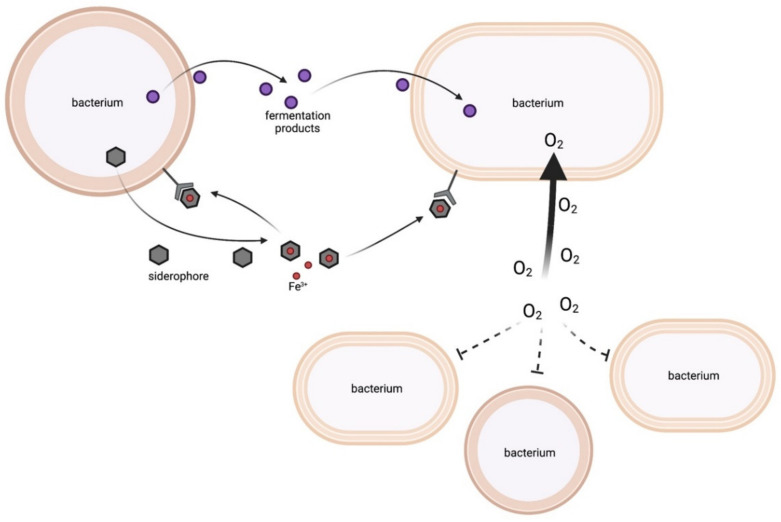
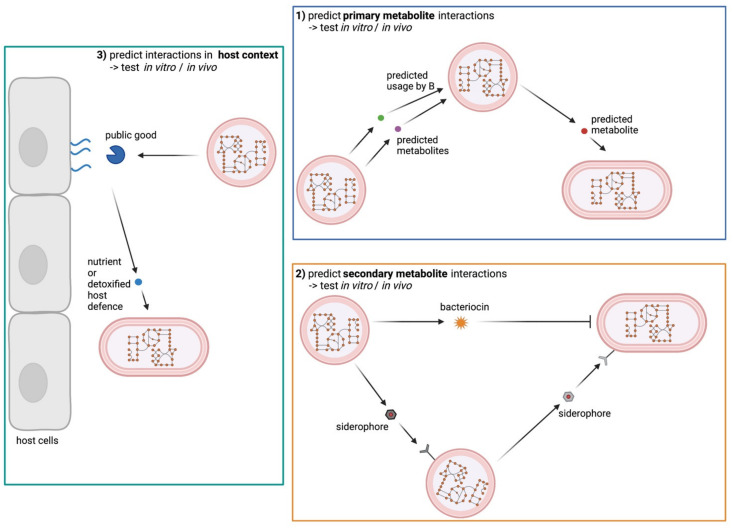
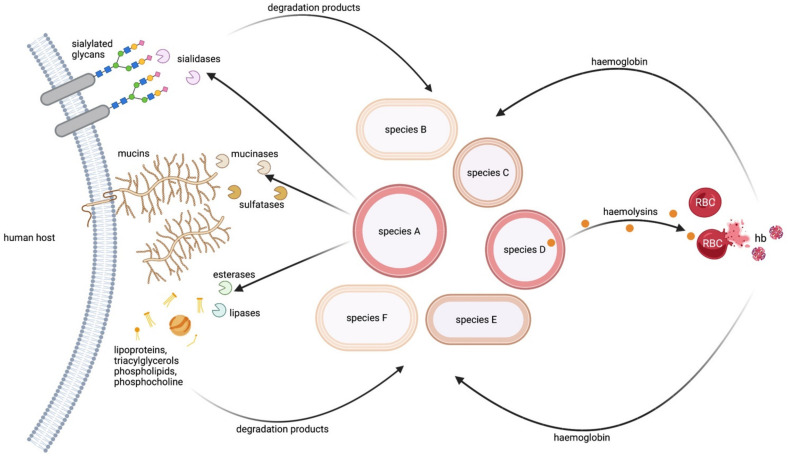
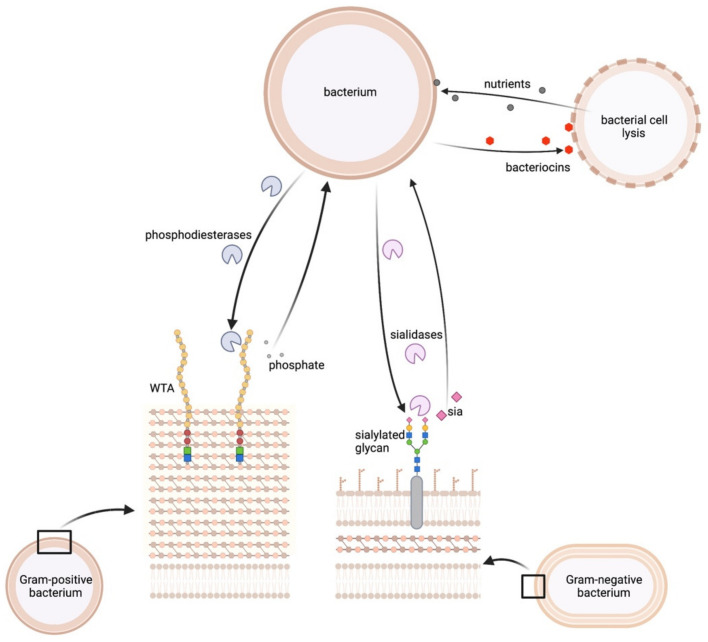
The human nasal microbiome can be a reservoir for several pathogens, including . However, certain harmless nasal commensals can interfere with pathogen colonisation, an ability that could be exploited to prevent infection. Although attractive as a prophylactic strategy, manipulation of nasal microbiomes to prevent pathogen colonisation requires a better understanding of the molecular mechanisms of interaction that occur between nasal commensals as well as between commensals and pathogens. Our knowledge concerning the mechanisms of pathogen exclusion and how stable community structures are established is patchy and incomplete. Nutrients are scarce in nasal cavities, which makes competitive or mutualistic traits in nutrient acquisition very likely. In this review, we focus on nutritional interactions that have been shown to or might occur between nasal microbiome members. We summarise concepts of nutrient release from complex host molecules and host cells as well as of intracommunity exchange of energy-rich fermentation products and siderophores. Finally, we discuss the potential of genome-based metabolic models to predict complex nutritional interactions between members of the nasal microbiome.
人类鼻腔微生物群可能是多种病原体的储存库,包括……。然而,某些无害的鼻腔共生菌可以干扰病原体的定植,这种能力可被利用来预防感染。尽管作为一种预防策略很有吸引力,但操纵鼻腔微生物群以防止病原体定植需要更好地了解鼻腔共生菌之间以及共生菌与病原体之间发生的相互作用的分子机制。我们关于病原体排除机制以及如何建立稳定群落结构的知识是零散且不完整的。鼻腔中营养物质稀缺,这使得在营养获取方面具有竞争或互利特征的可能性很大。在这篇综述中,我们关注已被证明或可能在鼻腔微生物群成员之间发生的营养相互作用。我们总结了从复杂宿主分子和宿主细胞中释放营养物质的概念,以及富含能量的发酵产物和铁载体在群落内交换的概念。最后,我们讨论了基于基因组的代谢模型预测鼻腔微生物群成员之间复杂营养相互作用的潜力。