Chasapi Styliani A, Karagkouni Evdokia, Kalavrizioti Dimitra, Vamvakas Sotirios, Zompra Aikaterini, Takis Panteleimon G, Goumenos Dimitrios S, Spyroulias Georgios A
Department of Pharmacy, University of Patras, 26504 Patras, Greece.
Department of Nephrology and Renal Transplantation, University Hospital of Patras, 26504 Patras, Greece.
Metabolites. 2022 May 28;12(6):490. doi: 10.3390/metabo12060490.
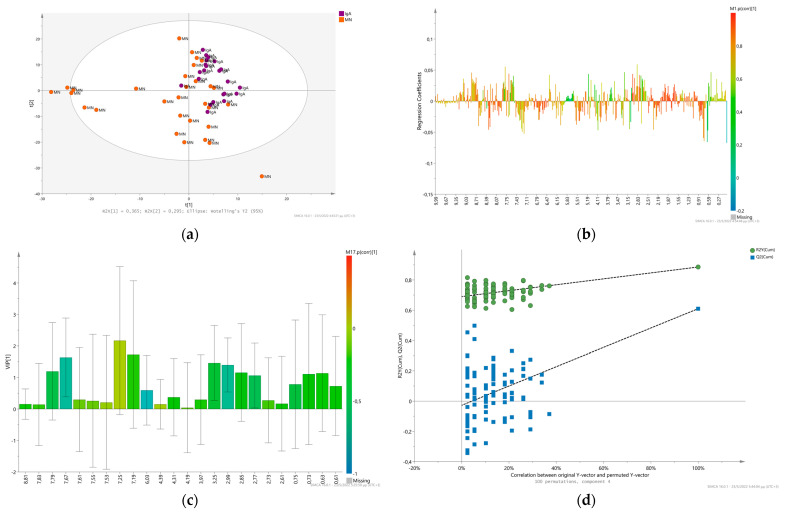
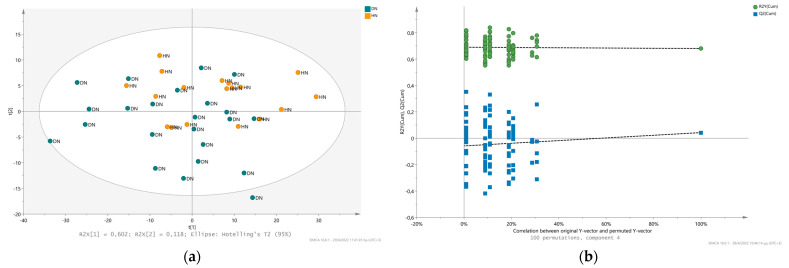
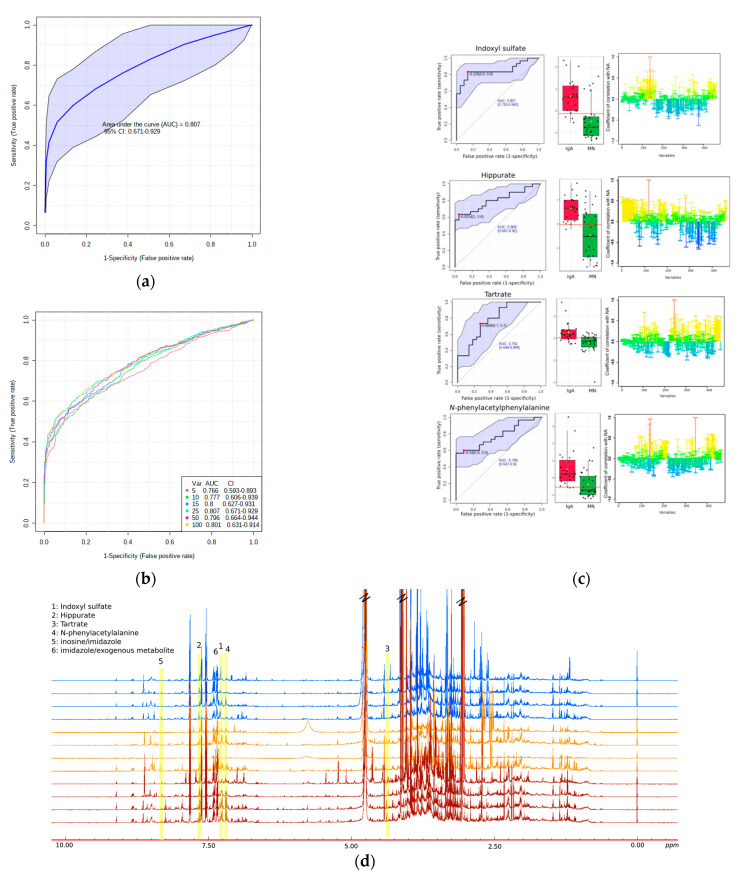
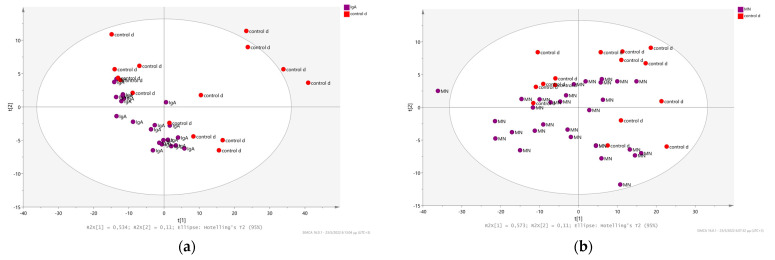
Chronic Kidney Disease (CKD) is considered as a major public health problem as it can lead to end-stage kidney failure, which requires replacement therapy. A prompt and accurate diagnosis, along with the appropriate treatment, can delay CKD's progression, significantly. Herein, we sought to determine whether CKD etiology can be reflected in urine metabolomics during its early stage. This is achieved through the analysis of the urine metabolic fingerprint from 108 CKD patients by means of Nuclear Magnetic Resonance (NMR) spectroscopy metabolomic analysis. We report the first NMR-metabolomics data regarding the three most common etiologies of CKD: Chronic Glomerulonephritis (IgA and Membranous Nephropathy), Diabetic Nephropathy (DN) and Hypertensive Nephrosclerosis (HN). Analysis aided a moderate glomerulonephritis clustering, providing characterization of the metabolic fluctuations between the CKD subtypes and control disease. The urine metabolome of IgA Nephropathy reveals a specific metabolism, reflecting its different etiology or origin and is useful for determining the origin of the disease. In contrast, urine metabolomes from DN and HN patients did not reveal any indicative metabolic pattern, which is consistent with their fused clinical phenotype. These findings may contribute to improving diagnostics and prognostic approaches for CKD, as well as improving our understanding of its pathology.
慢性肾脏病(CKD)被视为一个重大的公共卫生问题,因为它可导致终末期肾衰竭,而这需要替代治疗。及时、准确的诊断以及恰当的治疗能够显著延缓CKD的进展。在此,我们试图确定CKD的病因在其早期阶段能否通过尿液代谢组学得以体现。这是通过利用核磁共振(NMR)波谱代谢组学分析方法,对108例CKD患者的尿液代谢指纹进行分析来实现的。我们报告了有关CKD三种最常见病因的首批NMR代谢组学数据:慢性肾小球肾炎(IgA和膜性肾病)、糖尿病肾病(DN)和高血压性肾硬化(HN)。分析有助于对中度肾小球肾炎进行聚类,从而对CKD各亚型与对照疾病之间的代谢波动特征进行描述。IgA肾病的尿液代谢组显示出一种特定的代谢情况,反映了其不同的病因或起源,并且有助于确定疾病的起源。相比之下,DN和HN患者的尿液代谢组未显示出任何指示性代谢模式,这与其融合的临床表型相符。这些发现可能有助于改进CKD的诊断和预后方法,以及增进我们对其病理学的理解。