Yadav Manoj, Chaudhary Prem Prashant, D'Souza Brandon N, Spathies Jacquelyn, Myles Ian A
Epithelial Therapeutics Unit, National Institute of Allergy and Infectious Disease, National Institutes of Health, Bethesda, MD 20892, USA.
Metabolites. 2022 May 30;12(6):497. doi: 10.3390/metabo12060497.
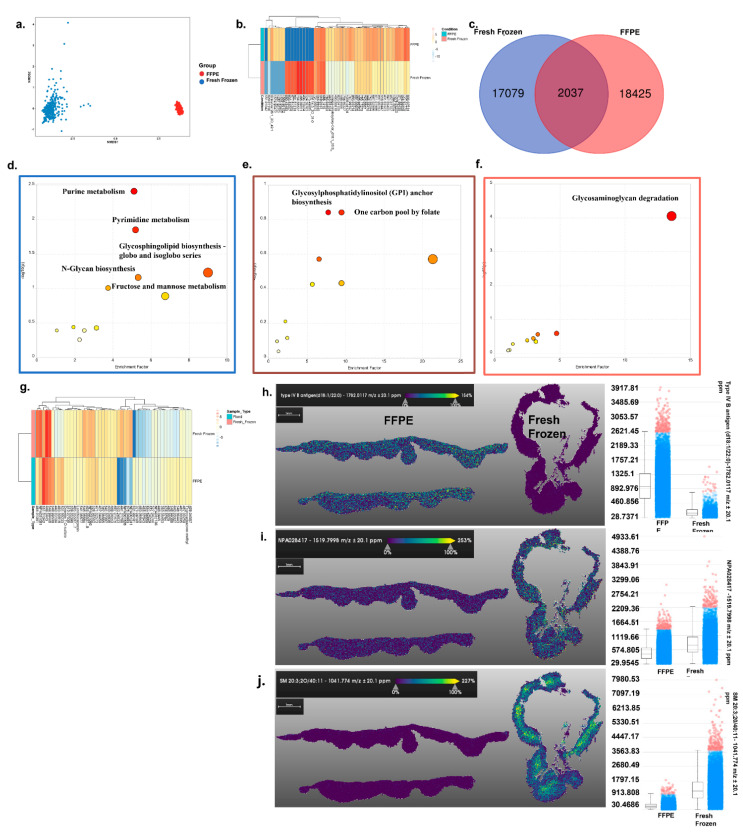
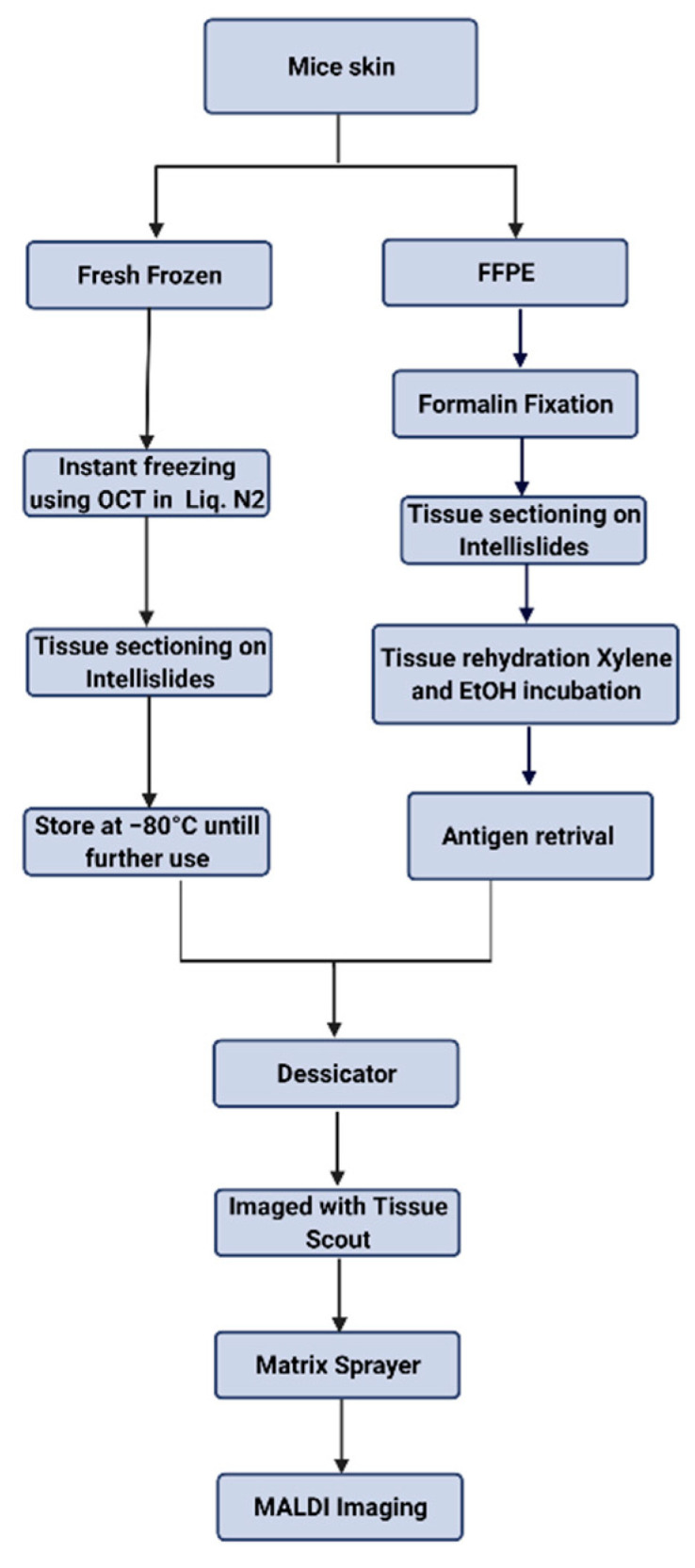
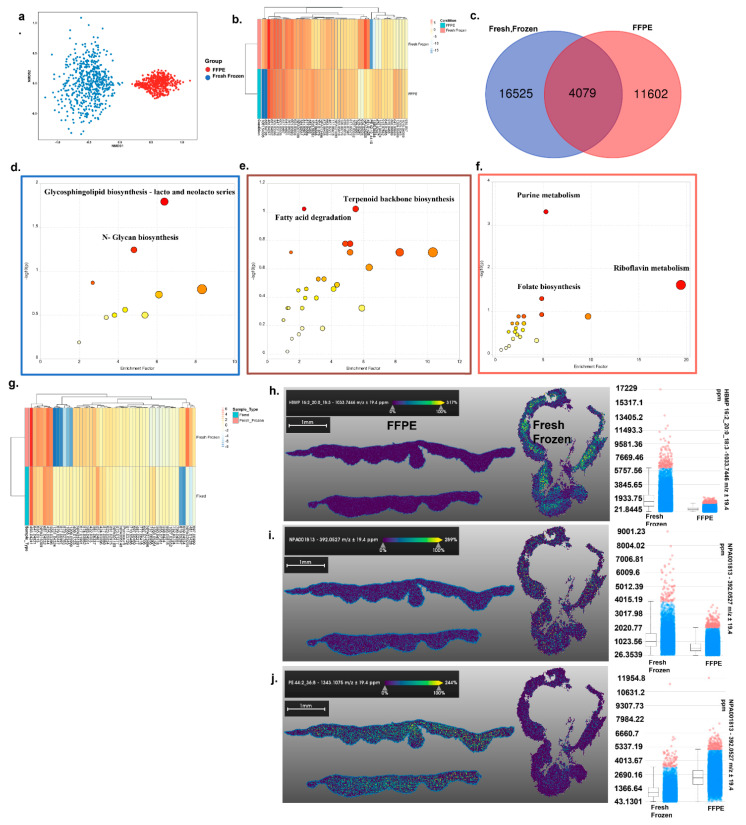
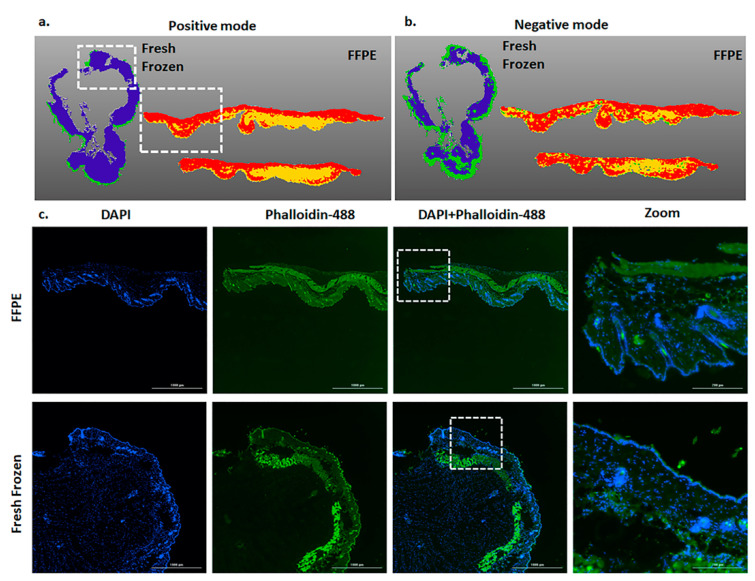
MALDI imaging is a novel technique with which to study the pathophysiologies of diseases. Advancements in the field of metabolomics and lipidomics have been instrumental in mapping the signaling pathways involved in various diseases, such as cancer and neurodegenerative diseases (Parkinson's). MALDI imaging is flexible and can handle many sample types. Researchers primarily use either formalin-fixed paraffin-embedded (FFPE) or fresh frozen tissue samples to answer their scientific questions. FFPE samples allow for easy long-term storage, but the requirement for extensive sample processing may limit the ability to provide a clear picture of metabolite distribution in biological tissue. Frozen samples require less handling, but present logistical challenges for collection and storage. A few studies, mostly focused on cancer cell lines, have directly compared the results of MALDI imaging using these two tissue fixation approaches. Herein, we directly compared FFPE and fresh frozen sample preparation for murine skin samples, and performed detailed pathway analysis to understand how differences in processing impact MALDI results from otherwise identical tissues. Our results indicate that FFPE and fresh frozen methods differ significantly in the putative identified metabolite content and distribution. The fixation methods shared only 2037 metabolites in positive mode and only 4079 metabolites in negative ion mode. However, both fixation approaches allowed for downstream fluorescent staining, which may save time and resources for samples that are clinically precious. This work represents a direct comparison of the impacts of the two main tissue processing methods on subsequent MALDI-MSI. While our results are similar to previous work in cancer tissue, they provide novel insights for those using MALDI-MSI in skin.
基质辅助激光解吸电离成像(MALDI成像)是一种用于研究疾病病理生理学的新技术。代谢组学和脂质组学领域的进展有助于绘制参与各种疾病(如癌症和神经退行性疾病(帕金森病))的信号通路。MALDI成像具有灵活性,能够处理多种样本类型。研究人员主要使用福尔马林固定石蜡包埋(FFPE)或新鲜冷冻组织样本以解答他们的科学问题。FFPE样本便于长期保存,但大量样本处理的要求可能会限制其清晰呈现生物组织中代谢物分布情况的能力。冷冻样本所需处理较少,但在采集和储存方面存在后勤挑战。一些主要针对癌细胞系的研究直接比较了使用这两种组织固定方法的MALDI成像结果。在此,我们直接比较了小鼠皮肤样本的FFPE和新鲜冷冻样本制备方法,并进行了详细的通路分析,以了解处理方式的差异如何影响来自其他方面相同组织的MALDI结果。我们的结果表明,FFPE和新鲜冷冻方法在推定鉴定出的代谢物含量和分布上存在显著差异。在正离子模式下,两种固定方法仅共有2037种代谢物,在负离子模式下仅共有4079种代谢物。然而,两种固定方法都允许进行下游荧光染色,这对于临床上珍贵的样本可能节省时间和资源。这项工作直接比较了两种主要组织处理方法对后续基质辅助激光解吸电离质谱成像(MALDI-MSI)的影响。虽然我们的结果与之前关于癌症组织的研究相似,但它们为在皮肤中使用MALDI-MSI的研究人员提供了新的见解。