College of Bioinformatics Science and Technology, Harbin Medical University, Harbin, 150081, China.
Precision Medicine Institute, The First Affiliated Hospital, Sun Yat-Sen University, Guangzhou, China.
Sci Rep. 2022 Jun 23;12(1):10641. doi: 10.1038/s41598-022-13835-5.
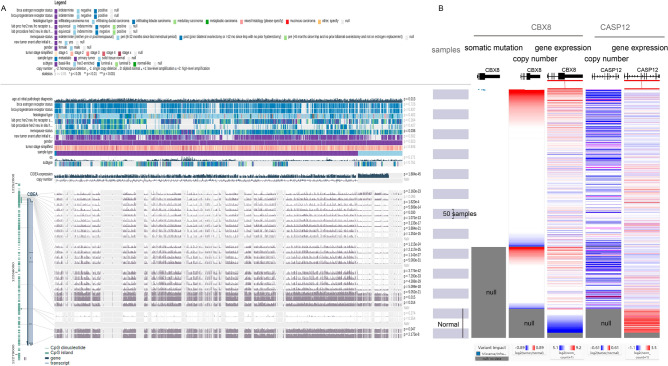
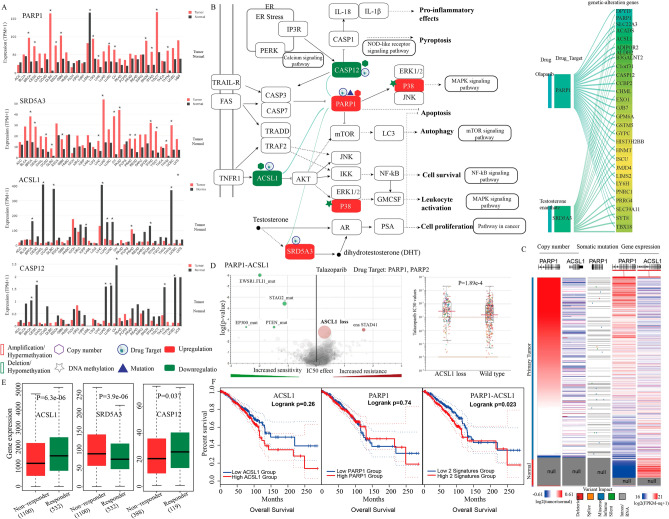
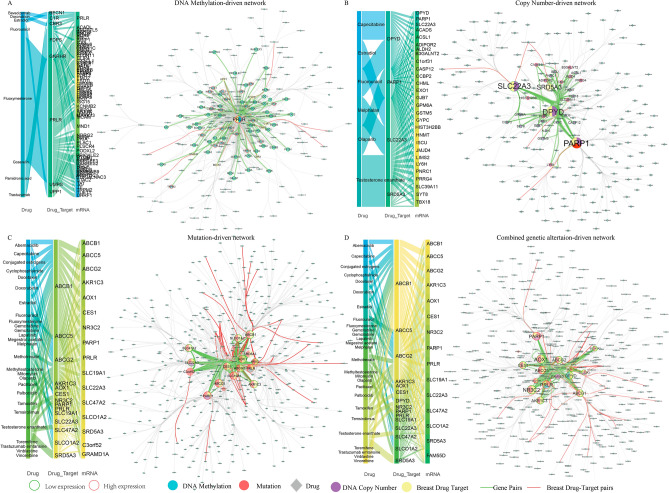
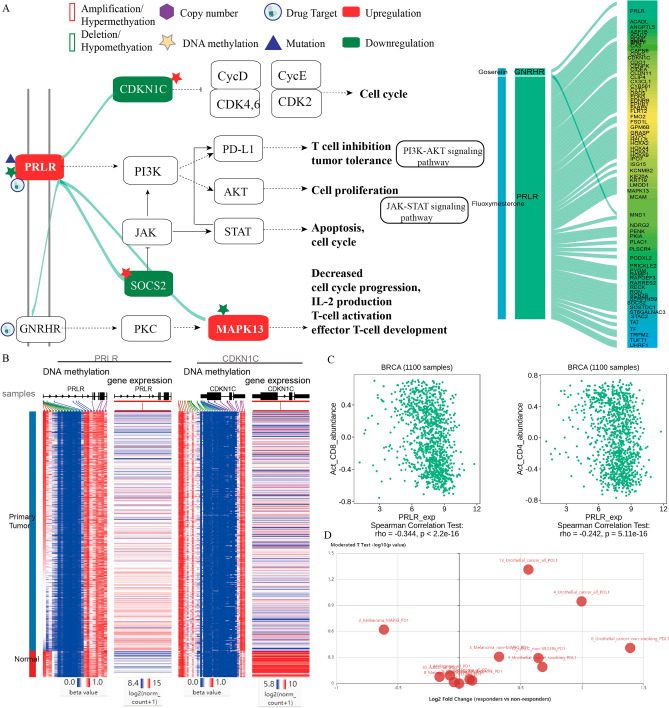
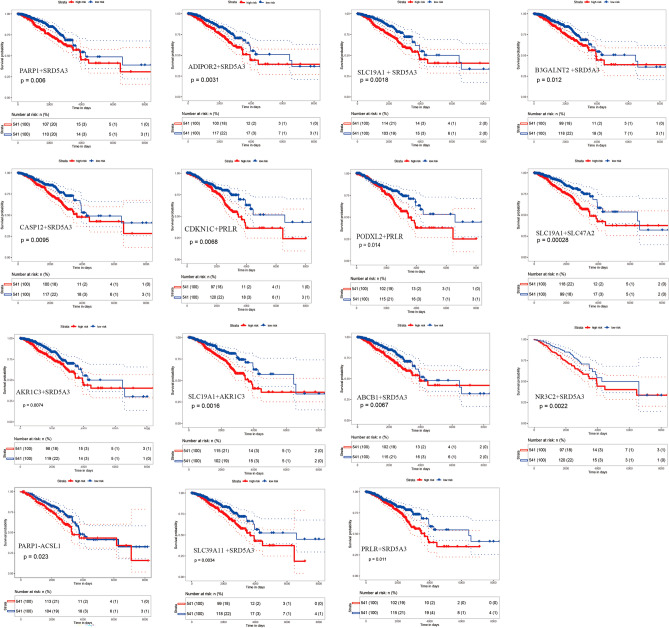
Differences in genetic molecular features including mutation, copy number alterations and DNA methylation, can explain interindividual variability in response to anti-cancer drugs in cancer patients. However, identifying genetic alteration-driven genes and characterizing their functional mechanisms in different cancer types are still major challenges for cancer studies. Here, we systematically identified functional regulations between genetic alteration-driven genes and drug target genes and their potential prognostic roles in breast cancer. We identified two mutation and copy number-driven gene pairs (PARP1-ACSL1 and PARP1-SRD5A3), three DNA methylation-driven gene pairs (PRLR-CDKN1C, PRLR-PODXL2 and PRLR-SRD5A3), six gene pairs between mutation-driven genes and drug target genes (SLC19A1-SLC47A2, SLC19A1-SRD5A3, AKR1C3-SLC19A1, ABCB1-SRD5A3, NR3C2-SRD5A3 and AKR1C3-SRD5A3), and four copy number-driven gene pairs (ADIPOR2-SRD5A3, CASP12-SRD5A3, SLC39A11-SRD5A3 and GALNT2-SRD5A3) that all served as prognostic biomarkers of breast cancer. In particular, RARP1 was found to be upregulated by simultaneous copy number amplification and gene mutation. Copy number deletion and downregulated expression of ACSL1 and upregulation of SRD5A3 both were observed in breast cancers. Moreover, copy number deletion of ACSL1 was associated with increased resistance to PARP inhibitors. PARP1-ACSL1 pair significantly correlated with poor overall survival in breast cancer owing to the suppression of the MAPK, mTOR and NF-kB signaling pathways, which induces apoptosis, autophagy and prevents inflammatory processes. Loss of SRD5A3 expression was also associated with increased sensitivity to PARP inhibitors. The PARP1-SRD5A3 pair significantly correlated with poor overall survival in breast cancer through regulating androgen receptors to induce cell proliferation. These results demonstrate that genetic alteration-driven gene pairs might serve as potential biomarkers for the prognosis of breast cancer and facilitate the identification of combination therapeutic targets for breast cancers.
遗传分子特征的差异,包括突变、拷贝数改变和 DNA 甲基化,可解释癌症患者对癌症药物反应的个体间变异性。然而,确定遗传改变驱动的基因并描述它们在不同癌症类型中的功能机制仍然是癌症研究的主要挑战。在这里,我们系统地鉴定了遗传改变驱动的基因与药物靶基因之间的功能调控及其在乳腺癌中的潜在预后作用。我们鉴定了两个突变和拷贝数驱动的基因对(PARP1-ACSL1 和 PARP1-SRD5A3),三个 DNA 甲基化驱动的基因对(PRLR-CDKN1C、PRLR-PODXL2 和 PRLR-SRD5A3),六个突变驱动的基因与药物靶基因之间的基因对(SLC19A1-SLC47A2、SLC19A1-SRD5A3、AKR1C3-SLC19A1、ABCB1-SRD5A3、NR3C2-SRD5A3 和 AKR1C3-SRD5A3),以及四个拷贝数驱动的基因对(ADIPOR2-SRD5A3、CASP12-SRD5A3、SLC39A11-SRD5A3 和 GALNT2-SRD5A3),它们均作为乳腺癌的预后生物标志物。特别地,发现 RARP1 由于同时发生的拷贝数扩增和基因突变而上调。在乳腺癌中观察到 ACSL1 的拷贝数缺失和下调表达以及 SRD5A3 的上调。此外,ACSL1 的拷贝数缺失与对 PARP 抑制剂的耐药性增加有关。PARP1-ACSL1 对与乳腺癌患者的总体生存率显著相关,因为 MAPK、mTOR 和 NF-kB 信号通路的抑制会诱导细胞凋亡、自噬并防止炎症过程。SRD5A3 表达的丧失也与对 PARP 抑制剂的敏感性增加有关。PARP1-SRD5A3 对与乳腺癌患者的总体生存率显著相关,因为它通过调节雄激素受体来诱导细胞增殖。这些结果表明,遗传改变驱动的基因对可能是乳腺癌预后的潜在生物标志物,并有助于鉴定乳腺癌的联合治疗靶点。