Kim Shihyoung, Shukla Rajni Kant, Kim Eunsoo, Cressman Sophie G, Yu Hannah, Baek Alice, Choi Hyewon, Kim Alan, Sharma Amit, Wang Zhirui, Huang Christene A, Reneau John C, Boyaka Prosper N, Liyanage Namal P M, Kim Sanggu
Department of Veterinary Biosciences, The Ohio State University, Columbus, OH 43210, USA.
Department of Microbial Immunity and Infection, The Ohio State University, Columbus, OH 43210, USA.
Biomedicines. 2022 May 24;10(6):1221. doi: 10.3390/biomedicines10061221.
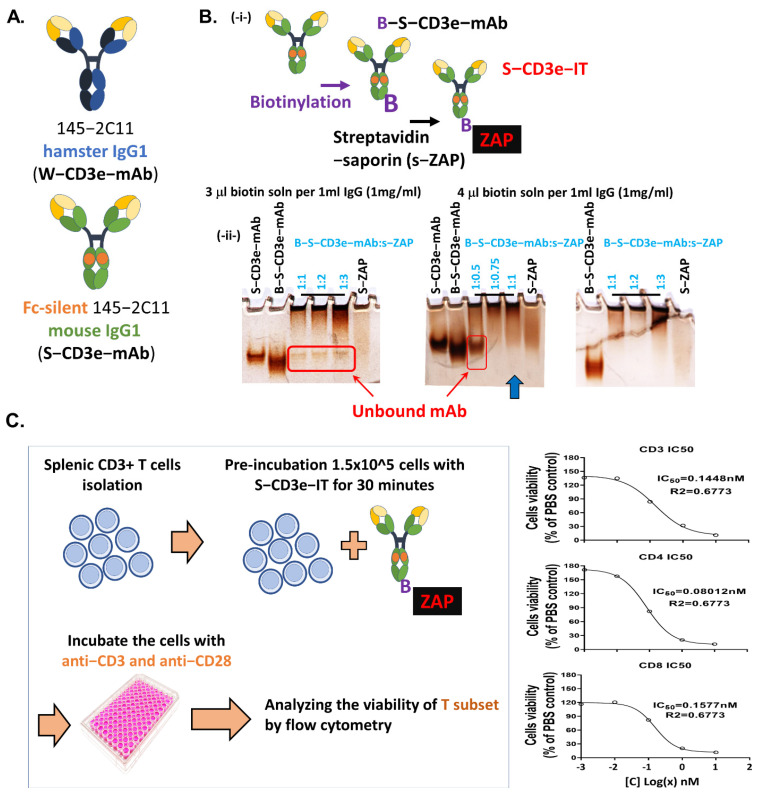
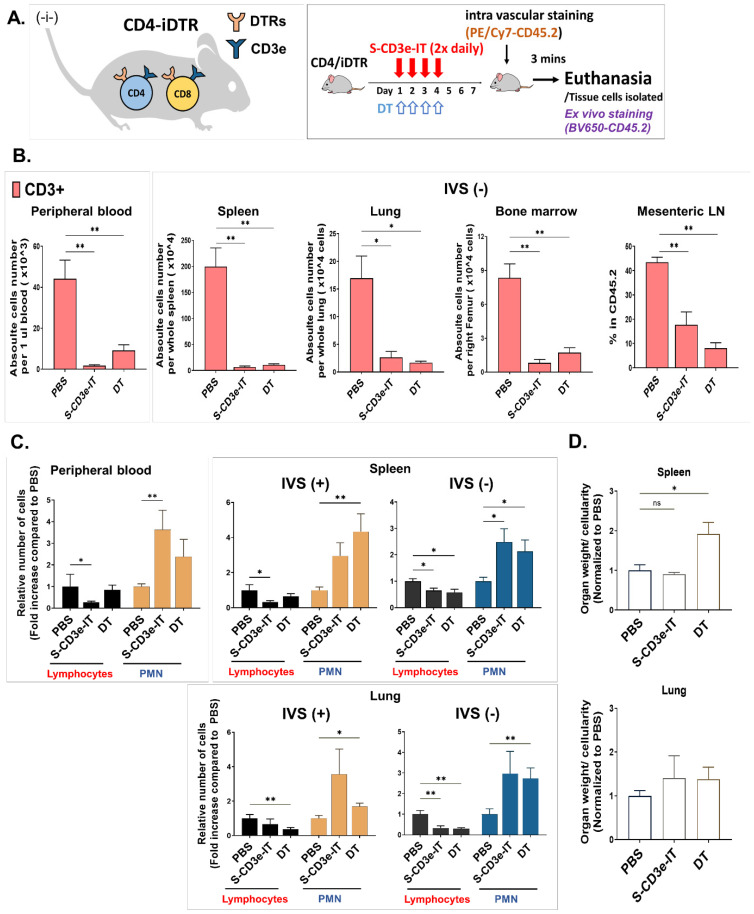
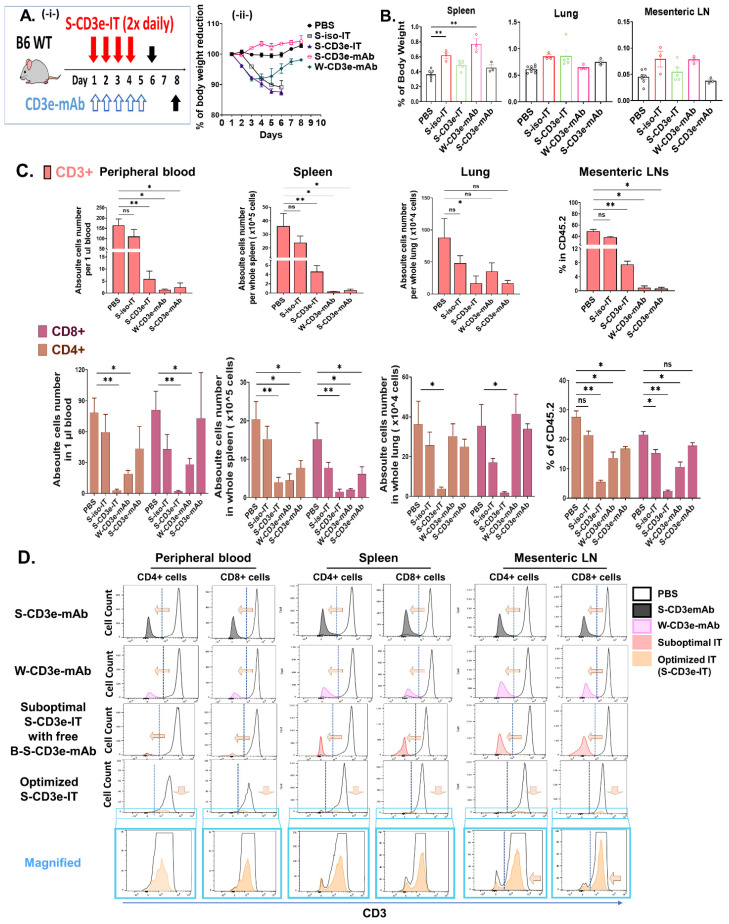
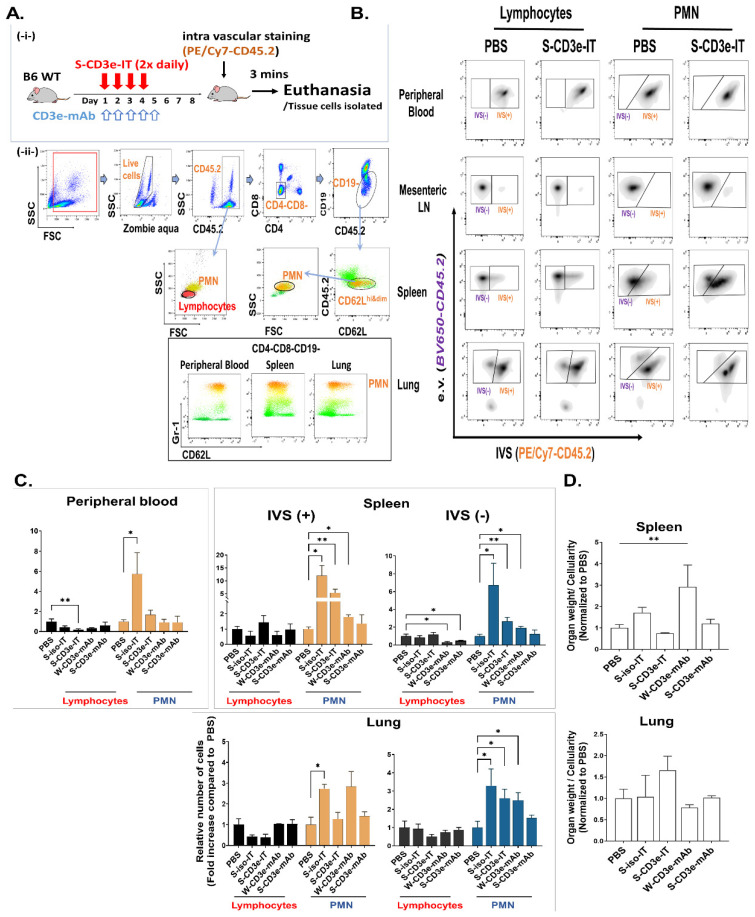
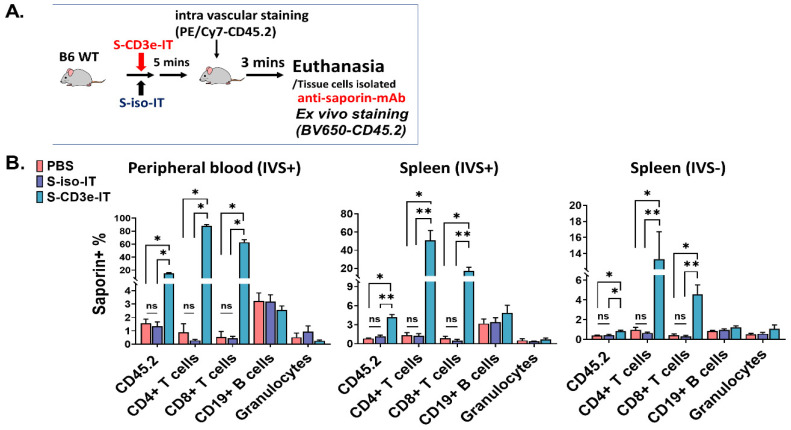
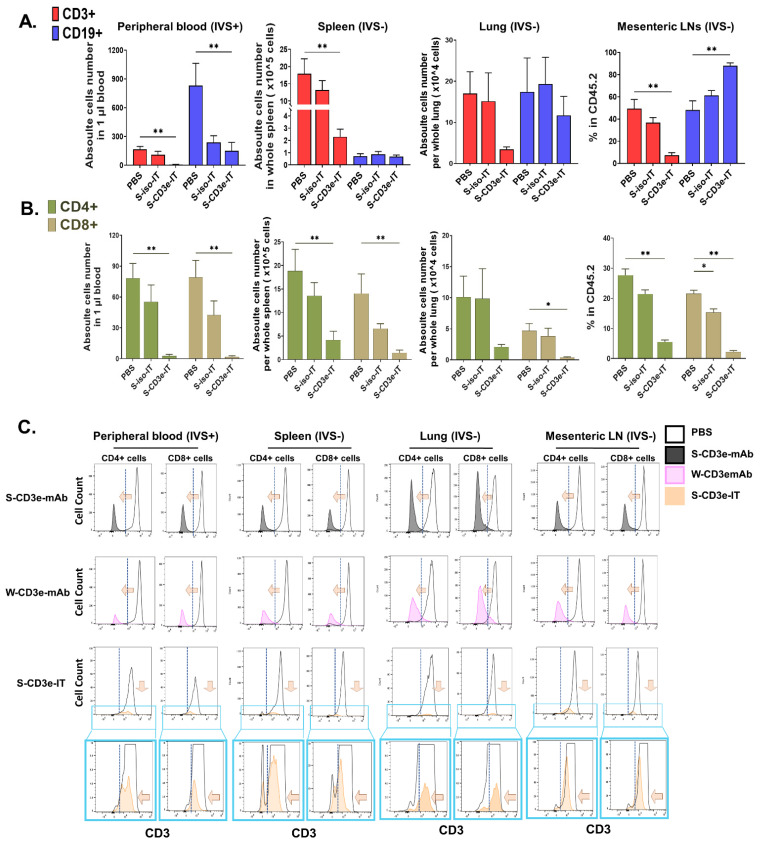
Anti-CD3-epsilon (CD3e) monoclonal antibodies (mAbs) and CD3e immunotoxins (ITs) are promising targeted therapy options for various T-cell disorders. Despite significant advances in mAb and IT engineering, vascular leakage syndrome (VLS) remains a major dose-limiting toxicity for ITs and has been poorly characterized for recent "engineered" mAbs. This study undertakes a direct comparison of non-mitogenic CD3e-mAb (145-2C11 with Fc-silent murine IgG1: S-CD3e-mAb) and a new murine-version CD3e-IT (saporin-streptavidin (sZAP) conjugated with S-CD3e-mAb: S-CD3e-IT) and identifies their distinct toxicity profiles in mice. As expected, the two agents showed different modes of action on T cells, with S-CD3e-mAb inducing nearly complete modulation of CD3e on the cell surface, while S-CD3e-IT depleted the cells. S-CD3e-IT significantly increased the infiltration of polymorphonuclear leukocytes (PMNs) into the tissue parenchyma of the spleen and lungs, a sign of increased vascular permeability. By contrast, S-CD3e-mAbs-treated mice showed no notable signs of vascular leakage. Treatment with control ITs (sZAP conjugated with Fc-silent isotype antibodies) induced significant vascular leakage without causing T-cell deaths. These results demonstrate that the toxin portion of S-CD3e-IT, not the CD3e-binding portion (S-CD3e-mAb), is the main driver of vascular leakage, thus clarifying the molecular target for improving safety profiles in CD3e-IT therapy.
抗CD3ε单克隆抗体(mAb)和CD3ε免疫毒素(IT)是治疗各种T细胞疾病的有前景的靶向治疗选择。尽管在单克隆抗体和免疫毒素工程方面取得了重大进展,但血管渗漏综合征(VLS)仍然是免疫毒素的主要剂量限制性毒性,并且对于最近的“工程化”单克隆抗体来说,其特征尚不明确。本研究对非促有丝分裂的CD3ε单克隆抗体(145-2C11与Fc沉默的小鼠IgG1:S-CD3ε-mAb)和一种新的小鼠版本的CD3ε免疫毒素(与S-CD3ε-mAb偶联的皂草素-链霉亲和素(sZAP):S-CD3ε-IT)进行了直接比较,并确定了它们在小鼠中的不同毒性特征。正如预期的那样,这两种药物对T细胞表现出不同的作用模式,S-CD3ε-mAb诱导细胞表面CD3ε几乎完全被调节,而S-CD3ε-IT使细胞耗竭。S-CD3ε-IT显著增加了多形核白细胞(PMN)向脾脏和肺组织实质的浸润,这是血管通透性增加的迹象。相比之下,经S-CD3ε-mAb处理的小鼠没有明显的血管渗漏迹象。用对照免疫毒素(与Fc沉默的同型抗体偶联的sZAP)治疗会导致显著血管渗漏,但不会导致T细胞死亡。这些结果表明,S-CD3ε-IT的毒素部分而非CD3ε结合部分(S-CD3ε-mAb)是血管渗漏的主要驱动因素,从而明确了改善CD3ε-IT治疗安全性的分子靶点。