Hung Shuen-Iu, Preclaro Ivan Arni C, Chung Wen-Hung, Wang Chuang-Wei
Cancer Vaccine & Immune Cell Therapy Core Laboratory, Department of Medical Research, Chang Gung Memorial Hospital, Linkou Branch, Taoyuan 333, Taiwan.
Institute of Pharmacology, School of Medicine, National Yang Ming Chiao Tung University, Taipei 112, Taiwan.
Biomedicines. 2022 May 28;10(6):1260. doi: 10.3390/biomedicines10061260.
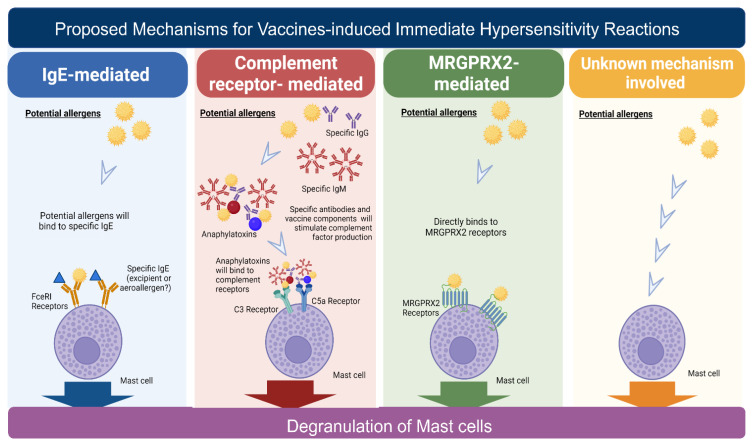
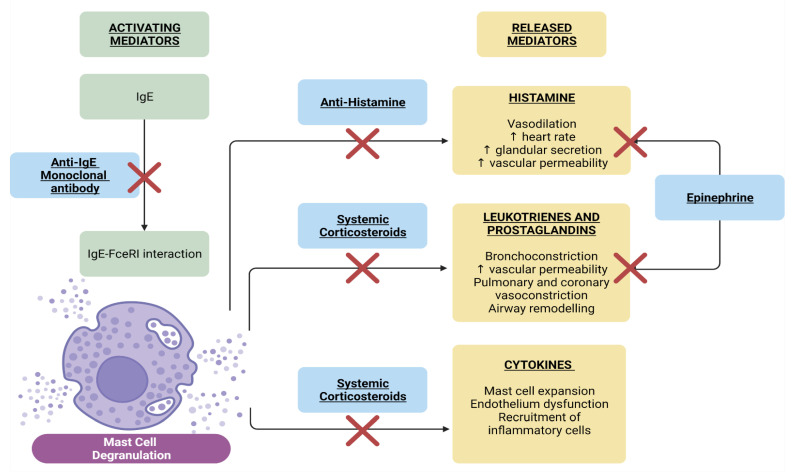
As the world deals with the COVID-19 pandemic, vaccination remains vital to successfully end this crisis. However, COVID-19-vaccine-induced immediate hypersensitivity reactions presenting with potentially life-threatening systemic anaphylactic reactions are one of the reasons for vaccine hesitancy. Recent studies have suggested that different mechanisms, including IgE-mediated and non-IgE-mediated mast cell activation, may be involved in immediate hypersensitivity. The main culprits triggering hypersensitivity reactions have been suggested to be the excipients of vaccines, including polyethylene glycol and polysorbate 80. Patients with a history of allergic reactions to drugs, foods, or other vaccines may have an increased risk of hypersensitivity reactions to COVID-19 vaccines. Various strategies have been suggested to prevent hypersensitivity reactions, including performing skin tests or in vitro tests before vaccination, administering different vaccines for the primary and following boosters, changing the fractionated doses, or pretreating the anti-IgE antibody. This review discusses the current trends, potential mechanisms, and prevention strategies for COVID-19-vaccine-induced immediate hypersensitivity reactions.
在全球应对新冠疫情之际,疫苗接种对于成功结束这场危机仍然至关重要。然而,新冠疫苗引发的即刻超敏反应,表现为可能危及生命的全身性过敏反应,是导致疫苗犹豫的原因之一。最近的研究表明,包括IgE介导和非IgE介导的肥大细胞活化在内的不同机制,可能与即刻超敏反应有关。据推测,引发超敏反应的主要因素是疫苗的辅料,包括聚乙二醇和聚山梨酯80。有药物、食物或其他疫苗过敏反应史的患者,对新冠疫苗发生超敏反应的风险可能会增加。已经提出了各种预防超敏反应的策略,包括在接种疫苗前进行皮肤试验或体外试验、为初次接种和后续加强针接种不同的疫苗、改变分剂量方式或使用抗IgE抗体进行预处理。本综述讨论了新冠疫苗诱导的即刻超敏反应的当前趋势、潜在机制和预防策略。