Clinical Collaboration Unit Translational Immunology, German Cancer Consortium (DKTK), Department of Internal Medicine, University Hospital Tübingen, Tübingen, Germany.
Cluster of Excellence iFIT (EXC2180) "Image-Guided and Functionally Instructed Tumor Therapies", University of Tübingen, Tübingen, Germany.
Nature. 2022 Jan;601(7894):617-622. doi: 10.1038/s41586-021-04232-5. Epub 2021 Nov 23.
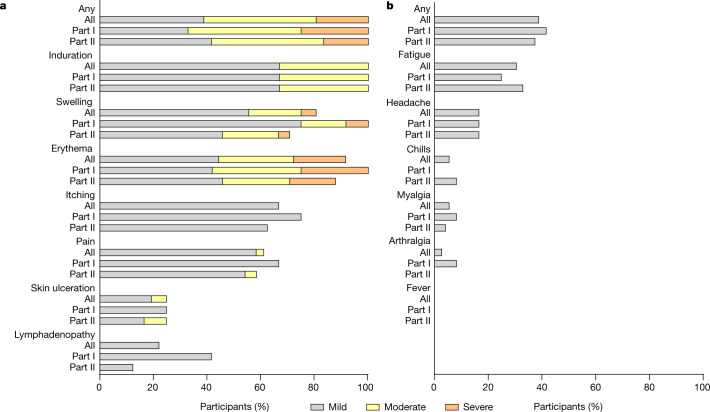
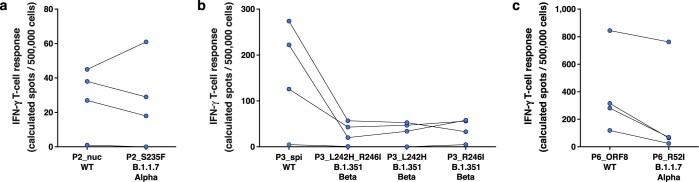
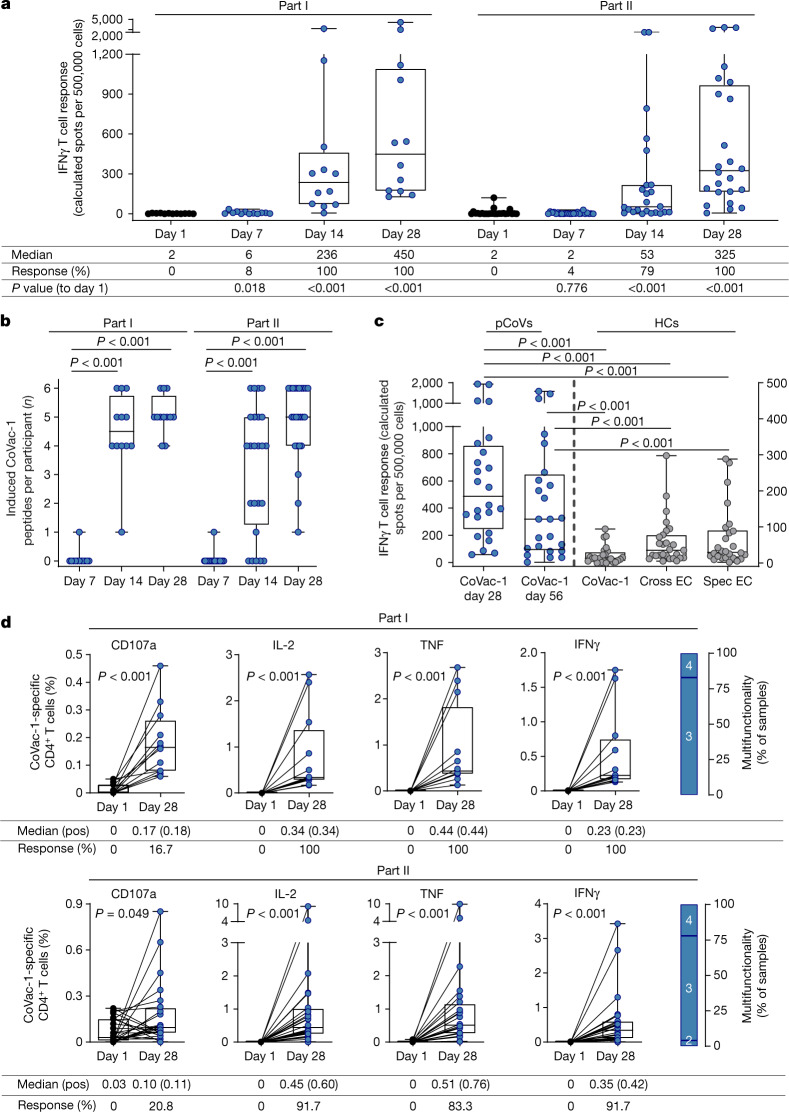
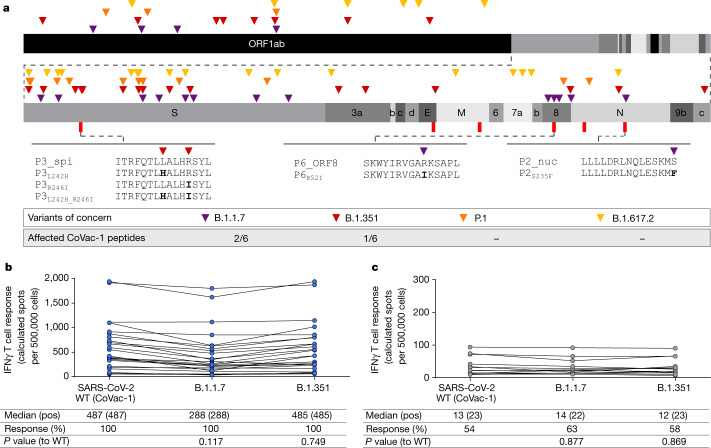
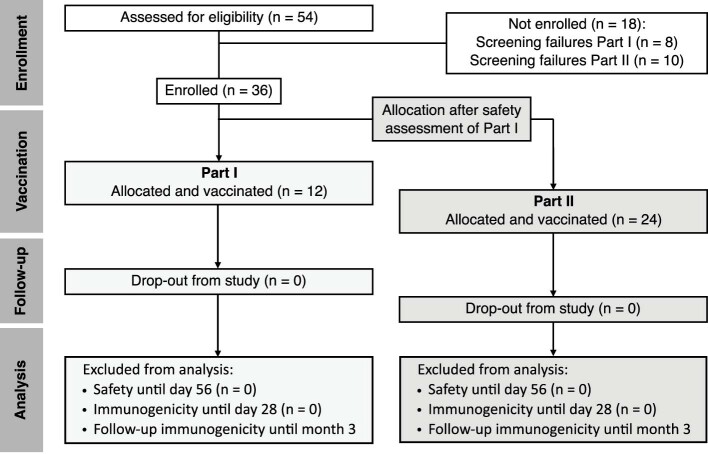
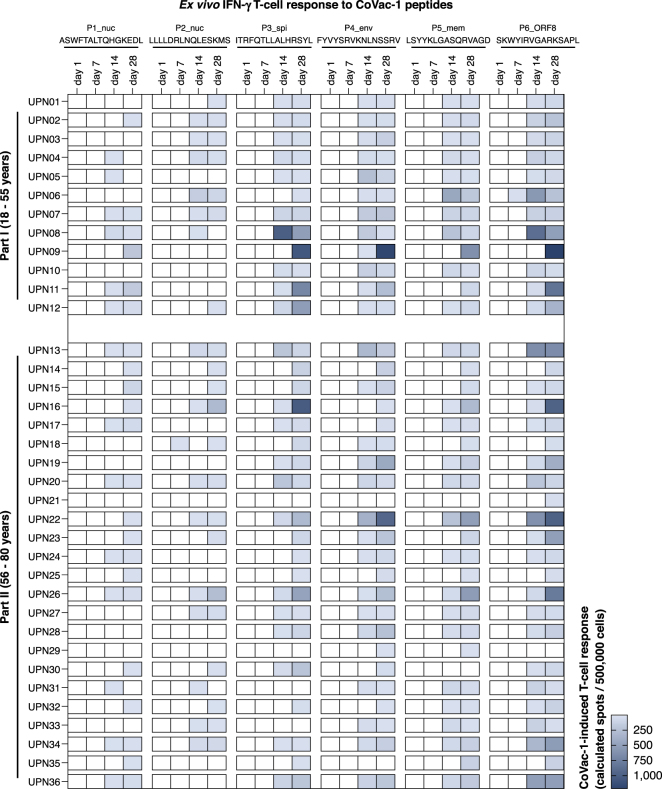
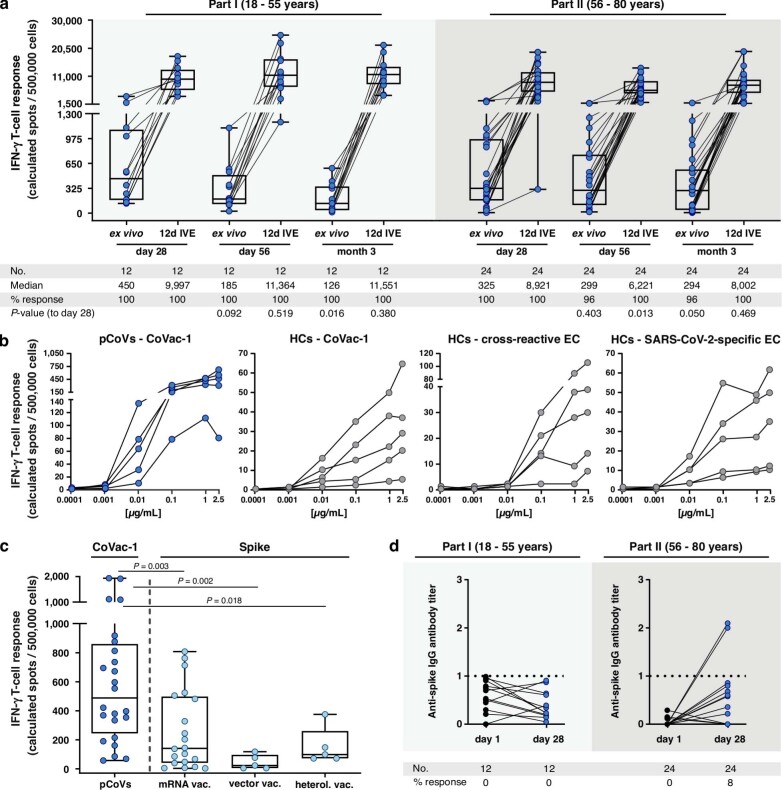
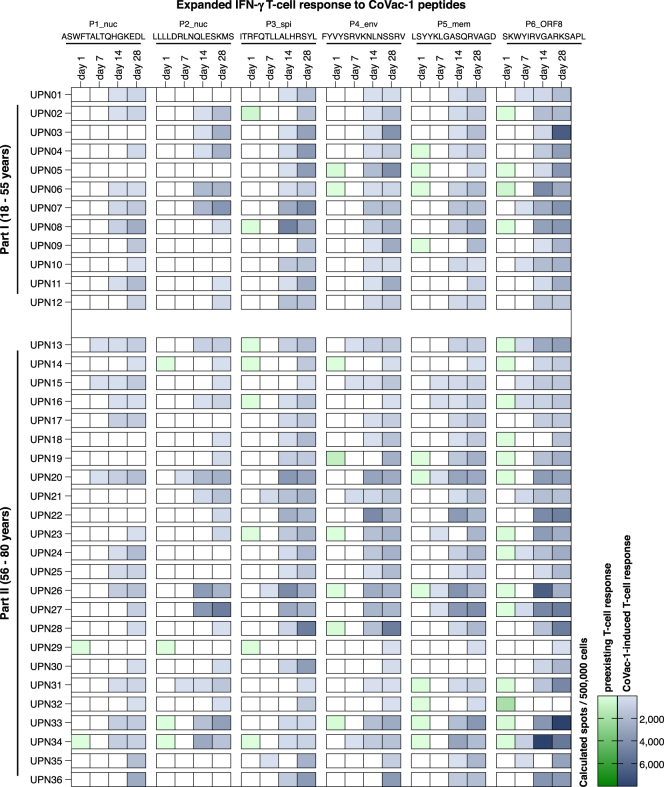
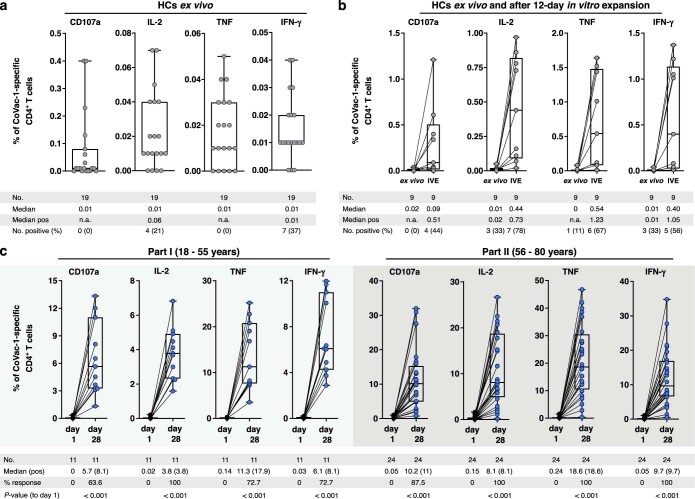
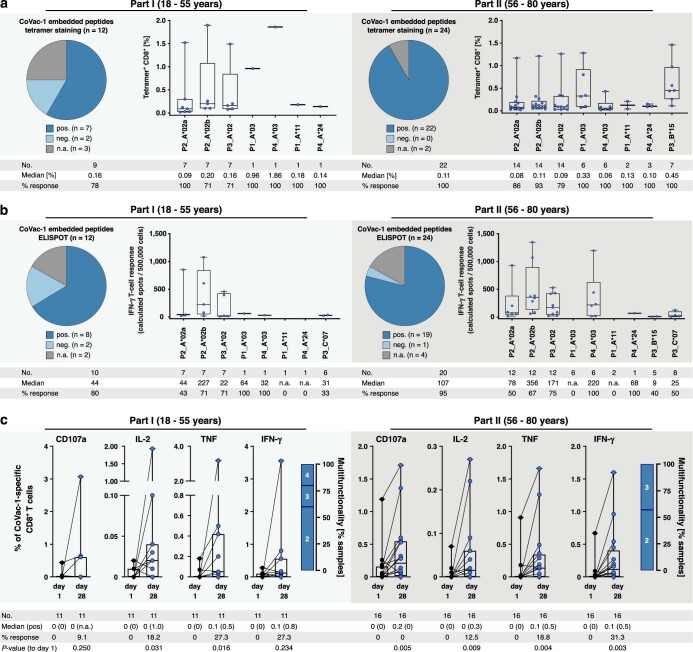
T cell immunity is central for the control of viral infections. CoVac-1 is a peptide-based vaccine candidate, composed of SARS-CoV-2 T cell epitopes derived from various viral proteins, combined with the Toll-like receptor 1/2 agonist XS15 emulsified in Montanide ISA51 VG, aiming to induce profound SARS-CoV-2 T cell immunity to combat COVID-19. Here we conducted a phase I open-label trial, recruiting 36 participants aged 18-80 years, who received a single subcutaneous CoVac-1 vaccination. The primary end point was safety analysed until day 56. Immunogenicity in terms of CoVac-1-induced T cell response was analysed as the main secondary end point until day 28 and in the follow-up until month 3. No serious adverse events and no grade 4 adverse events were observed. Expected local granuloma formation was observed in all study participants, whereas systemic reactogenicity was absent or mild. SARS-CoV-2-specific T cell responses targeting multiple vaccine peptides were induced in all study participants, mediated by multifunctional T helper 1 CD4 and CD8 T cells. CoVac-1-induced IFNγ T cell responses persisted in the follow-up analyses and surpassed those detected after SARS-CoV-2 infection as well as after vaccination with approved vaccines. Furthermore, vaccine-induced T cell responses were unaffected by current SARS-CoV-2 variants of concern. Together, CoVac-1 showed a favourable safety profile and induced broad, potent and variant of concern-independent T cell responses, supporting the presently ongoing evaluation in a phase II trial for patients with B cell or antibody deficiency.
T 细胞免疫对于控制病毒感染至关重要。CoVac-1 是一种基于肽的疫苗候选物,由来自各种病毒蛋白的 SARS-CoV-2 T 细胞表位组成,与 Toll 样受体 1/2 激动剂 XS15 乳化在 Montanide ISA51 VG 中,旨在诱导深刻的 SARS-CoV-2 T 细胞免疫以对抗 COVID-19。在这里,我们进行了一项 I 期开放标签试验,招募了 36 名年龄在 18-80 岁的参与者,他们接受了单次皮下 CoVac-1 疫苗接种。主要终点是直到第 56 天的安全性分析。以 CoVac-1 诱导的 T 细胞反应为主要次要终点的免疫原性分析直到第 28 天和随访到第 3 个月。未观察到严重不良事件和 4 级不良事件。所有研究参与者均观察到预期的局部肉芽肿形成,而全身反应性不存在或轻微。所有研究参与者均诱导了针对多种疫苗肽的 SARS-CoV-2 特异性 T 细胞反应,由多功能辅助性 T 细胞 1 CD4 和 CD8 T 细胞介导。CoVac-1 诱导的 IFNγ T 细胞反应在随访分析中持续存在,并超过了 SARS-CoV-2 感染以及批准疫苗接种后检测到的反应。此外,疫苗诱导的 T 细胞反应不受当前关注的 SARS-CoV-2 变体的影响。总之,CoVac-1 表现出良好的安全性,并诱导广泛、有效且不受关注的变体独立的 T 细胞反应,支持目前正在进行的一项针对 B 细胞或抗体缺陷患者的 II 期试验评估。