Manolescu Diana, Timar Bogdan, Bratosin Felix, Rosca Ovidiu, Citu Cosmin, Oancea Cristian
Department of Radiology, "Victor Babes" University of Medicine and Pharmacy Timisoara, Eftimie Murgu Square 2, 300041 Timisoara, Romania.
Center for Research and Innovation in Precision Medicine of Respiratory Diseases, "Victor Babes" University of Medicine and Pharmacy Timisoara, Eftimie Murgu Square 2, 300041 Timisoara, Romania.
Diagnostics (Basel). 2022 Jun 5;12(6):1397. doi: 10.3390/diagnostics12061397.
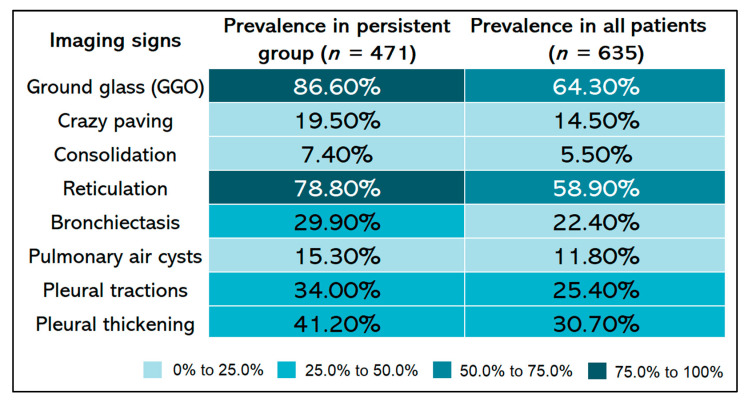
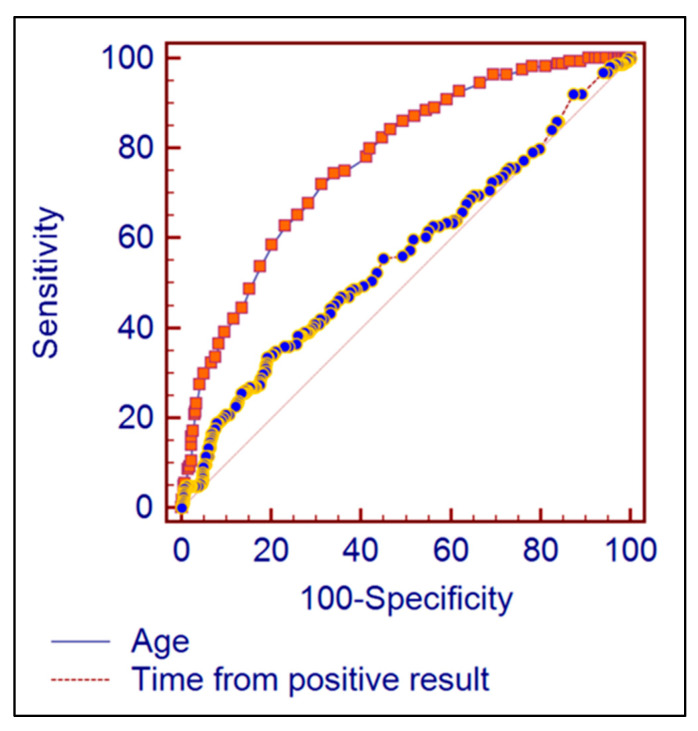
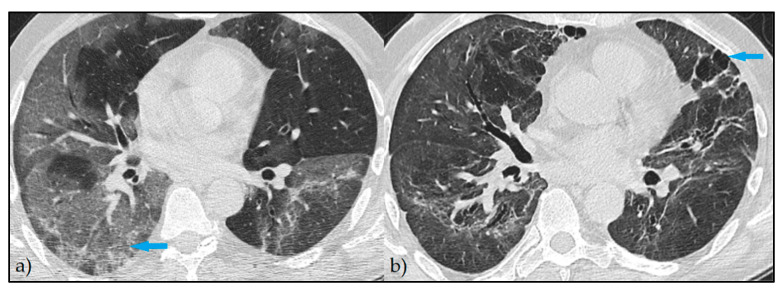
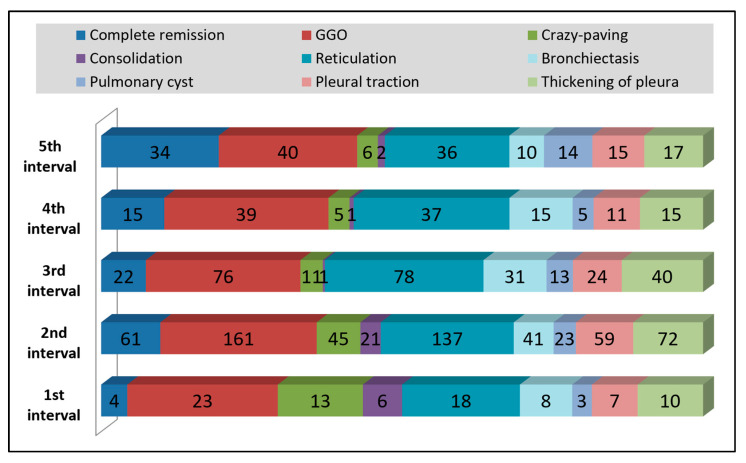
There are growing concerns that some COVID-19 survivors may acquire fibrosis and other irreversible lung abnormalities. The purpose of this prospective study was to assess the rate and predictors of complete resolution of COVID-19 pneumonia by pursuing a hypothetical relation between time and imaging pattern evolution using HRCT findings. A monocentric prospective cohort study with a consecutive-case enrolment design was implemented during a five-month period, having a total of 683 post-COVID patients eligible for inclusion and 635 evaluations with complete follow-up for chest HRCT. The target for post-COVID evaluations consisted of performing HRCT 90 days after a confirmed SARS-CoV-2 infection. The studied patients had an average age of 54 years, ranging between 18 and 85 years old, and an average duration from the first symptoms until HRCT was performed of 74 days. At the post-COVID follow-up, 25.8% had a complete imagistic remission. The most common appearance with HRCT was “ground glass” in 86.6% in patients with persistent COVID-19, followed by reticulations, present in 78.8%, and respectively pleural thickening in 41.2% of cases. The mean total HRCT scores were statistically significantly higher in patients older than 65 years (10.6 ± 6.0) compared to the 40−65 group (6.1 ± 6.1) and the 18−40 age group (2.7 ± 4.8) (p < 0.001). Chest HRCT is a “time window” in documenting temporal persistent radiologic features of lung injury 90 days after SARS-CoV-2 infection, determining the pathologic basis of so-called “long COVID”. The complete remission was associated with a significantly higher average follow-up period and a significantly lower average patient age. Persistent HRCT features of ground glass, reticulation, and pleural thickening are associated with a higher total CT score and older age.
人们越来越担心一些新冠病毒感染者可能会出现肺纤维化和其他不可逆的肺部异常。这项前瞻性研究的目的是通过利用高分辨率计算机断层扫描(HRCT)结果,探讨时间与影像模式演变之间的假设关系,以评估新冠病毒肺炎完全消退的发生率及预测因素。在五个月期间实施了一项采用连续病例入组设计的单中心前瞻性队列研究,共有683例新冠康复患者符合纳入条件,其中635例接受了胸部HRCT的完整随访。新冠康复后评估的目标是在确诊感染严重急性呼吸综合征冠状病毒2(SARS-CoV-2)90天后进行HRCT检查。研究患者的平均年龄为54岁,年龄范围在18至85岁之间,从首次出现症状到进行HRCT检查的平均时长为74天。在新冠康复后的随访中,25.8%的患者影像学表现完全缓解。在持续感染新冠病毒的患者中,HRCT最常见的表现是“磨玻璃影”,占86.6%,其次是网状影,占78.8%,胸膜增厚占41.2%。65岁以上患者的HRCT总评分均值(10.6±6.0)在统计学上显著高于40 - 65岁组(6.1±6.1)和18 - 40岁年龄组(2.7±4.8)(p<0.001)。胸部HRCT是记录SARS-CoV-2感染90天后肺部损伤的持续性放射学特征的“时间窗口”,确定了所谓“长新冠”的病理基础。完全缓解与显著更长的平均随访期和显著更低的平均患者年龄相关。磨玻璃影、网状影和胸膜增厚等持续的HRCT特征与更高的CT总评分和更高的年龄相关。