Salameh Ahlam, McCabe Jessica, Skelly Margaret, Duncan Kelsey Rose, Chen Zhengyi, Tatsuoka Curtis, Bikson Marom, Hardin Elizabeth C, Daly Janis J, Pundik Svetlana
VA Northeast Ohio Healthcare System, Cleveland, OH 44106, USA.
Department of Neurology, School of Medicine, Case Western Reserve University, Cleveland, OH 44106, USA.
Brain Sci. 2022 May 28;12(6):701. doi: 10.3390/brainsci12060701.
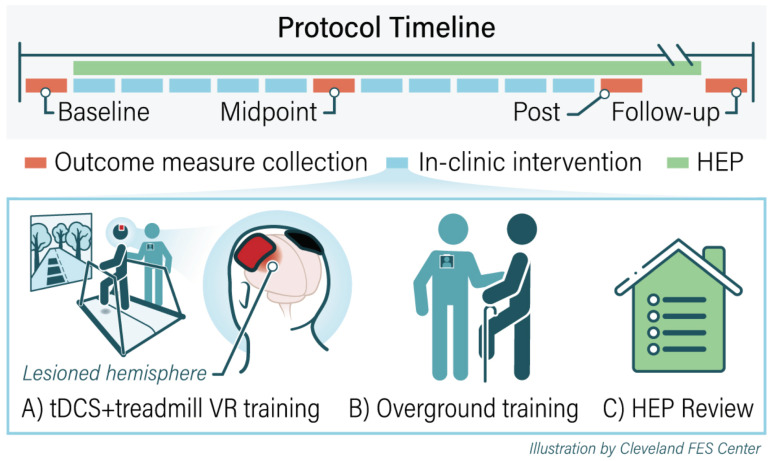
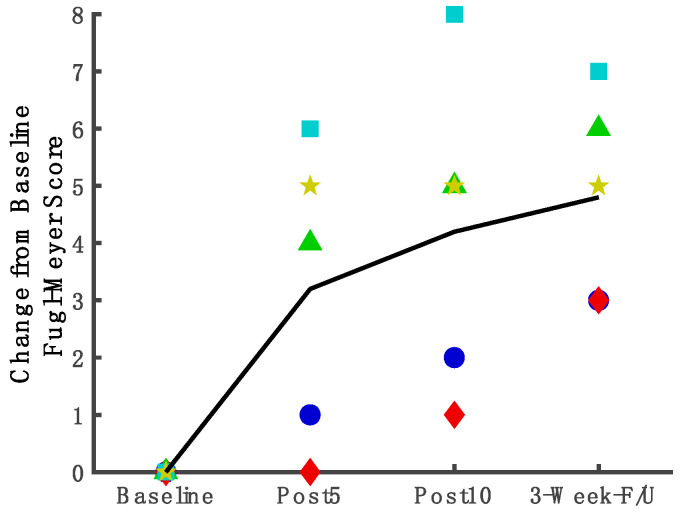
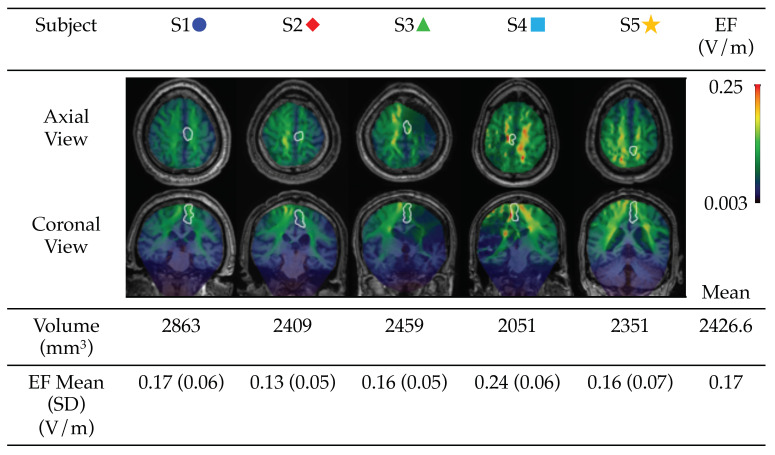
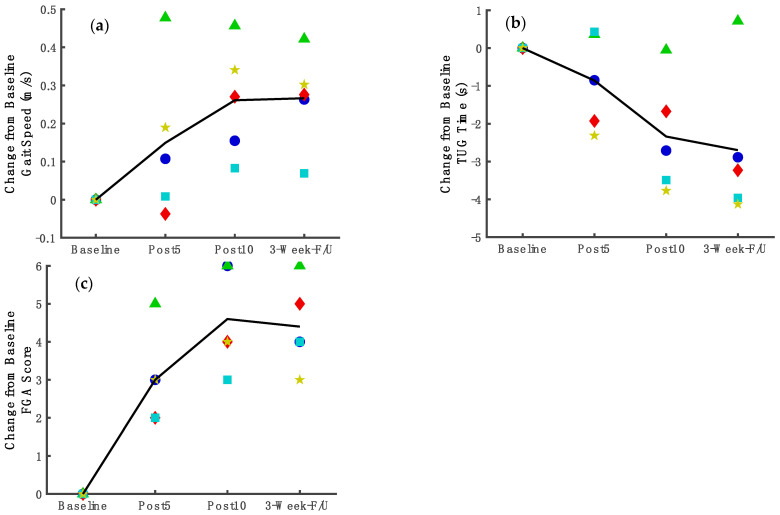
Gait deficits are often persistent after stroke, and current rehabilitation methods do not restore normal gait for everyone. Targeted methods of focused gait therapy that meet the individual needs of each stroke survivor are needed. Our objective was to develop and test a combination protocol of simultaneous brain stimulation and focused stance phase training for people with chronic stroke (>6 months). We combined Transcranial Direct Current Stimulation (tDCS) with targeted stance phase therapy using Virtual Reality (VR)-assisted treadmill training and overground practice. The training was guided by motor learning principles. Five users (>6 months post-stroke with stance phase gait deficits) completed 10 treatment sessions. Each session began with 30 min of VR-assisted treadmill training designed to apply motor learning (ML)-based stance phase targeted practice. During the first 15 min of the treadmill training, bihemispheric tDCS was simultaneously delivered. Immediately after, users completed 30 min of overground (ML)-based gait training. The outcomes included the feasibility of protocol administration, gait speed, Timed Up and Go (TUG), Functional Gait Assessment (FGA), paretic limb stance phase control capability, and the Fugl−Meyer for lower extremity coordination (FMLE). The changes in the outcome measures (except the assessments of stance phase control capability) were calculated as the difference from baseline. Statistically and clinically significant improvements were observed after 10 treatment sessions in gait speed (0.25 ± 0.11 m/s) and FGA (4.55 ± 3.08 points). Statistically significant improvements were observed in TUG (2.36 ± 3.81 s) and FMLE (4.08 ± 1.82 points). A 10-session intervention combining tDCS and ML-based task-specific gait rehabilitation was feasible and produced clinically meaningful improvements in lower limb function in people with chronic gait deficits after stroke. Because only five users tested the new protocol, the results cannot be generalized to the whole population. As a contribution to the field, we developed and tested a protocol combining brain stimulation and ML-based stance phase training for individuals with chronic stance phase deficits after stroke. The protocol was feasible to administer; statistically and/or clinically significant improvements in gait function across an array of gait performance measures were observed with this relatively short treatment protocol.
中风后步态缺陷往往持续存在,目前的康复方法并不能让每个人都恢复正常步态。需要有针对性的聚焦步态疗法,以满足每个中风幸存者的个体需求。我们的目标是为慢性中风(>6个月)患者开发并测试一种同时进行脑刺激和聚焦站立期训练的联合方案。我们将经颅直流电刺激(tDCS)与使用虚拟现实(VR)辅助跑步机训练和地面练习的针对性站立期治疗相结合。训练以运动学习原则为指导。五名患者(中风后>6个月,有站立期步态缺陷)完成了10次治疗课程。每次课程开始时进行30分钟的VR辅助跑步机训练,旨在应用基于运动学习(ML)的站立期针对性练习。在跑步机训练的前15分钟内,同时进行双侧脑tDCS。之后,患者立即完成30分钟的基于地面(ML)的步态训练。结果包括方案实施的可行性、步态速度、定时起立行走测试(TUG)、功能性步态评估(FGA)、患侧肢体站立期控制能力以及下肢协调性的Fugl−Meyer评估(FMLE)。结果指标的变化(除站立期控制能力评估外)计算为与基线的差值。在进行10次治疗课程后,观察到步态速度(0.25±0.11米/秒)和FGA(4.55±3.08分)有统计学和临床意义的改善。在TUG(2.36±3.81秒)和FMLE(4.08±1.82分)方面观察到有统计学意义的改善。将tDCS与基于ML的特定任务步态康复相结合的10次干预是可行的,并在中风后慢性步态缺陷患者的下肢功能方面产生了具有临床意义的改善。由于只有五名患者测试了新方案,结果不能推广到整个人群。作为对该领域的贡献,我们为中风后有慢性站立期缺陷的个体开发并测试了一种将脑刺激与基于ML的站立期训练相结合的方案。该方案实施可行;通过这种相对较短的治疗方案,在一系列步态性能指标上观察到步态功能有统计学和/或临床意义的改善。