Singh Jitendra, Albertson April, Sillerud Brandi
School of Nursing & Healthcare Leadership, Minnesota State University Moorhead, Moorhead, MN 56563, USA.
Healthcare (Basel). 2022 Jun 3;10(6):1041. doi: 10.3390/healthcare10061041.
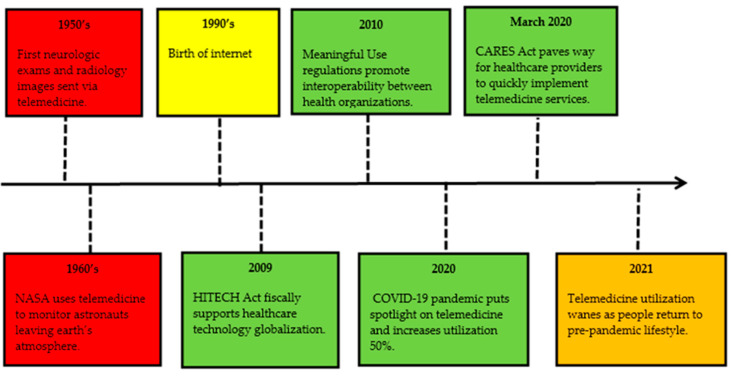
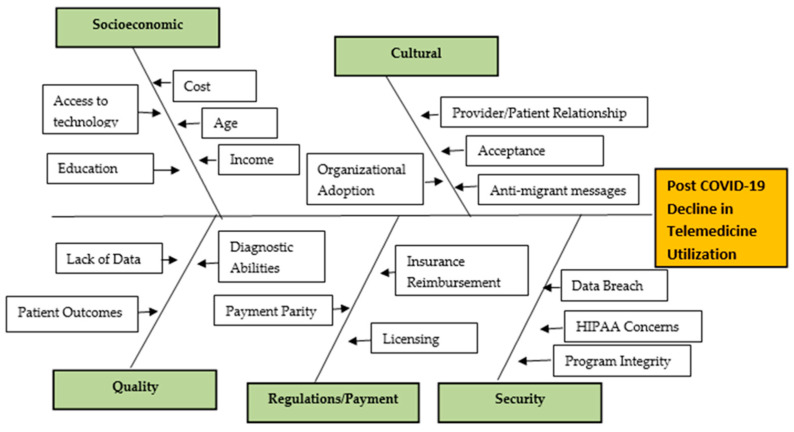
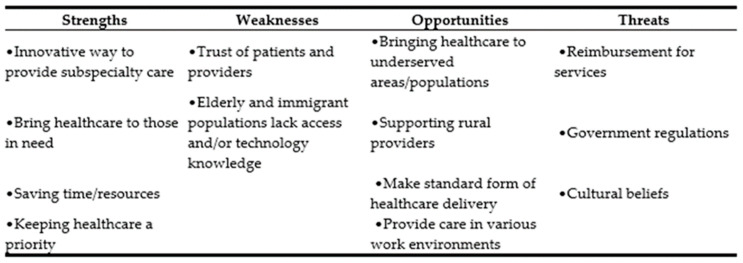
Telemedicine's underutilization ended when the COVID-19 pandemic caused people to isolate and kept them from seeking healthcare services at their local hospitals and clinics. With the aid of the CARES Act of March 2020, healthcare providers quickly implemented telemedicine services to meet the various needs of their patients. During the pandemic, healthcare systems saw a significant increase in telemedicine visits. Essential industries turned to healthcare providers for assistance in keeping their workers healthy and to maintain production in the country's critical infrastructure. Telemedicine services could quickly address health concerns, help address industry needs, and combat workforce shortages. As quickly as telemedicine services grew, telemedicine service utilization waned as people started to move closer to a pre-pandemic lifestyle. This descriptive study builds on an in-depth literature review by utilizing a fishbone diagram and SWOT analysis examining the potential factors related to telemedicine underutilization. To promote telemedicine utilization, application of Rogers' Diffusion of Innovation theory outlines how to gain support for the benefits of telemedicine and build on opportunities brought out by the COVID-19 pandemic. Implication for practice could include establishing virtual clinics for industries plagued with workforce shortages.
当新冠疫情导致人们隔离,无法前往当地医院和诊所寻求医疗服务时,远程医疗未得到充分利用的情况就此终结。在2020年3月的《新冠病毒援助、救济和经济安全法案》(CARES Act)的帮助下,医疗服务提供者迅速实施了远程医疗服务,以满足患者的各种需求。在疫情期间,医疗系统的远程医疗就诊量大幅增加。关键行业向医疗服务提供者寻求帮助,以保障其员工健康,并维持国家关键基础设施的生产。远程医疗服务能够迅速解决健康问题,满足行业需求,并应对劳动力短缺问题。随着人们开始逐渐回归疫情前的生活方式,远程医疗服务的使用量迅速下降,尽管此前其增长迅速。这项描述性研究基于深入的文献综述,利用鱼骨图和SWOT分析,研究了与远程医疗未得到充分利用相关的潜在因素。为了促进远程医疗的使用,应用罗杰斯创新扩散理论概述了如何为远程医疗的益处争取支持,并利用新冠疫情带来的机遇。对实践的启示可能包括为饱受劳动力短缺困扰的行业设立虚拟诊所。