Institute of Chemistry, University of Miskolc, 3515 Miskolc, Hungary.
Department of Applied and Environmental Chemistry, University of Szeged, Rerrich Béla tér 1, 6720 Szeged, Hungary.
Int J Mol Sci. 2022 Jun 8;23(12):6423. doi: 10.3390/ijms23126423.
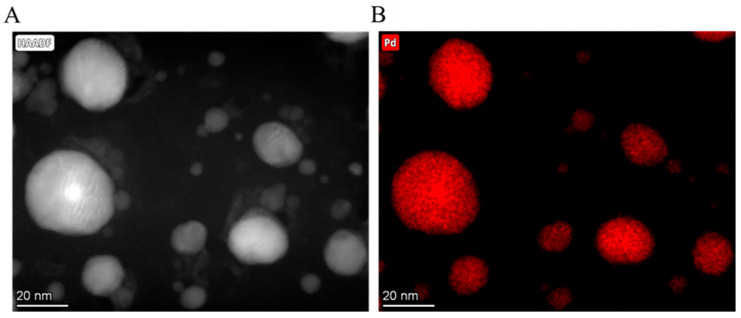
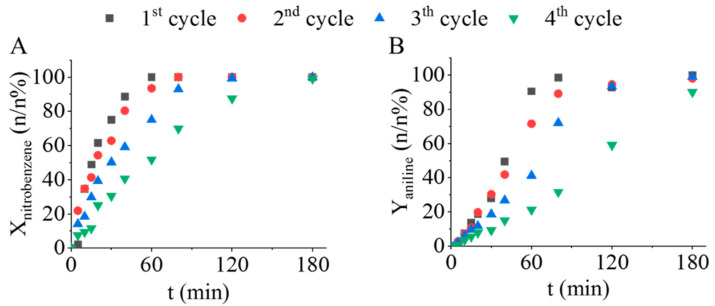
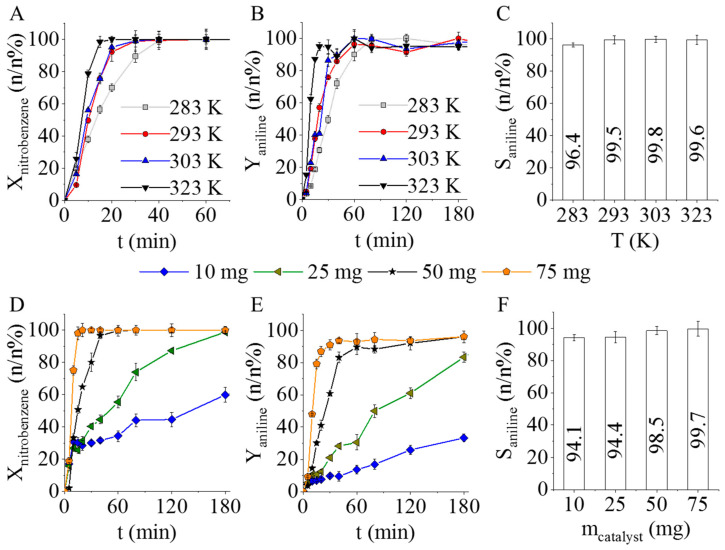
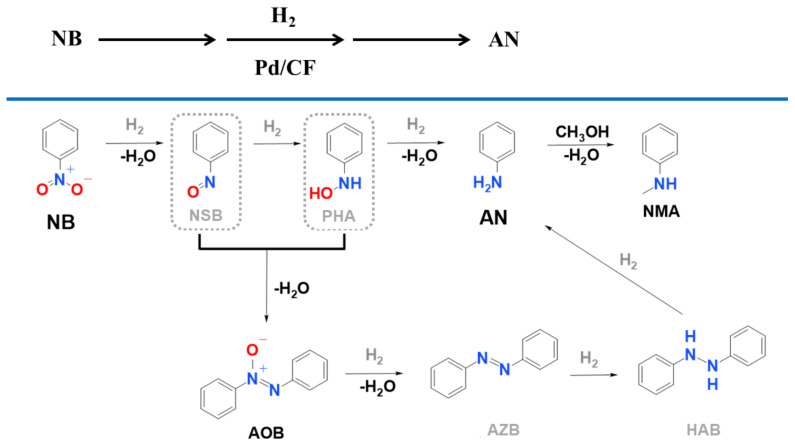
Carbon foam was synthesized by the carbonization of 4-nitroaniline. The reaction is an alternative of the well-known "carbon snake" (or sugar snake) demonstration experiment, which leads to the formation of nitrogen-doped carbon foils due to its nitrogen content. The synthesized carbon foils were grinded to achieve an efficient catalyst support. Palladium nanoparticles were deposited onto the surface of the support, which showed continuous distribution. The prepared Pd nanoparticle decorated carbon foils showed high catalytic activity in nitrobenzene hydrogenation. By applying the designed catalyst, total nitrobenzene conversion, a 99.1 n/n% aniline yield, and an exceptionally high selectivity (99.8 n/n%) were reached. Furthermore, the catalyst remained active during the reuse tests (four cycles) even without regeneration.
通过对 4-硝基苯胺的碳化作用合成了碳泡沫。该反应是著名的“碳蛇”(或糖蛇)演示实验的替代方法,由于其氮含量,导致形成了氮掺杂碳箔。合成的碳箔被研磨以获得高效的催化剂载体。钯纳米颗粒沉积在载体的表面上,呈现连续分布。所制备的 Pd 纳米颗粒修饰的碳箔在硝基苯加氢中表现出高催化活性。通过应用设计的催化剂,实现了总硝基苯转化率为 99.1 n/n%,苯胺收率为 99.1 n/n%,且选择性极高(99.8 n/n%)。此外,即使没有再生,催化剂在重复使用测试(四周期)中仍保持活性。